

Ready & Packaged Foods
All →Vegetables & Legumes
All →Desserts & Confectionery
All →Meat & Protein
All →Grains & Bakery
All →Beverages
All →Milk & Dairy
All →

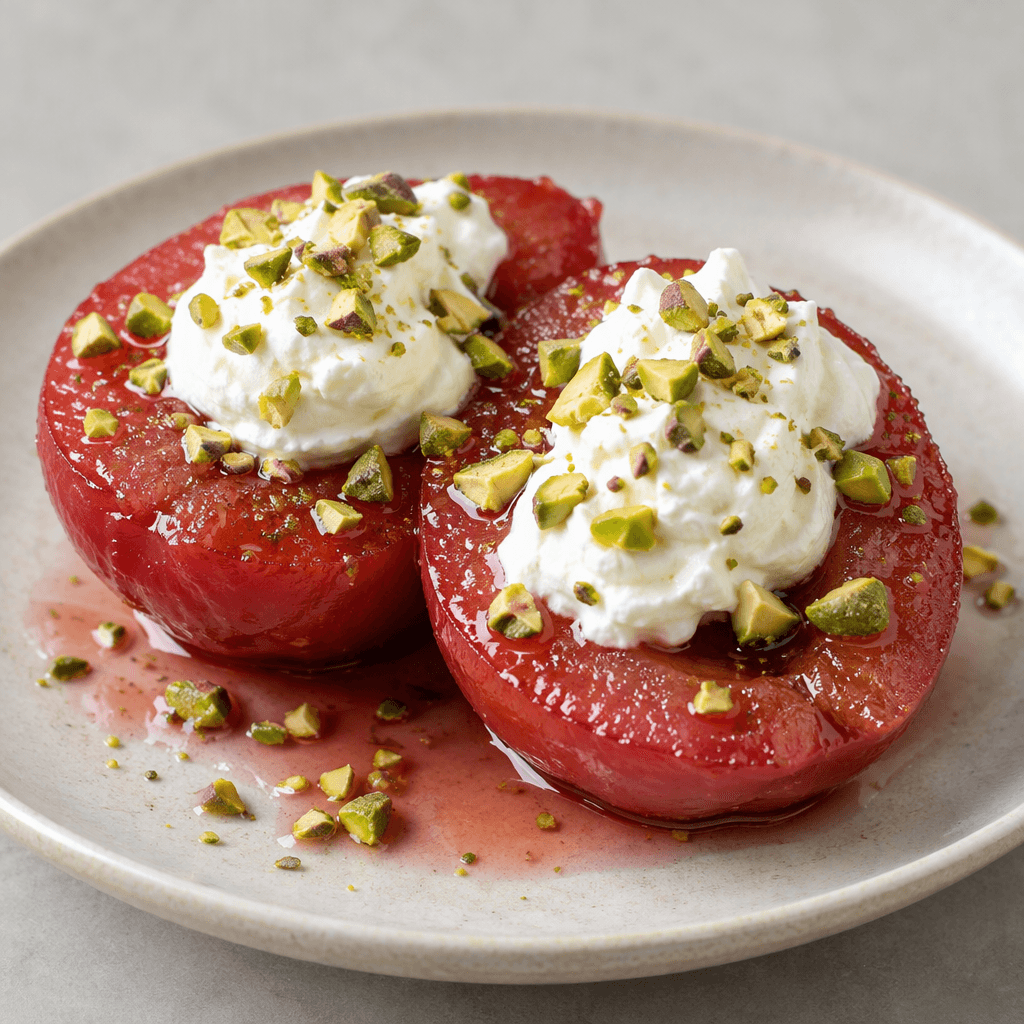
Quince Dessert Calories
Traditional dessert made from quince, sugar, cloves, sometimes garnished with walnuts or cream.
In season: Autumn · Winter
CALORIES
GI
POTASSIUM
FIBER
Quick answer
1 piece (medium) of Quince Dessert (120 g) has 204 calories. That works out to 170 calories per 100 g. It contains 51.6 g of carbs, 0.5 g of protein, 0.2 g of fat and 1.8 g of fiber. Its 9.6 mg of Vitamin C covers 11% of the Daily Value. Its glycemic index is 65 (high), so it raises blood sugar quickly.
What is Quince Dessert?
Quince Dessert is a Turkish sweet made by slowly cooking quince halves with sugar and often cloves until tender. The fruit’s natural colour deepens as it cooks, giving the dessert its familiar ruby-red appearance and glossy syrup.
The quince becomes soft but keeps a delicate, slightly grainy texture, balanced by the thick, sweet syrup. In Turkey it is commonly served with kaymak, a rich clotted cream, and may be finished with pistachios or walnuts. It is mostly carbohydrate, with very little protein or fat. For a less-sweet serving, use less syrup and enjoy a modest portion with unsweetened tea.
Quince Dessert Nutrition Facts
Selected: 100 g
170
KCAL / 100G
Carbs
43g
· 16% DV
Protein
0.4g
· 1% DV
Fat
0.2g
· 0% DV
Fiber
1.5g
· 5% DV
DV is the share of the daily value covered, on a 2,000 kcal reference diet.
Calories come from: Carbs 98% · Protein 1% · Fat 1%
Quince Dessert Vitamins & Minerals
Vitamins
Vitamin C
8mg · 9% DV
B1
0.02mg · 2% DV
B2
0.02mg · 2% DV
B6
0.03mg · 2% DV
Minerals
Potassium ⭐
110mg · 3% DV
Magnesium
7mg · 2% DV
Phosphorus
13mg · 2% DV
Calcium
12mg · 1% DV
How Nutritious Is Quince Dessert?
Nutrient density
Low
How many vitamins, minerals and how much fiber this food carries per calorie. A high score means a lot of nutrition for few calories.
Satiety score
Low
An EatBetter score computed from fiber, protein and calorie density. A high score means staying full longer on the same calories.
Both scores are calculated per 100 g and do not change with the selected portion. The satiety score is EatBetter's own calculation, not a clinical measure.
Quince Dessert Glycemic Index
GLYCEMIC INDEX
GLYCEMIC LOAD
Accounts for portion size — a more realistic measure than GI alone.
How to Burn Off Quince Dessert
To burn the 170 calories in 100 g:
🚶
Walking (5 km/h)
🏃
Running (8 km/h)
🚴
Cycling
🏊
Swimming
Times are calculated with the MET equation for a 70 kg adult. Actual burn varies with your weight, age and pace.
Is Quince Dessert Processed?
NOVA 3
Processed
1. Unprocessed
2. Minimally Processed
3. Processed
4. Ultra-Processed
NOVA classifies foods into 4 groups by industrial processing. NOVA 1 (unprocessed) is the healthiest.
Does Quince Dessert Contain Allergens?
No known major allergens
Which Diets Is Quince Dessert Good For?
Vegan
— Not suitable
Vegetarian
✓ Suitable
Gluten-Free
— Not suitable
Dairy-Free
— Not suitable
Mediterranean
✓ Suitable
Paleo
— Not suitable
Whole30
— Not suitable
DASH
— Not suitable
Keto
— Not suitable
Low FODMAP
— Not suitable
Quince Dessert Fat Profile
SATURATED
0.04g
MONOUNSATURATED
0.03g
POLYUNSATURATED
0.03g
Omega 6:3 ratio 2:1
Below the ideal 4:1 — a good omega balance.
Compare Quince Dessert
Foods Similar to Quince Dessert
Frequently Asked Questions About Quince Dessert
How do you make quince dessert?
Quince dessert is made by cooking peeled quince halves gently with sugar and a little water until tender. Add the cores and a few cloves to the pan for extra aroma, then serve the fruit with some of its syrup.
Why does quince dessert turn red?
Quince dessert develops its ruby color during slow cooking. The fruit’s pigments change as it cooks, and keeping the peel and cores in the pan can help build color and flavor. A fast, high-heat cook may leave the fruit paler.
How do you get quince dessert to turn red?
For red quince dessert, cook the quince halves slowly over low heat and keep the pan covered. Use ripe but firm fruit, and leave the peel and cores in the cooking liquid; the color develops gradually rather than appearing immediately.
What kind of quince is best for quince dessert?
Firm, ripe quinces work best for quince dessert because they soften without immediately falling apart. Avoid fruit with bruises or soft spots if you want neat halves that hold their shape when served.
Do you peel quince for quince dessert?
Yes, quince dessert is usually made with peeled halves. You can add the peels to the cooking liquid for more aroma and color, then remove them before serving. Keep the cores in the pan while the fruit cooks.
Can you make quince dessert in the oven?
Yes, quince dessert can be cooked in the oven as well as on the stovetop. Oven cooking can lightly caramelize the tops, while a covered pan on the stove makes it easier to keep the fruit gently simmering in syrup.
What do you serve with quince dessert?
Quince dessert is traditionally served with clotted cream, which balances the sweet syrup with a rich, cool topping. Chopped walnuts or pistachios add crunch, and a spoonful of the cooking syrup brings the flavors together.
Can you eat quince dessert cold?
Yes, quince dessert can be eaten cold or at room temperature. Chilling lets the syrup settle around the fruit, and it is commonly served cool with clotted cream added just before eating.
How long does quince dessert last in the fridge?
Quince dessert keeps for several days in the refrigerator when stored in a covered container with its syrup. Keep clotted cream separate and add it only when serving, so the topping stays fresh.
Is quince dessert the same as quince paste?
No, quince dessert is not the same as quince paste. Turkish-style quince dessert consists of tender quince halves served in syrup, often with clotted cream; quince paste is a firm, sliceable preserve made by cooking quince pulp with sugar.
Have another question about Quince Dessert?
Ask the AI nutrition coach — calories, portions, alternatives and more, answered in seconds in the app.

Scan calories with your camera
Instant AI nutrition analysis

Nutrition data compiled from USDA FoodData Central and scientific sources.