

Ready & Packaged Foods
All →Vegetables & Legumes
All →Desserts & Confectionery
All →Meat & Protein
All →Grains & Bakery
All →Beverages
All →Milk & Dairy
All →

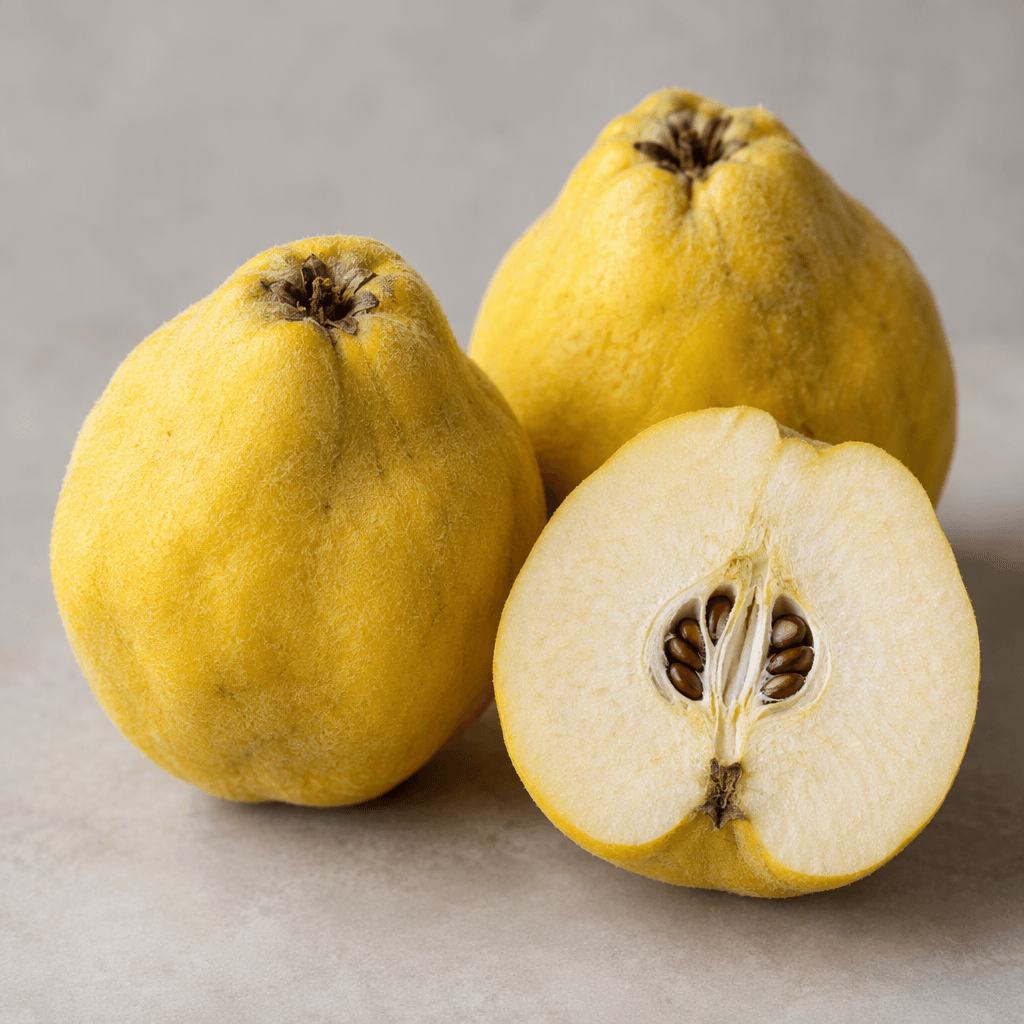
Quince Calories
Vitamin C, fiber, low calorie
In season: Autumn · Winter
CALORIES
GI
POTASSIUM
FIBER
Quick answer
1 piece (medium) of Quince (90 g) has 51 calories. That works out to 57 calories per 100 g. It contains 13.8 g of carbs, 0.4 g of protein, 0.1 g of fat and 1.7 g of fiber. Its 13.5 mg of Vitamin C covers 15% of the Daily Value. Its glycemic index is 35 (low), so it raises blood sugar slowly.
What is Quince?
Quince is a firm, fragrant, golden fruit cultivated for centuries across West Asia and the Mediterranean. Its pale flesh can be sharply tart and astringent when raw, so it is usually cooked until tender and mellow. In Turkey and elsewhere around the Mediterranean, it is poached or baked as a dessert, often served with cream; quince also makes fragrant jelly and preserves. In English-speaking kitchens, it pairs well with apples and pears in crumbles, or can be cooked alongside savoury dishes such as roast meat.
Quince is mostly valued for its fibre and vitamin C, while remaining relatively low in calories: it has 57 calories per 100 g. Cook it gently with less sugar for a lighter dessert, or add it to a dish that benefits from a tart, floral note.
Quince Nutrition Facts
Selected: 100 g
57
KCAL / 100G
Carbs
15.3g
· 6% DV
Protein
0.4g
· 1% DV
Fat
0.1g
· 0% DV
Fiber
1.9g
· 7% DV
DV is the share of the daily value covered, on a 2,000 kcal reference diet.
Calories come from: Carbs 96% · Protein 3% · Fat 1%

Log this food in EatBetter
100,000+ people use it
- Get your daily calorie target
- Snap your meal, log it in seconds
- See every vitamin and mineral

📸 Scan the code to get the app free.

Quince Vitamins & Minerals
Vitamins
Vitamin C
15mg · 17% DV
Vitamin A
40µg · 4% DV
Vitamin K
3.5µg · 3% DV
B6
0.04mg · 2% DV
Minerals
Potassium ⭐
197mg · 6% DV
Iron
1mg · 6% DV
Copper
0mg · 0% DV
Manganese
0mg · 0% DV
How Nutritious Is Quince?
Nutrient density
High
How many vitamins, minerals and how much fiber this food carries per calorie. A high score means a lot of nutrition for few calories.
Satiety score
Medium
An EatBetter score computed from fiber, protein and calorie density. A high score means staying full longer on the same calories.
Both scores are calculated per 100 g and do not change with the selected portion. The satiety score is EatBetter's own calculation, not a clinical measure.
Quince Glycemic Index
GLYCEMIC INDEX
GLYCEMIC LOAD
Accounts for portion size — a more realistic measure than GI alone.
How to Burn Off Quince
To burn the 57 calories in 100 g:
🚶
Walking (5 km/h)
🏃
Running (8 km/h)
🚴
Cycling
🏊
Swimming
Times are calculated with the MET equation for a 70 kg adult. Actual burn varies with your weight, age and pace.
Is Quince Processed?
NOVA 1
Unprocessed
1. Unprocessed
2. Minimally Processed
3. Processed
4. Ultra-Processed
NOVA classifies foods into 4 groups by industrial processing. NOVA 1 (unprocessed) is the healthiest.
Does Quince Contain Allergens?
No known major allergens
Which Diets Is Quince Good For?
Vegan
✓ Suitable
Vegetarian
✓ Suitable
Gluten-Free
✓ Suitable
Dairy-Free
— Not suitable
Mediterranean
✓ Suitable
Paleo
✓ Suitable
Whole30
— Not suitable
DASH
— Not suitable
Keto
— Not suitable
Low FODMAP
— Not suitable
Quince Fat Profile
SATURATED
0.02g
MONOUNSATURATED
0.01g
POLYUNSATURATED
0.03g
Omega 6:3 ratio 2:1
Below the ideal 4:1 — a good omega balance.
Compare Quince
Foods Similar to Quince
Frequently Asked Questions About Quince
Can you eat quince raw?
Yes, quince is safe to eat raw, but its firm, tart, and astringent flesh is why it is more often cooked. If eating it raw, wash and rub off the fuzzy skin, then slice it thinly.
What does quince taste like?
Raw quince tastes tart and astringent, with a fragrant aroma often compared with apple and pear. Cooking softens the fruit and brings out a sweeter, floral flavor, which is why many quince recipes use poaching or baking.
How do you cook quince?
Peel or scrub quince, cut it in half or into wedges, and remove the core if the recipe calls for it. Poach or bake it slowly with water and a sweetener until tender; it also works well in stews, preserves, and pies.
How can you tell when a quince is ripe?
A ripe quince is usually golden yellow and gives off a strong, pleasant fragrance. Greenish fruit with little scent may need more time to ripen. Quince can remain quite firm even when ripe, so softness alone is not a reliable test.
How should you store quince?
Keep whole quince in a cool, dry, well-ventilated place, or refrigerate it once ripe. Its strong fragrance can affect nearby produce, so store it separately. Refrigerate cut quince in a covered container and use it soon.
Why does cooked quince turn pink or red?
Quince can turn pink or reddish as it cooks because heat changes its natural pigments and promotes color-forming reactions in the fruit. Slow cooking often deepens the color, though the final shade varies with the fruit and cooking method.
Can you freeze quince?
Yes. Wash the quince, rub away its fuzz, remove the core, and cut it into slices or wedges before freezing in airtight portions. Frozen quince softens after thawing, so it is best used in cooked dishes rather than eaten raw.
Can you eat quince skin?
Yes, quince skin is edible. Wash and rub the fruit well to remove its fine fuzzy coating; peel it only if you prefer a smoother texture or your recipe calls for peeled fruit. The skin can also add flavor to preserves.
Is quince the same as a pear?
No. Quince is a separate fruit, although its shape can resemble a pear. Unlike a ripe pear, quince usually stays firm and is commonly cooked before eating because its raw flesh is tart and astringent.
How do you make quince jelly?
Simmer chopped quince with water until soft, then strain the fruit through a cloth to collect the juice. Cook the juice with sugar until it reaches a jelly consistency. Quince is naturally rich in pectin, which helps the jelly set.
Have another question about Quince?
Ask the AI nutrition coach — calories, portions, alternatives and more, answered in seconds in the app.

Scan calories with your camera
Instant AI nutrition analysis

Nutrition data compiled from USDA FoodData Central and scientific sources.