

Ready & Packaged Foods
All →Vegetables & Legumes
All →Desserts & Confectionery
All →Meat & Protein
All →Grains & Bakery
All →Beverages
All →Milk & Dairy
All →

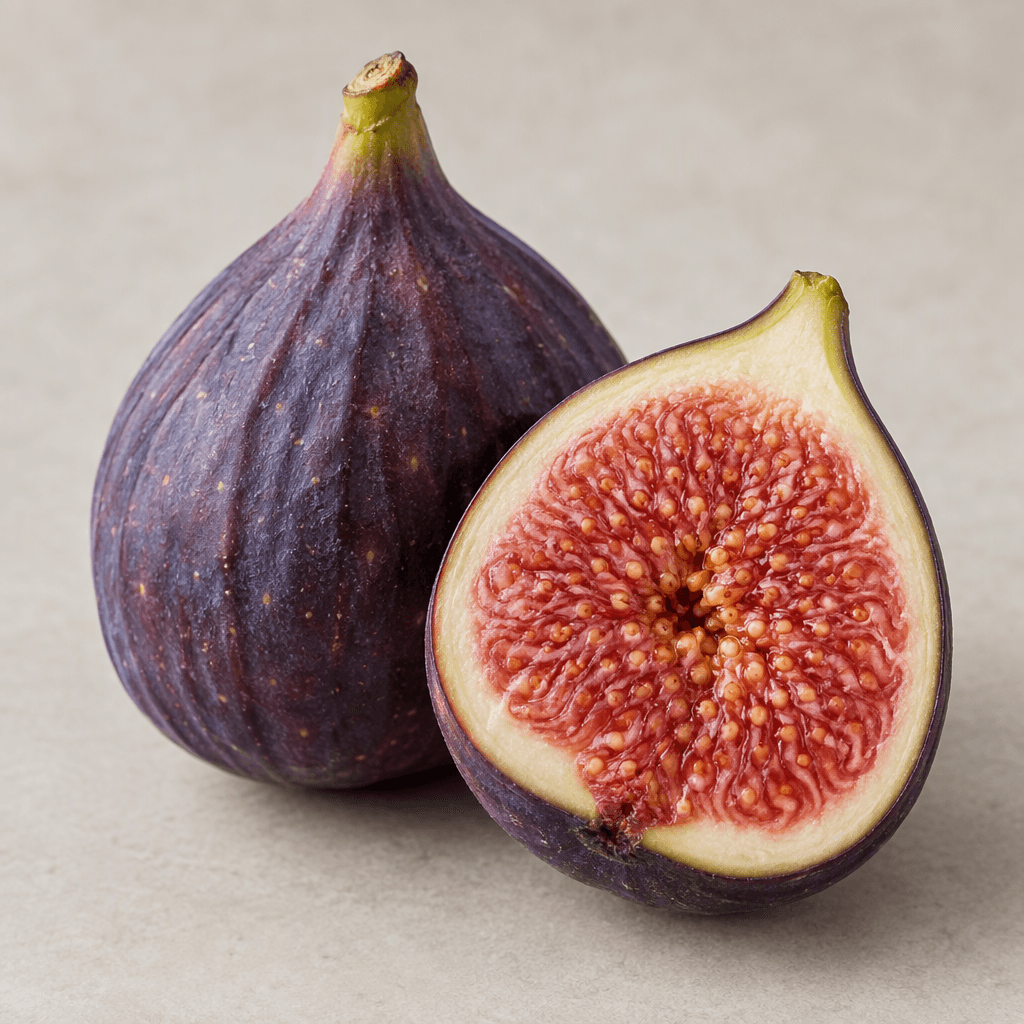
Purple Fig Calories
Rich in antioxidants, high fiber, natural sugars
In season: Summer · Autumn
CALORIES
GI
POTASSIUM
FIBER
Quick answer
1 piece (medium) of Purple Fig (50 g) has 37 calories. That works out to 74 calories per 100 g. It contains 9.6 g of carbs, 0.4 g of protein, 0.2 g of fat and 1.5 g of fiber. Its glycemic index is 51 (medium), so it raises blood sugar at a moderate pace.
What is Purple Fig?
Purple fig is a fresh fig with thin, deep-purple skin and soft pink-red flesh dotted with tiny edible seeds. Figs have long been grown around the Mediterranean and western Asia, and purple-skinned varieties are enjoyed fresh when ripe. The fruit becomes especially tender and fragrant as it softens, with a mellow, honey-like sweetness.
Eat one on its own as a snack, slice it over porridge or yoghurt, or pair it with cheese and nuts; in Mediterranean cooking, fresh figs also appear in salads and simple desserts. Purple figs are naturally sweet and provide fibre, while remaining very low in fat. A medium fruit is an easy portion to enjoy alongside a more filling breakfast, or choose plain yoghurt to balance its sweetness.
Purple Fig Nutrition Facts
Selected: 100 g
74
KCAL / 100G
Carbs
19.2g
· 7% DV
Protein
0.8g
· 2% DV
Fat
0.3g
· 0% DV
Fiber
2.9g
· 10% DV
DV is the share of the daily value covered, on a 2,000 kcal reference diet.
Calories come from: Carbs 93% · Protein 4% · Fat 3%
Purple Fig Vitamins & Minerals
Vitamins
B5
0.3mg · 6% DV
B6
0.11mg · 6% DV
B1
0.06mg · 5% DV
Biotin
1.5µg · 5% DV
Minerals
Potassium ⭐
232mg · 7% DV
Calcium
35mg · 4% DV
Magnesium
17mg · 4% DV
Phosphorus
14mg · 2% DV
How Nutritious Is Purple Fig?
Nutrient density
High
How many vitamins, minerals and how much fiber this food carries per calorie. A high score means a lot of nutrition for few calories.
Satiety score
Medium
An EatBetter score computed from fiber, protein and calorie density. A high score means staying full longer on the same calories.
Both scores are calculated per 100 g and do not change with the selected portion. The satiety score is EatBetter's own calculation, not a clinical measure.
Purple Fig Glycemic Index
GLYCEMIC INDEX
GLYCEMIC LOAD
Accounts for portion size — a more realistic measure than GI alone.
How to Burn Off Purple Fig
To burn the 74 calories in 100 g:
🚶
Walking (5 km/h)
🏃
Running (8 km/h)
🚴
Cycling
🏊
Swimming
Times are calculated with the MET equation for a 70 kg adult. Actual burn varies with your weight, age and pace.
Is Purple Fig Processed?
NOVA 1
Unprocessed
1. Unprocessed
2. Minimally Processed
3. Processed
4. Ultra-Processed
NOVA classifies foods into 4 groups by industrial processing. NOVA 1 (unprocessed) is the healthiest.
Does Purple Fig Contain Allergens?
No known major allergens
Which Diets Is Purple Fig Good For?
Vegan
✓ Suitable
Vegetarian
✓ Suitable
Gluten-Free
✓ Suitable
Dairy-Free
— Not suitable
Mediterranean
✓ Suitable
Paleo
✓ Suitable
Whole30
— Not suitable
DASH
— Not suitable
Keto
— Not suitable
Low FODMAP
— Not suitable
Purple Fig Fat Profile
SATURATED
0.06g
MONOUNSATURATED
0.04g
POLYUNSATURATED
0.07g
Omega 6:3 ratio 2.5:1
Below the ideal 4:1 — a good omega balance.
Compare Purple Fig
Foods Similar to Purple Fig
Frequently Asked Questions About Purple Fig
Can you eat the skin of a purple fig?
Yes, purple fig skin is edible, and its thin skin can be eaten with the soft flesh. Rinse the fruit gently under running water first and remove the stem. If you dislike the skin’s texture, halve the fig and scoop out the inside.
How can you tell when a purple fig is ripe?
A ripe purple fig feels soft when gently pressed, smells sweet, and may droop at the narrow end. A firm, scentless fig is usually underripe. Small splits can occur as figs ripen, but avoid fruit with mold or a sour smell.
How should you store fresh purple figs?
Keep fresh purple figs unwashed in a single layer in the refrigerator so they do not bruise. Eat ripe fruit within a few days, since figs are delicate and spoil quickly. Discard any that become moldy, mushy, or sour-smelling.
Do you need to wash a purple fig before eating it?
Yes, rinse a purple fig gently under cool running water just before eating, then pat it dry. Its delicate skin can be damaged by vigorous scrubbing or soaking. Washing only when you are ready to eat it helps limit excess moisture during storage.
Can you freeze purple figs?
Yes, purple figs can be frozen, but they turn soft and release juice after thawing, so they are less suitable for eating fresh. Rinse and dry them well, remove the stems, and freeze in an airtight container. Use thawed figs in cooking or yogurt.
Why do purple figs split open?
Purple figs can split when the flesh expands faster than the skin, often as the fruit ripens or takes up extra water. A clean, lightly split fig is usually fine to eat. Avoid it if the split area is moldy, sour-smelling, or spoiled.
How do you serve purple figs for breakfast?
Serve purple figs whole or sliced with yogurt, oats, walnuts, or cheese. Their sweet flavor pairs especially well with tangy or salty foods. Cut them just before serving, since the soft flesh can become watery if left sliced for too long.
Are the tiny seeds inside a purple fig edible?
Yes, the tiny seeds inside a purple fig are edible and are normally eaten with the soft flesh. There is no need to remove them. The pink or red interior around the seeds is also part of the fruit and can be eaten.
What is the difference between purple figs and green figs?
Purple and green figs are different varieties or types, with skin color being the most obvious difference; color alone does not tell you whether a fig is ripe. Their flavor and flesh can vary by variety. Choose a purple fig by its softness and sweet scent.
Can purple figs help with constipation?
Purple figs provide fiber, which can support regular bowel movements and help prevent constipation, but they are not a treatment on their own. Drinking enough fluids also matters. Seek medical advice if constipation persists or is severe.
Have another question about Purple Fig?
Ask the AI nutrition coach — calories, portions, alternatives and more, answered in seconds in the app.

Scan calories with your camera
Instant AI nutrition analysis

Nutrition data compiled from USDA FoodData Central and scientific sources.