

Ready & Packaged Foods
All →Vegetables & Legumes
All →Desserts & Confectionery
All →Meat & Protein
All →Grains & Bakery
All →Beverages
All →Milk & Dairy
All →

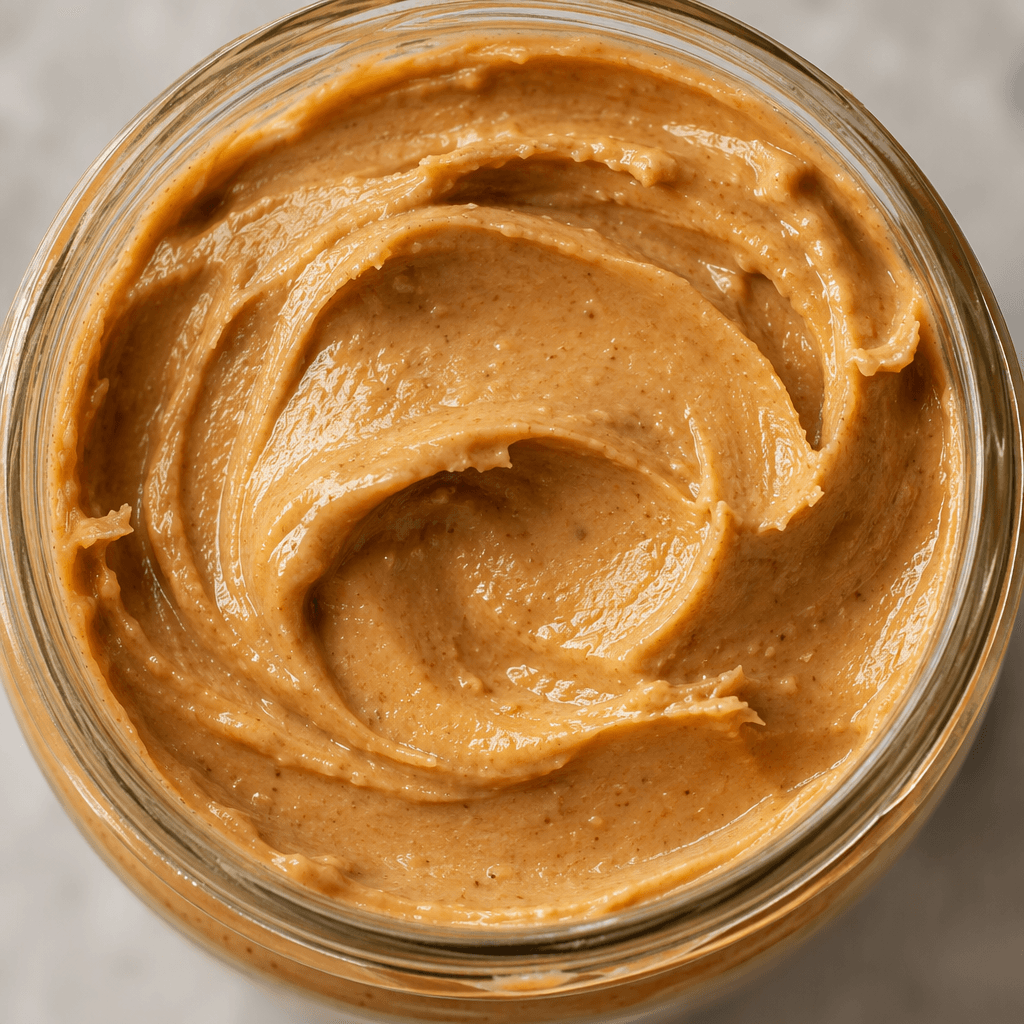
Pure peanut butter Calories
High protein, healthy fats, pure peanut butter
In season: Spring · Summer · Autumn · Winter
CALORIES
GI
POTASSIUM
FIBER
Quick answer
1 tablespoon (medium) of Pure peanut butter (16 g) has 94 calories. That works out to 588 calories per 100 g. It contains 3.2 g of carbs, 4 g of protein, 7.9 g of fat and 1 g of fiber. Its 0.1 mg of Copper covers 16% of the Daily Value. Its glycemic index is 14 (low), so it raises blood sugar slowly.
What is Pure peanut butter?
Pure peanut butter is made by grinding roasted peanuts into a thick spread, usually without other ingredients. It is closely associated with the United States, where it is a familiar pantry staple, and is now eaten widely around the world. Depending on how it is ground, it can be smooth or pleasantly crunchy, with a roasted, nutty flavour.
Spread it on toast, stir it into porridge or smoothies, or pair it with apple or banana; in North America, it is also a classic sandwich filling. It is energy-dense and provides protein as well as substantial fat: 100 g contains 25.1 g of protein. A modest spoonful adds richness to a snack, while pairing it with fruit or whole-grain bread makes for a more balanced bite. If oil has risen to the top, stir before serving.
Pure peanut butter Nutrition Facts
Selected: 100 g
588
KCAL / 100G
Carbs
20g
· 7% DV
Protein
25.1g
· 50% DV
Fat
49.2g
· 63% DV
Fiber
6.2g
· 22% DV
DV is the share of the daily value covered, on a 2,000 kcal reference diet.
Calories come from: Carbs 13% · Protein 16% · Fat 71%
Pure peanut butter Vitamins & Minerals
Vitamins
B3
13.5mg · 84% DV
Vitamin E
9.1mg · 61% DV
Biotin
17µg · 57% DV
B1
0.44mg · 37% DV
Minerals
Copper
1mg · 111% DV
Manganese
2mg · 87% DV
Phosphorus
370mg · 53% DV
Magnesium
168mg · 40% DV
How Nutritious Is Pure peanut butter?
Nutrient density
High
How many vitamins, minerals and how much fiber this food carries per calorie. A high score means a lot of nutrition for few calories.
Satiety score
High
An EatBetter score computed from fiber, protein and calorie density. A high score means staying full longer on the same calories.
Both scores are calculated per 100 g and do not change with the selected portion. The satiety score is EatBetter's own calculation, not a clinical measure.
Pure peanut butter Glycemic Index
GLYCEMIC INDEX
GLYCEMIC LOAD
Accounts for portion size — a more realistic measure than GI alone.
How to Burn Off Pure peanut butter
To burn the 588 calories in 100 g:
🚶
Walking (5 km/h)
🏃
Running (8 km/h)
🚴
Cycling
🏊
Swimming
Times are calculated with the MET equation for a 70 kg adult. Actual burn varies with your weight, age and pace.
Is Pure peanut butter Processed?
NOVA 2
Minimally Processed
1. Unprocessed
2. Minimally Processed
3. Processed
4. Ultra-Processed
NOVA classifies foods into 4 groups by industrial processing. NOVA 1 (unprocessed) is the healthiest.
Does Pure peanut butter Contain Allergens?
Contains these allergens:
Which Diets Is Pure peanut butter Good For?
Vegan
✓ Suitable
Vegetarian
✓ Suitable
Gluten-Free
✓ Suitable
Dairy-Free
— Not suitable
Mediterranean
✓ Suitable
Paleo
✓ Suitable
Whole30
— Not suitable
DASH
— Not suitable
Keto
— Not suitable
Low FODMAP
— Not suitable
Pure peanut butter Fat Profile
SATURATED
9g
MONOUNSATURATED
24.5g
POLYUNSATURATED
13.5g
Omega 6:3 ratio 1300:1
Above the ideal 4:1 (1300:1).
Compare Pure peanut butter
Foods Similar to Pure peanut butter
Frequently Asked Questions About Pure peanut butter
Why does pure peanut butter have oil on top?
Oil separation is normal in pure peanut butter because it has no stabilizers to keep the peanut oil evenly mixed. Stir it thoroughly with a clean, dry spoon, reaching the bottom of the jar; storing the jar upside down before opening can also help.
Does pure peanut butter need to be refrigerated after opening?
It does not always need refrigeration, but chilling pure peanut butter after opening can slow rancidity and help it keep its flavor. The trade-off is a firmer texture, so let the jar sit at room temperature briefly before spreading.
How is pure peanut butter different from regular peanut butter?
Pure peanut butter is made from peanuts alone, while some regular varieties add sugar, salt, or stabilizing oils. That makes pure peanut butter taste more strongly of peanuts and more likely to separate; always stir it before serving.
Can you use pure peanut butter in smoothies?
Yes, pure peanut butter blends well into smoothies and adds a rich, nutty flavor. Add a spoonful with banana, milk or a plant-based drink, then blend until smooth; blending it with the liquid avoids clumps better than stirring it in afterward.
Can pure peanut butter be used in cooking and sauces?
Yes, pure peanut butter works in savory sauces, dressings, and marinades as well as sweet dishes. Whisk it first with warm water or another liquid to make a smooth paste, then add seasonings; adding it straight to a hot pan can make it clump.
Can you make pure peanut butter at home?
Yes, process roasted, shelled peanuts in a strong food processor until they go from crumbs to a smooth paste. The process takes patience and occasional scraping down of the bowl; you do not need to add oil or sugar.
Does pure peanut butter help with weight loss?
Pure peanut butter does not cause weight loss by itself, but its rich, filling texture can make a modest snack more satisfying. It is easy to eat more than intended straight from the jar, so portion some out rather than eating from the container.
Is pure peanut butter good for people with diabetes?
Pure peanut butter is not automatically off-limits for people with diabetes, and it is generally made without added sugar. What you eat it with matters too: pair it with a balanced meal or snack and follow your individual glucose-management plan.
Can dogs eat pure peanut butter?
Dogs can have a small amount of pure peanut butter as an occasional treat if they are not allergic, but it is high in fat and should not replace their food. Never give a product containing xylitol, which is toxic to dogs.
How can you tell if pure peanut butter has gone rancid?
Rancid pure peanut butter often smells stale, bitter, or like old paint, and its taste may be unpleasant. A layer of oil by itself is not a sign of spoilage; discard the jar if the smell or flavor has turned off.
Have another question about Pure peanut butter?
Ask the AI nutrition coach — calories, portions, alternatives and more, answered in seconds in the app.

Scan calories with your camera
Instant AI nutrition analysis

Nutrition data compiled from USDA FoodData Central and scientific sources.