

Ready & Packaged Foods
All →Vegetables & Legumes
All →Desserts & Confectionery
All →Meat & Protein
All →Grains & Bakery
All →Beverages
All →Milk & Dairy
All →

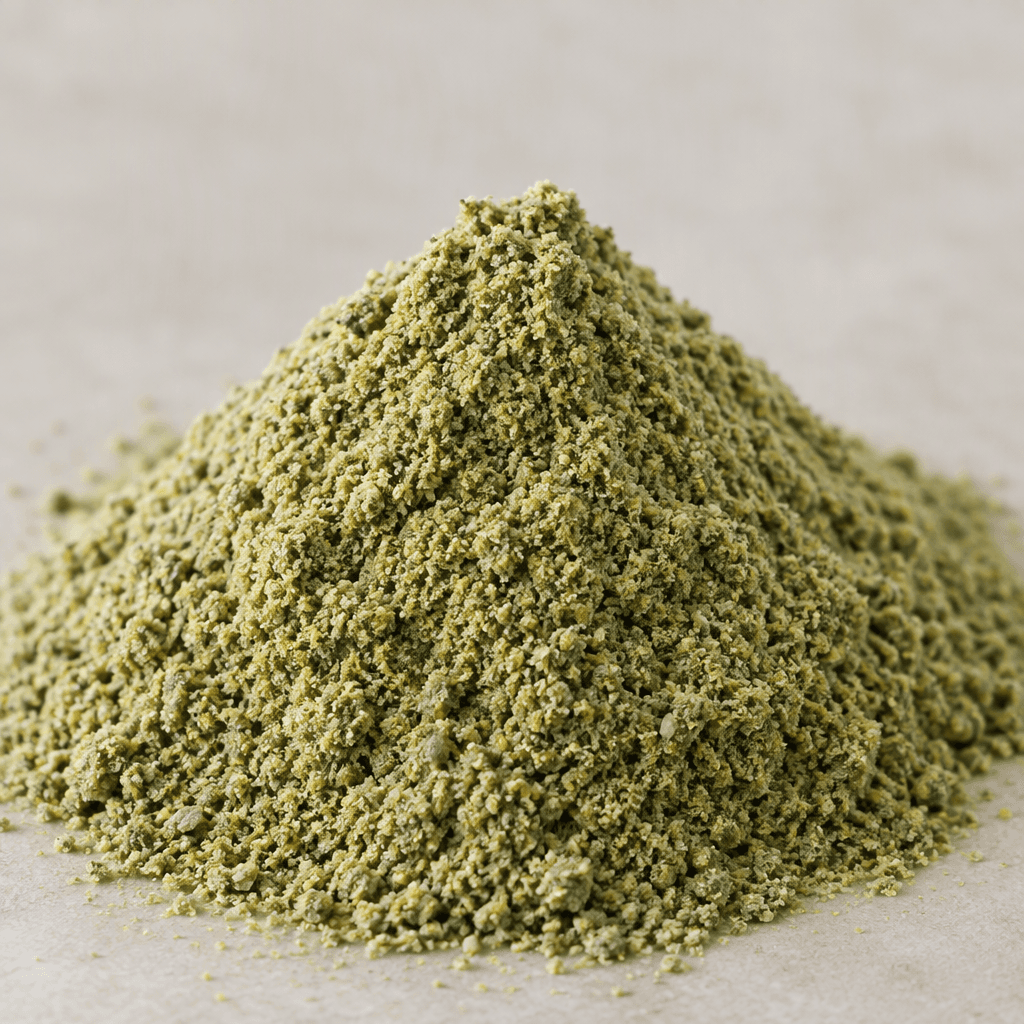
Pumpkin seed flour Calories
High-protein, fiber-rich seed flour rich in magnesium
In season: Autumn · Winter
CALORIES
GI
POTASSIUM
FIBER
Quick answer
2 tablespoon (medium) of Pumpkin seed flour (20 g) has 80 calories. That works out to 402 calories per 100 g. It contains 3.6 g of carbs, 7.2 g of protein, 2.4 g of fat and 2.9 g of fiber. Its 216 mg of Phosphorus covers 31% of the Daily Value. Its glycemic index is 15 (low), so it raises blood sugar slowly.
What is Pumpkin seed flour?
Pumpkin seed flour is made by finely grinding pumpkin seeds into a greenish, slightly coarse flour. It is used as an ingredient in baking and cooking rather than usually eaten on its own; recipes may add it to breads, pancakes, crackers or smoothies. Some products are made from whole seeds, so their texture and richness can vary.
Its flavour is earthy and nutty, and it can give baked goods a muted green colour. In kitchens around the world, it works well blended with other flours or stirred into porridge, yogurt or soup. It is notably high in protein and fibre, with 35.8 g of protein per 100 g. Start by replacing only part of the flour in a recipe, as its distinctive taste and texture can come through strongly.
Pumpkin seed flour Nutrition Facts
Selected: 100 g
402
KCAL / 100G
Carbs
18.2g
· 7% DV
Protein
35.8g
· 72% DV
Fat
12.1g
· 16% DV
Fiber
14.6g
· 52% DV
DV is the share of the daily value covered, on a 2,000 kcal reference diet.
Calories come from: Carbs 22% · Protein 44% · Fat 34%
Pumpkin seed flour Vitamins & Minerals
Vitamins
Biotin
9µg · 30% DV
B3
4.6mg · 29% DV
B1
0.23mg · 19% DV
B5
0.72mg · 14% DV
Minerals
Phosphorus
1080mg · 154% DV
Magnesium
520mg · 124% DV
Copper
1mg · 111% DV
Manganese
2mg · 87% DV
How Nutritious Is Pumpkin seed flour?
Nutrient density
Very high
How many vitamins, minerals and how much fiber this food carries per calorie. A high score means a lot of nutrition for few calories.
Satiety score
High
An EatBetter score computed from fiber, protein and calorie density. A high score means staying full longer on the same calories.
Both scores are calculated per 100 g and do not change with the selected portion. The satiety score is EatBetter's own calculation, not a clinical measure.
Pumpkin seed flour Glycemic Index
GLYCEMIC INDEX
GLYCEMIC LOAD
Accounts for portion size — a more realistic measure than GI alone.
How to Burn Off Pumpkin seed flour
To burn the 402 calories in 100 g:
🚶
Walking (5 km/h)
🏃
Running (8 km/h)
🚴
Cycling
🏊
Swimming
Times are calculated with the MET equation for a 70 kg adult. Actual burn varies with your weight, age and pace.
Is Pumpkin seed flour Processed?
NOVA 2
Minimally Processed
1. Unprocessed
2. Minimally Processed
3. Processed
4. Ultra-Processed
NOVA classifies foods into 4 groups by industrial processing. NOVA 1 (unprocessed) is the healthiest.
Does Pumpkin seed flour Contain Allergens?
No known major allergens
Which Diets Is Pumpkin seed flour Good For?
Vegan
✓ Suitable
Vegetarian
✓ Suitable
Gluten-Free
✓ Suitable
Dairy-Free
— Not suitable
Mediterranean
✓ Suitable
Paleo
✓ Suitable
Whole30
— Not suitable
DASH
— Not suitable
Keto
✓ Suitable
Low FODMAP
— Not suitable
Pumpkin seed flour Fat Profile
SATURATED
2.3g
MONOUNSATURATED
3.6g
POLYUNSATURATED
5.7g
Omega 6:3 ratio 45:1
Above the ideal 4:1 (45:1).
Compare Pumpkin seed flour
Foods Similar to Pumpkin seed flour
Frequently Asked Questions About Pumpkin seed flour
How do you use pumpkin seed flour?
Pumpkin seed flour works in breads, crackers, pancakes, and savory batters, and can be stirred into yogurt or smoothies. Its dense texture can thicken mixtures, so start with a small amount and adjust the liquid in the recipe.
Can pumpkin seed flour replace almond flour?
Pumpkin seed flour can replace some almond flour, but it is not a guaranteed one-for-one swap. It absorbs liquid differently and gives recipes a greener color and earthier flavor, so test it in a small batch first.
Does pumpkin seed flour taste like pumpkin?
No, pumpkin seed flour tastes more like ground pumpkin seeds than pumpkin flesh. Expect a nutty, earthy flavor rather than the sweet, mild taste associated with pumpkin purée.
Can you bake bread with pumpkin seed flour?
Yes, you can bake bread with pumpkin seed flour, but it does not provide the stretchy structure that wheat gluten gives. Combining it with other flour and a suitable binder helps keep the loaf from turning dense or crumbly.
What is the difference between pumpkin seed flour and pumpkin powder?
Pumpkin seed flour is made from pumpkin seeds, while pumpkin powder usually refers to dried pumpkin flesh. They have different flavors, textures, and uses, so they are not interchangeable in a recipe.
How do you make pumpkin seed flour at home?
To make pumpkin seed flour, grind shelled pumpkin seeds in short pulses. Stop as soon as they are finely ground: continued grinding releases their oil and can turn the flour into a thick seed butter.
How should you store pumpkin seed flour?
Store pumpkin seed flour in an airtight container away from heat and light. Its natural oils can become rancid over time; refrigerating an opened bag can help preserve its flavor, especially if you use it slowly.
Why is pumpkin seed flour green?
Pumpkin seed flour is often green because of the seeds’ natural color and pigments. The shade varies with the seeds and how they were processed; green color by itself does not mean the flour has spoiled.
Can pumpkin seed flour be used to make pasta?
Yes, pumpkin seed flour can be added to homemade pasta dough, but it is best combined with a flour that gives the dough enough structure. Used alone, it may make pasta fragile and harder to roll or shape.
Should pumpkin seed flour be toasted before using it?
No, pumpkin seed flour does not have to be toasted before use. Toasting it briefly in a dry pan can deepen its nutty flavor, but watch it closely because finely ground seeds can scorch quickly.
Have another question about Pumpkin seed flour?
Ask the AI nutrition coach — calories, portions, alternatives and more, answered in seconds in the app.

Scan calories with your camera
Instant AI nutrition analysis

Nutrition data compiled from USDA FoodData Central and scientific sources.