

Ready & Packaged Foods
All →Vegetables & Legumes
All →Desserts & Confectionery
All →Meat & Protein
All →Grains & Bakery
All →Beverages
All →Milk & Dairy
All →

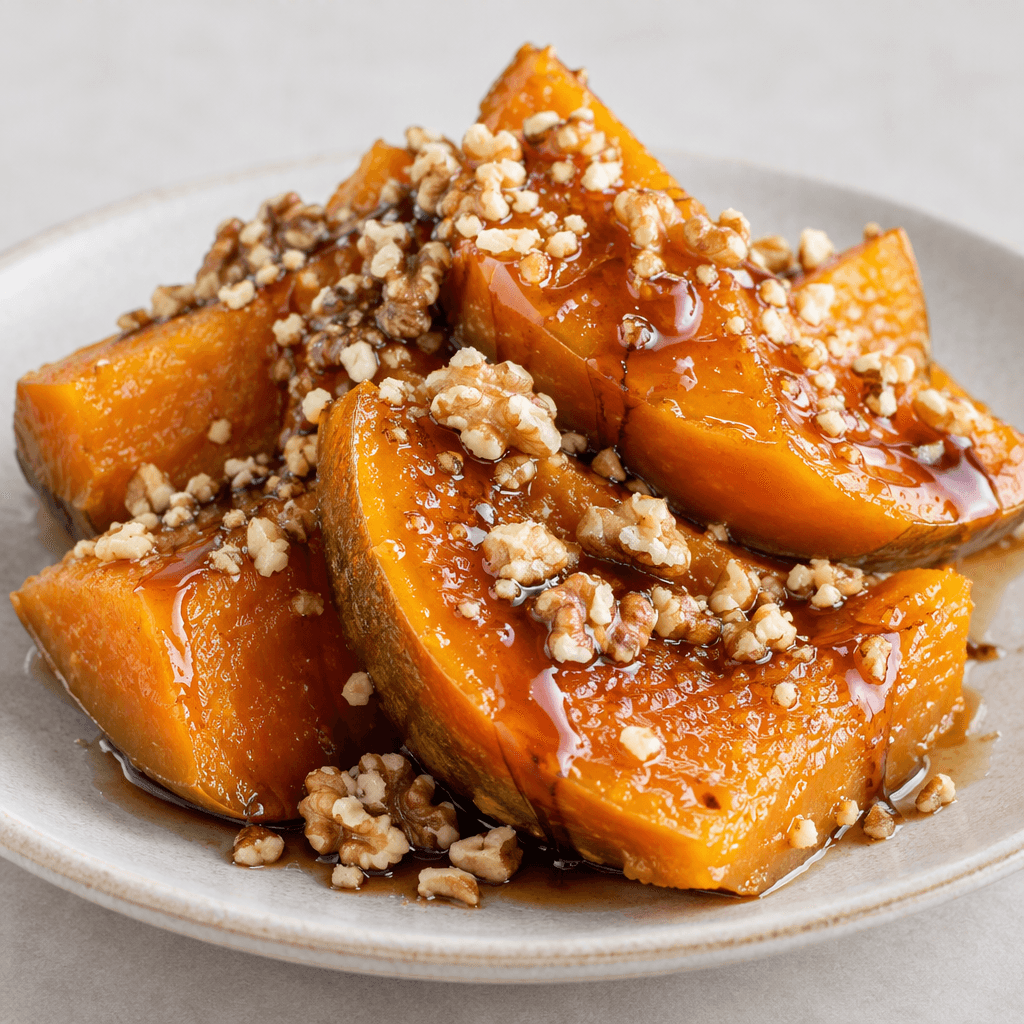
Pumpkin Dessert Calories
Traditional Turkish dessert made with pumpkin and sugar.
In season: Autumn · Winter
CALORIES
GI
POTASSIUM
FIBER
Quick answer
1 piece (medium) of Pumpkin Dessert (80 g) has 96 calories. That works out to 120 calories per 100 g. It contains 24 g of carbs, 0.6 g of protein, 0.2 g of fat and 1.7 g of fiber. Its 384 µg of Vitamin A covers 43% of the Daily Value. Its glycemic index is 65 (medium), so it raises blood sugar at a moderate pace.
What is Pumpkin Dessert?
Pumpkin Dessert is a traditional Turkish sweet made by cooking pumpkin pieces with sugar until tender. As the pumpkin softens and absorbs the syrup, it turns glossy, moist and sometimes slightly translucent at the edges. The variety of pumpkin and the cooking method can differ from one household to another.
It is commonly served cool or at room temperature, often with crushed walnuts and sometimes tahini. In Turkey, it makes a familiar dessert after a meal or a sweet bite alongside tea; elsewhere, it can be served as a simple autumnal dessert. Its nutrition is mostly carbohydrate, with little protein or fat. For a lighter serving, use less of the syrup and keep the walnut or tahini topping modest.
Pumpkin Dessert Nutrition Facts
Selected: 100 g
120
KCAL / 100G
Carbs
30g
· 11% DV
Protein
0.8g
· 2% DV
Fat
0.2g
· 0% DV
Fiber
2.1g
· 8% DV
DV is the share of the daily value covered, on a 2,000 kcal reference diet.
Calories come from: Carbs 96% · Protein 3% · Fat 1%
Pumpkin Dessert Vitamins & Minerals
Vitamins
Vitamin A
480µg · 53% DV
Vitamin C
6mg · 7% DV
B5
0.2mg · 4% DV
B6
0.06mg · 4% DV
Minerals
Iron
1mg · 6% DV
Potassium ⭐
180mg · 5% DV
Magnesium
12mg · 3% DV
Phosphorus
18mg · 3% DV
How Nutritious Is Pumpkin Dessert?
Nutrient density
Medium
How many vitamins, minerals and how much fiber this food carries per calorie. A high score means a lot of nutrition for few calories.
Satiety score
Medium
An EatBetter score computed from fiber, protein and calorie density. A high score means staying full longer on the same calories.
Both scores are calculated per 100 g and do not change with the selected portion. The satiety score is EatBetter's own calculation, not a clinical measure.
Pumpkin Dessert Glycemic Index
GLYCEMIC INDEX
GLYCEMIC LOAD
Accounts for portion size — a more realistic measure than GI alone.
How to Burn Off Pumpkin Dessert
To burn the 120 calories in 100 g:
🚶
Walking (5 km/h)
🏃
Running (8 km/h)
🚴
Cycling
🏊
Swimming
Times are calculated with the MET equation for a 70 kg adult. Actual burn varies with your weight, age and pace.
Is Pumpkin Dessert Processed?
NOVA 3
Processed
1. Unprocessed
2. Minimally Processed
3. Processed
4. Ultra-Processed
NOVA classifies foods into 4 groups by industrial processing. NOVA 1 (unprocessed) is the healthiest.
Does Pumpkin Dessert Contain Allergens?
No known major allergens
Which Diets Is Pumpkin Dessert Good For?
Vegan
— Not suitable
Vegetarian
✓ Suitable
Gluten-Free
— Not suitable
Dairy-Free
— Not suitable
Mediterranean
✓ Suitable
Paleo
— Not suitable
Whole30
— Not suitable
DASH
— Not suitable
Keto
— Not suitable
Low FODMAP
— Not suitable
Pumpkin Dessert Fat Profile
SATURATED
0.04g
MONOUNSATURATED
0.03g
POLYUNSATURATED
0.03g
Omega 6:3 ratio 2:1
Below the ideal 4:1 — a good omega balance.
Compare Pumpkin Dessert
Foods Similar to Pumpkin Dessert
Frequently Asked Questions About Pumpkin Dessert
What is Turkish pumpkin dessert?
Turkish pumpkin dessert is a sweet made from pumpkin pieces cooked with sugar until tender and glossy. It is commonly served with tahini and crushed walnuts, rather than baked into a spiced custard or pie filling.
How do you make Turkish pumpkin dessert?
Turkish pumpkin dessert is made by peeling and slicing pumpkin, covering it with sugar, and cooking it until tender in the liquid the pumpkin releases. Gentle cooking helps the pieces keep their shape and become glossy.
What kind of pumpkin is best for Turkish pumpkin dessert?
A firm, mature winter pumpkin works best for Turkish pumpkin dessert because its pieces hold together as they cook. Choose pumpkin with dense flesh and cut it into evenly sized wedges so they soften at roughly the same rate.
Is Turkish pumpkin dessert served with tahini?
Yes, Turkish pumpkin dessert is often served with tahini drizzled over the top. The nutty, slightly bitter flavor balances the sweetness, and crushed walnuts are a common topping for extra crunch.
Can you bake Turkish pumpkin dessert in the oven?
Yes, Turkish pumpkin dessert can be baked. Arrange the sugared pumpkin in a covered oven dish and cook until tender; uncover it near the end if you want the syrup to reduce and the surface to turn glossy.
Why is Turkish pumpkin dessert watery?
Turkish pumpkin dessert can look watery because pumpkin releases liquid as it cooks. If the pieces are tender but the syrup is still thin, simmer it uncovered briefly, taking care not to stir enough to break up the pumpkin.
How do you keep Turkish pumpkin dessert pieces from falling apart?
To keep Turkish pumpkin dessert pieces intact, use firm pumpkin, cut even wedges, and cook them gently without frequent stirring. Stop cooking once a fork passes through easily; continued cooking can make the edges collapse.
How is Turkish pumpkin dessert different from pumpkin pie?
Turkish pumpkin dessert uses tender pumpkin wedges cooked with sugar and is usually topped with tahini or walnuts. Pumpkin pie is typically a spiced pumpkin filling baked in a crust, so the dishes differ in texture and serving style.
How should you store Turkish pumpkin dessert?
Store Turkish pumpkin dessert in a covered container in the refrigerator once it has cooled. Keep the pieces with their syrup to help them stay moist, and serve chilled or let them lose some of their chill before serving.
Can people with diabetes eat Turkish pumpkin dessert?
People with diabetes can include Turkish pumpkin dessert, but its added sugar can raise blood glucose. The suitable portion depends on an individual’s meal plan and medication, so ask a doctor or dietitian for personalized guidance.
Have another question about Pumpkin Dessert?
Ask the AI nutrition coach — calories, portions, alternatives and more, answered in seconds in the app.

Scan calories with your camera
Instant AI nutrition analysis

Nutrition data compiled from USDA FoodData Central and scientific sources.