

Ready & Packaged Foods
All →Vegetables & Legumes
All →Desserts & Confectionery
All →Meat & Protein
All →Grains & Bakery
All →Beverages
All →Milk & Dairy
All →

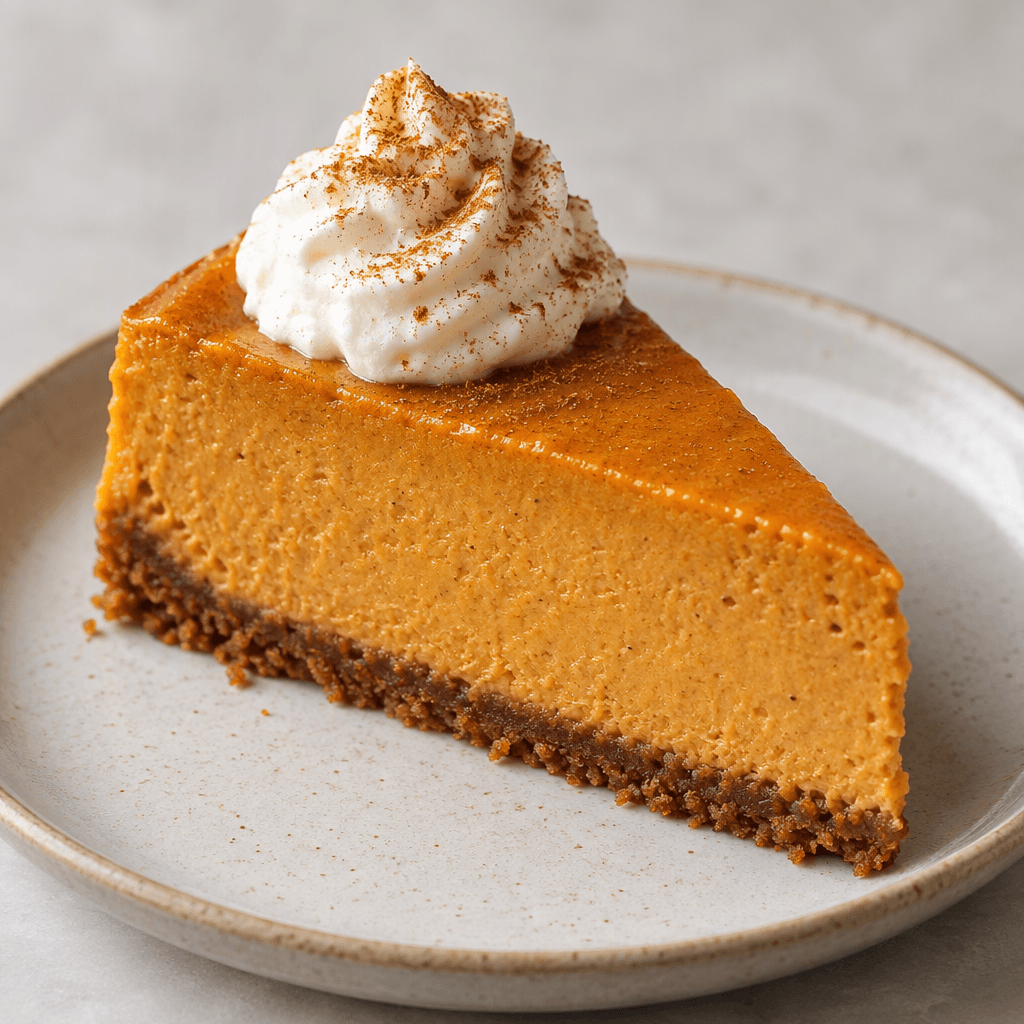
Pumpkin cheesecake Calories
Pumpkin cheesecake; a sweet cake made with cream cheese, pumpkin puree, and spices.
In season: Autumn · Winter
CALORIES
GI
POTASSIUM
FIBER
Quick answer
1 slice (medium) of Pumpkin cheesecake (90 g) has 243 calories. That works out to 270 calories per 100 g. It contains 25.2 g of carbs, 4.6 g of protein, 13.5 g of fat and 1.1 g of fiber. Its 108 µg of Vitamin A covers 12% of the Daily Value. Its glycemic index is 55 (medium), so it raises blood sugar at a moderate pace.
What is Pumpkin cheesecake?
Pumpkin cheesecake combines a creamy cheese filling with pumpkin purée and warming spices, set on a thin crumb crust. It is a seasonal variation of cheesecake especially associated with autumn and Thanksgiving in the United States, though it is now enjoyed in many places.
The filling is smooth, rich and gently spiced, contrasting with the crust’s crisp, crumbly texture. Serve it chilled in a slice, often with coffee or tea; in the US it commonly appears on holiday dessert tables, while elsewhere it makes an appealing café or dinner-party dessert. It is energy-dense for a dessert, with 270 calories per 100 g, and offers relatively little fibre. A smaller slice with unsweetened coffee or tea is an easy way to keep the serving lighter.
Pumpkin cheesecake Nutrition Facts
Selected: 100 g
270
KCAL / 100G
Carbs
28g
· 10% DV
Protein
5.1g
· 10% DV
Fat
15g
· 19% DV
Fiber
1.2g
· 4% DV
DV is the share of the daily value covered, on a 2,000 kcal reference diet.
Calories come from: Carbs 42% · Protein 8% · Fat 50%
Pumpkin cheesecake Vitamins & Minerals
Vitamins
Vitamin A
120µg · 13% DV
B2
0.13mg · 10% DV
B5
0.45mg · 9% DV
B12
0.22µg · 9% DV
Minerals
Phosphorus
95mg · 14% DV
Zinc
1mg · 9% DV
Sodium
210mg · 9% DV
Selenium
5.2µg · 9% DV
How Nutritious Is Pumpkin cheesecake?
Nutrient density
Low
How many vitamins, minerals and how much fiber this food carries per calorie. A high score means a lot of nutrition for few calories.
Satiety score
Low
An EatBetter score computed from fiber, protein and calorie density. A high score means staying full longer on the same calories.
Both scores are calculated per 100 g and do not change with the selected portion. The satiety score is EatBetter's own calculation, not a clinical measure.
Pumpkin cheesecake Glycemic Index
GLYCEMIC INDEX
GLYCEMIC LOAD
Accounts for portion size — a more realistic measure than GI alone.
How to Burn Off Pumpkin cheesecake
To burn the 270 calories in 100 g:
🚶
Walking (5 km/h)
🏃
Running (8 km/h)
🚴
Cycling
🏊
Swimming
Times are calculated with the MET equation for a 70 kg adult. Actual burn varies with your weight, age and pace.
Is Pumpkin cheesecake Processed?
NOVA 3
Processed
1. Unprocessed
2. Minimally Processed
3. Processed
4. Ultra-Processed
NOVA classifies foods into 4 groups by industrial processing. NOVA 1 (unprocessed) is the healthiest.
Does Pumpkin cheesecake Contain Allergens?
Contains these allergens:
Which Diets Is Pumpkin cheesecake Good For?
Vegan
— Not suitable
Vegetarian
✓ Suitable
Gluten-Free
— Not suitable
Dairy-Free
— Not suitable
Mediterranean
— Not suitable
Paleo
— Not suitable
Whole30
— Not suitable
DASH
— Not suitable
Keto
— Not suitable
Low FODMAP
— Not suitable
Pumpkin cheesecake Fat Profile
SATURATED
7.2g
MONOUNSATURATED
4.5g
POLYUNSATURATED
1.1g
Omega 6:3 ratio 7.3:1
Above the ideal 4:1 (7.3:1).
Compare Pumpkin cheesecake
Foods Similar to Pumpkin cheesecake
Frequently Asked Questions About Pumpkin cheesecake
How do you make pumpkin cheesecake?
Pumpkin cheesecake is made by pouring a cream-cheese, pumpkin-purée and spice filling over a crumb crust and baking it. Mix the filling just until smooth, then let the cake cool gradually so it sets evenly and is less likely to crack.
Can you use canned pumpkin for pumpkin cheesecake?
Yes, canned pumpkin works well in pumpkin cheesecake if it is plain pumpkin purée, not sweetened pumpkin pie filling. Pie filling already contains sweeteners and spices, which can throw off the flavor and balance of your recipe.
How do you keep pumpkin cheesecake from cracking?
To help prevent pumpkin cheesecake from cracking, avoid overbeating the filling and exposing the cake to sudden temperature changes. Bake it gently, then leave it in the switched-off oven with the door slightly open before cooling it fully.
Is pumpkin cheesecake the same as pumpkin pie?
No, pumpkin cheesecake contains cream cheese along with pumpkin purée, while pumpkin pie has a pumpkin custard filling without cream cheese. That makes pumpkin cheesecake denser and creamier, with a more pronounced tang from the cheese.
What crust is best for pumpkin cheesecake?
A crumb crust made with graham crackers or digestive biscuits is a popular choice for pumpkin cheesecake. Mix the crumbs with melted butter and press them firmly into the pan so the thin base holds together when you slice the cake.
Does pumpkin cheesecake need a water bath?
A water bath can help pumpkin cheesecake bake more gently and reduce cracking, but it is not essential. If you use one, wrap the springform pan securely so water cannot leak into the crumb crust.
How can you tell when pumpkin cheesecake is done baking?
Pumpkin cheesecake is ready when the outer part looks set but the center still has a slight wobble. It will firm up as it cools and chills, so baking until the center is completely rigid can leave the texture dry.
How long should pumpkin cheesecake chill before serving?
Pumpkin cheesecake needs several hours in the refrigerator to become firm enough to slice cleanly. Let it cool completely first, then cover and chill it; serving it before it is thoroughly cold can make the center soft and messy.
How long does pumpkin cheesecake last in the refrigerator?
Pumpkin cheesecake keeps for about three to four days in the refrigerator when covered and stored promptly. Keep it chilled between servings, since its cream-cheese filling should not be left at room temperature for long.
Can you freeze pumpkin cheesecake?
Yes, pumpkin cheesecake freezes well when wrapped tightly to protect it from freezer odors and drying out. Freeze individual slices for easier serving, then thaw them in the refrigerator; the texture may be slightly softer after thawing.
Have another question about Pumpkin cheesecake?
Ask the AI nutrition coach — calories, portions, alternatives and more, answered in seconds in the app.

Scan calories with your camera
Instant AI nutrition analysis

Nutrition data compiled from USDA FoodData Central and scientific sources.