

Ready & Packaged Foods
All →Vegetables & Legumes
All →Desserts & Confectionery
All →Meat & Protein
All →Grains & Bakery
All →Beverages
All →Milk & Dairy
All →

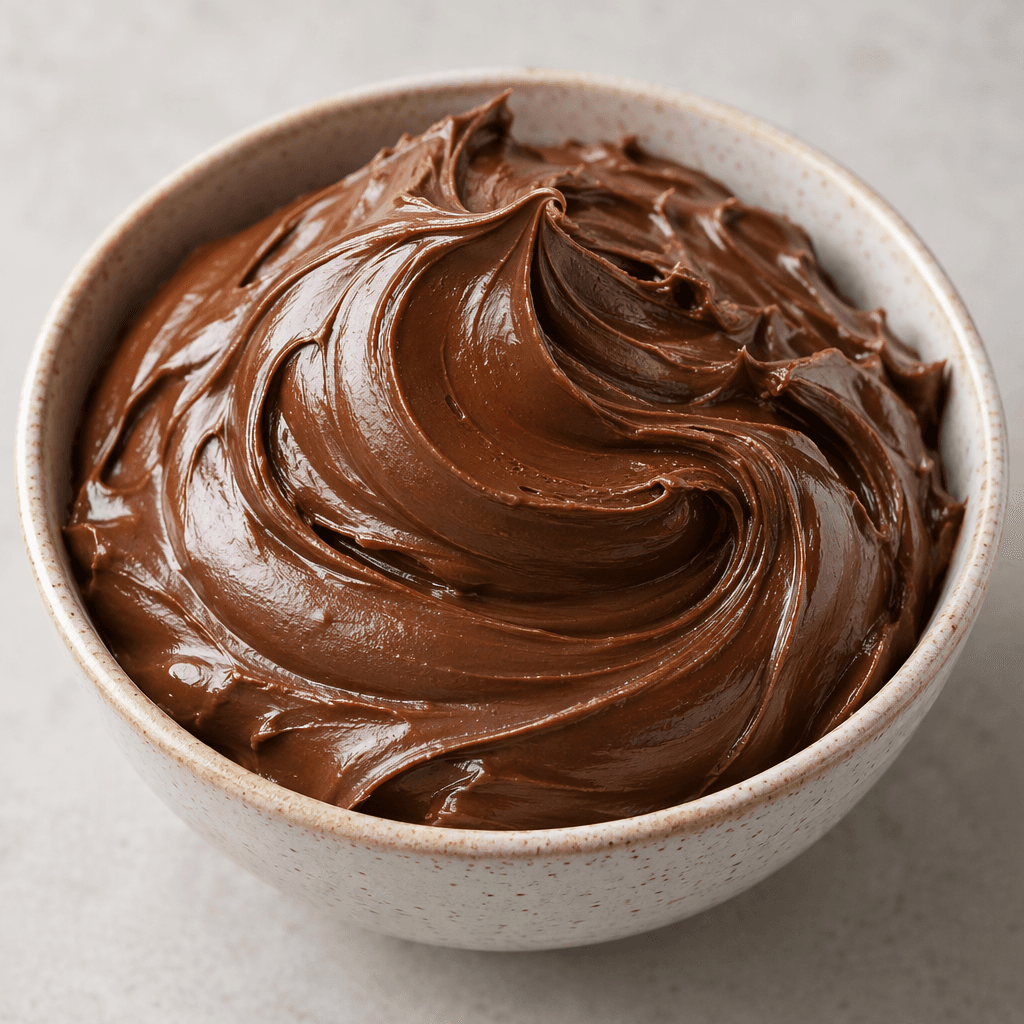
Proteinocn Choconella Calories
High-protein chocolate-hazelnut style spread
CALORIES · 100 G
GI
POTASSIUM · 100 G
FIBER · 100 G
Quick answer
1 tablespoon (medium) of Proteinocn Choconella (20 g) has 103 calories. That works out to 515 calories per 100 g. It contains 6.6 g of carbs, 4.8 g of protein, 6.4 g of fat and 1.6 g of fiber. Its 0.1 mg of Copper covers 12% of the Daily Value. Its glycemic index is 35 (low), so it raises blood sugar slowly.
Proteinocn Choconella Nutrition Facts
Selected: 1 tablespoon (medium) · 20 g
103
KCAL / 20G
Carbs
6.6g
· 2% DV
Protein
4.8g
· 10% DV
Fat
6.4g
· 8% DV
Fiber
1.6g
· 6% DV
DV is the share of the daily value covered, on a 2,000 kcal reference diet.
Calories come from: Carbs 26% · Protein 19% · Fat 55%
Proteinocn Choconella nutrition facts table · 1 tablespoon (medium) (20 g)
| Nutrient | Amount | % DV |
|---|---|---|
| Calories | 103 kcal | |
| Total fat | 6.4 g | 8% |
| Saturated fat | 1.7 g | 9% |
| Trans fat | 0.02 g | |
| Sodium | 19 mg | 1% |
| Total carbohydrate | 6.6 g | 2% |
| Fiber | 1.6 g | 6% |
| Protein | 4.8 g | 10% |
Calories: Calories measure energy. Average daily need is 2,000 kcal. Excess calories are stored as fat, too few cause weight loss.
Carbs: Your body's primary energy source. The brain runs exclusively on carbs. Daily need: 275g.
Protein: Essential for muscle repair and cell growth. Daily need: 50g. Keeps you full and boosts metabolism.
Fat: Needed for hormone production and vitamin absorption. Daily need: 78g. Limit saturated fats, choose unsaturated.
Fiber: Critical for digestive health and satiety. Daily need: 28g. Stabilizes blood sugar, lowers cholesterol.

Log this food in EatBetter
100,000+ people use it
- Get your daily calorie target
- Snap your meal, log it in seconds
- See every vitamin and mineral

📸 Scan the code to get the app free.

How Many Calories in 1 Tablespoon of Proteinocn Choconella?
| Serving | Amount | Calories |
|---|---|---|
| 1 tablespoon (medium) | 20 g | 103 kcal |
| 1 teaspoon (medium) | 7 g | 36 kcal |
| 1 slice (thin) | 15 g | 77 kcal |
| 2 slice (thick) | 30 g | 155 kcal |
| 1 serving (small) | 30 g | 155 kcal |
| 2 tablespoon (double) | 40 g | 206 kcal |
| 1 serving (medium) | 50 g | 258 kcal |
| 1 serving (large) | 80 g | 412 kcal |
| 100 g | 100 g | 515 kcal |
| 1 pack (whole) | 250 g | 1288 kcal |
Calculated from 515 calories per 100 g.
Frequently Asked Questions About Proteinocn Choconella
What is Proteinocn Choconella?
Proteinocn Choconella is a processed, high-protein spread in the chocolate-hazelnut style. It is a spread for meals or snacks, not a protein powder or a stand-alone sports supplement.
Can Proteinocn Choconella replace a protein shake?
No, Proteinocn Choconella is a spread rather than a ready-to-drink shake or protein supplement. It can contribute protein as part of a meal, but it is not a like-for-like replacement for a shake designed to be mixed with liquid.
Does Proteinocn Choconella taste like regular chocolate-hazelnut spread?
Proteinocn Choconella is made in the chocolate-hazelnut spread style, but its exact taste and texture cannot be determined from the nutrition information alone. A higher-protein formulation may feel or taste different from a conventional spread.
What ingredients are in Proteinocn Choconella?
Proteinocn Choconella is described as a high-protein chocolate-hazelnut-style spread, but the available information does not specify its full recipe. The package ingredient list is needed to identify the exact nuts, protein sources, sweeteners, and oils used.
Can you eat Proteinocn Choconella straight from the jar?
Yes, Proteinocn Choconella can be eaten straight from the jar, though spreading a measured amount on toast or adding it to fruit or porridge makes it easier to use as part of a snack or meal.
How should Proteinocn Choconella be stored after opening?
Follow the storage instructions printed on the Proteinocn Choconella package, since the maker’s directions take priority. If refrigeration is not required, keep the jar tightly closed in a cool, dry place away from direct sunlight.
Can Proteinocn Choconella be heated or used in baking?
Yes, Proteinocn Choconella can be used as a filling, topping, or flavouring in baking. Heat may change its consistency, so add it where the recipe calls for a spread or filling rather than assuming it will behave like chocolate.
Is Proteinocn Choconella a good snack before a workout?
Proteinocn Choconella can be a convenient pre-workout snack when you want something sweet, but it is a rich spread rather than a light sports drink. Try it with toast or fruit and allow enough time to digest before exercise.
Can Proteinocn Choconella raise blood sugar?
Yes, Proteinocn Choconella can affect blood sugar because it contains carbohydrates, even though its glycemic index is listed as low. People managing diabetes should consider the portion and the rest of the meal, and follow their clinician’s guidance.
Can Proteinocn Choconella be given to young children?
Proteinocn Choconella may be offered to a child who can safely eat spreads, but it is sticky and rich, so serve a thin layer rather than a large spoonful. Check the package ingredients for any foods the child must avoid.
Proteinocn Choconella Vitamins & Minerals
Vitamins
Vitamin E
0.84mg · 6% DV
Biotin
1.2µg · 4% DV
B2
0.04mg · 3% DV
B3
0.36mg · 2% DV
Minerals
Copper
0.11mg · 12% DV
Phosphorus
58mg · 8% DV
Manganese
0.18mg · 8% DV
Iron
0.96mg · 5% DV
Potassium ⭐
84mg · 2% DV
Sodium
19mg · 1% DV
Proteinocn Choconella Glycemic Index
GLYCEMIC INDEX
GLYCEMIC LOAD
Accounts for portion size — a more realistic measure than GI alone.
How to Burn Off Proteinocn Choconella
To burn the 103 calories in 1 tablespoon (medium) (20 g):
🚶
Walking (5 km/h)
🏃
Running (8 km/h)
🚴
Cycling
🏊
Swimming
Times are calculated with the MET equation for a 70 kg adult. Actual burn varies with your weight, age and pace.
What is Proteinocn Choconella?
Proteinocn Choconella is a packaged, spreadable product in the style of chocolate-hazelnut spread, with a notably high protein content. Its sweet cocoa-and-nut flavour and smooth, thick texture make it easy to spread on toast or bread. It also works on pancakes, stirred into porridge, or served with sliced fruit as a snack; use it wherever you might reach for a sweet spread.
It provides 24 g of protein per 100 g, but is also energy-dense, so a modest layer can go a long way. Pair it with whole-grain toast and fresh fruit for a more rounded breakfast, or use a small spoonful to add a chocolatey note to plain yoghurt.
How Nutritious Is Proteinocn Choconella?
Nutrient density
Medium
How many vitamins, minerals and how much fiber this food carries per calorie. A high score means a lot of nutrition for few calories.
Satiety score
High
An EatBetter score computed from fiber, protein and calorie density. A high score means staying full longer on the same calories.
Both scores are calculated per 100 g and do not change with the selected portion. The satiety score is EatBetter's own calculation, not a clinical measure.
Is Proteinocn Choconella Processed?
NOVA 3
Processed
1. Unprocessed
2. Minimally Processed
3. Processed
4. Ultra-Processed
NOVA classifies foods into 4 groups by industrial processing. NOVA 1 (unprocessed) is the healthiest.
Does Proteinocn Choconella Contain Allergens?
Contains these allergens:
Which Diets Is Proteinocn Choconella Good For?
Vegan
— Not suitable
Vegetarian
✓ Suitable
Gluten-Free
✓ Suitable
Dairy-Free
— Not suitable
Mediterranean
✓ Suitable
Paleo
— Not suitable
Whole30
— Not suitable
DASH
— Not suitable
Keto
— Not suitable
Low FODMAP
— Not suitable
Proteinocn Choconella Fat Profile
SATURATED
1.7g
MONOUNSATURATED
3.24g
POLYUNSATURATED
1.02g
Omega 6:3 ratio 48:1
Above the ideal 4:1 (48:1).
Compare Proteinocn Choconella
Foods Similar to Proteinocn Choconella
Have another question about Proteinocn Choconella?
Ask the AI nutrition coach — calories, portions, alternatives and more, answered in seconds in the app.

Scan calories with your camera
Instant AI nutrition analysis

Nutrition data compiled from USDA FoodData Central and scientific sources.