

Ready & Packaged Foods
All →Vegetables & Legumes
All →Desserts & Confectionery
All →Meat & Protein
All →Grains & Bakery
All →Beverages
All →Milk & Dairy
All →

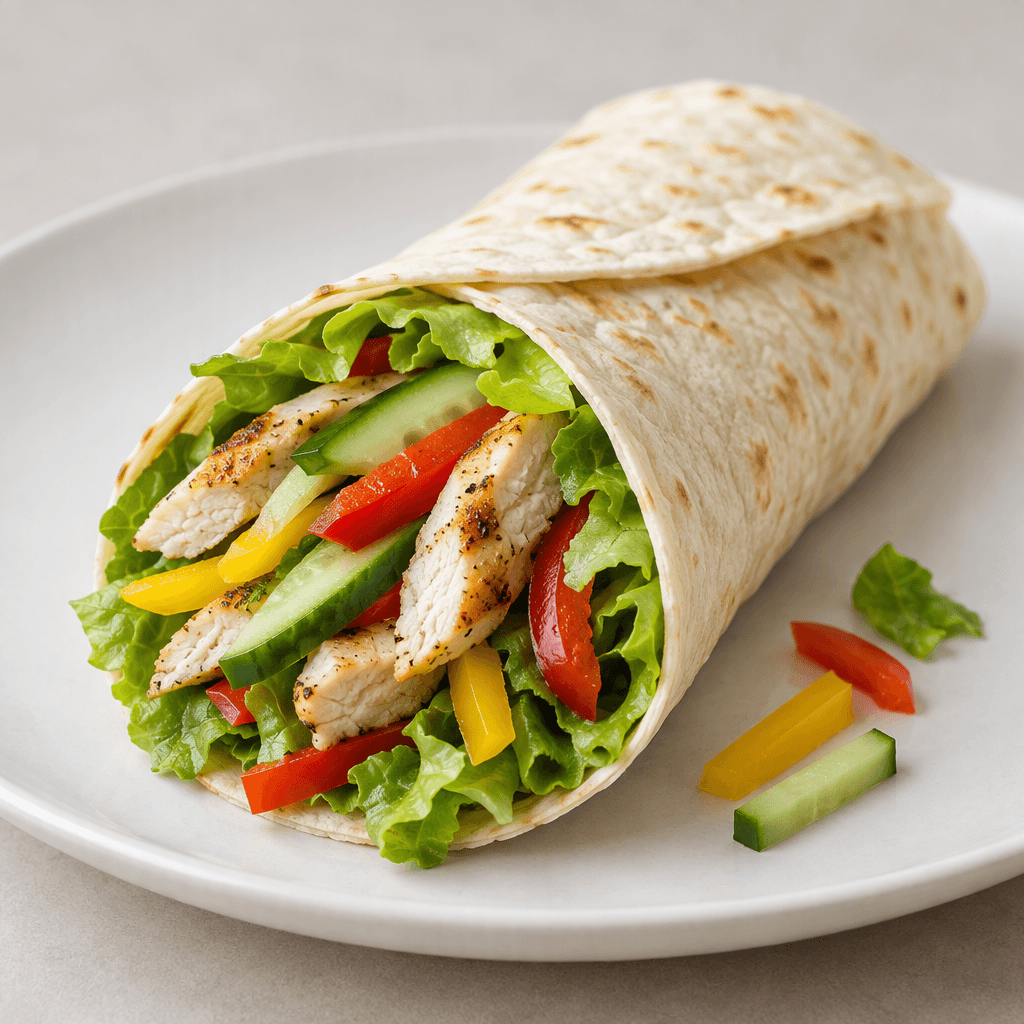
Protein wrap Calories
High-protein, low-carb, healthy sandwich alternative
In season: Spring · Summer · Autumn · Winter
CALORIES
GI
POTASSIUM
FIBER
Quick answer
1 piece (medium) of Protein wrap (120 g) has 204 calories. That works out to 170 calories per 100 g. It contains 12 g of carbs, 21.6 g of protein, 7.2 g of fat and 3.6 g of fiber. Its 0.6 µg of B12 covers 25% of the Daily Value. Its glycemic index is 35 (low), so it raises blood sugar slowly.
What is Protein wrap?
A protein wrap is a thin, flexible flatbread made with ingredients chosen to boost its protein content. It can be bought ready-made or prepared at home, and works as a handheld alternative to a sandwich. The exact flavour and texture vary by recipe, but it is generally mild and pliable, letting the filling take centre stage. Grilled chicken, lettuce, peppers and cucumber make a fresh, familiar combination; beans, eggs or roasted vegetables also work well.
It is handy for lunch or a packed meal, whether you’re eating at home or on the go. The standout nutritional feature is its protein content: one hundred grams provides 18 grams, alongside some fibre. For a lighter filling, pile on crunchy vegetables and use a modest amount of dressing; serve with fruit or a simple salad if you’d like a more complete meal.
Protein wrap Nutrition Facts
Selected: 100 g
170
KCAL / 100G
Carbs
10g
· 4% DV
Protein
18g
· 36% DV
Fat
6g
· 8% DV
Fiber
3g
· 11% DV
DV is the share of the daily value covered, on a 2,000 kcal reference diet.
Calories come from: Carbs 24% · Protein 43% · Fat 33%

Log this food in EatBetter
100,000+ people use it
- Get your daily calorie target
- Snap your meal, log it in seconds
- See every vitamin and mineral

📸 Scan the code to get the app free.

Protein wrap Vitamins & Minerals
Vitamins
B12
0.5µg · 21% DV
B2
0.18mg · 14% DV
Biotin
4µg · 13% DV
B3
2.1mg · 13% DV
Minerals
Phosphorus
120mg · 17% DV
Sodium
350mg · 15% DV
Selenium
7µg · 13% DV
Potassium ⭐
220mg · 6% DV
Copper
0mg · 0% DV
How Nutritious Is Protein wrap?
Nutrient density
Medium
How many vitamins, minerals and how much fiber this food carries per calorie. A high score means a lot of nutrition for few calories.
Satiety score
High
An EatBetter score computed from fiber, protein and calorie density. A high score means staying full longer on the same calories.
Both scores are calculated per 100 g and do not change with the selected portion. The satiety score is EatBetter's own calculation, not a clinical measure.
Protein wrap Glycemic Index
GLYCEMIC INDEX
GLYCEMIC LOAD
Accounts for portion size — a more realistic measure than GI alone.
How to Burn Off Protein wrap
To burn the 170 calories in 100 g:
🚶
Walking (5 km/h)
🏃
Running (8 km/h)
🚴
Cycling
🏊
Swimming
Times are calculated with the MET equation for a 70 kg adult. Actual burn varies with your weight, age and pace.
Is Protein wrap Processed?
NOVA 3
Processed
1. Unprocessed
2. Minimally Processed
3. Processed
4. Ultra-Processed
NOVA classifies foods into 4 groups by industrial processing. NOVA 1 (unprocessed) is the healthiest.
Does Protein wrap Contain Allergens?
Contains these allergens:
Which Diets Is Protein wrap Good For?
Vegan
— Not suitable
Vegetarian
— Not suitable
Gluten-Free
— Not suitable
Dairy-Free
— Not suitable
Mediterranean
✓ Suitable
Paleo
— Not suitable
Whole30
— Not suitable
DASH
— Not suitable
Keto
— Not suitable
Low FODMAP
— Not suitable
Protein wrap Fat Profile
SATURATED
1.2g
MONOUNSATURATED
2.2g
POLYUNSATURATED
1.1g
Omega 6:3 ratio 7.5:1
Above the ideal 4:1 (7.5:1).
Compare Protein wrap
Foods Similar to Protein wrap
Frequently Asked Questions About Protein wrap
What is a protein wrap made of?
A protein wrap is made from a thin wrap designed to provide more protein than a conventional tortilla, but its ingredients vary by recipe and brand. Some use eggs or dairy proteins, while others use added protein ingredients; check the ingredient list if you need to avoid a specific food.
How do you make a protein wrap at home?
You can make a homemade protein wrap by blending eggs with cottage cheese or another soft cheese, then cooking the mixture as a thin layer in a nonstick pan. Let it cool before filling so it is easier to handle and less likely to tear.
Do you need to heat a protein wrap before filling it?
No, a protein wrap does not always need heating, but warming it briefly in a dry pan can make it more flexible. Avoid overcooking it, since a dry wrap is more likely to crack when you fold or roll it.
How do you stop a protein wrap from tearing?
Warm the protein wrap briefly, keep the filling in a narrow line down the center, and leave the edges clear. Fold the sides in before rolling. Wet fillings and overstuffing are common reasons a wrap splits or leaks.
Can you meal-prep protein wraps for the week?
Yes, you can prepare protein wraps ahead, but assembled wraps may turn soggy as vegetables release moisture. For better texture, store the wrap and filling separately, or use dry, cooled fillings and pack any dressing on the side.
Can you freeze protein wraps?
Yes, plain protein wraps can be frozen with parchment between them so they separate easily. Thaw one before warming it in a pan. Freezing a fully assembled wrap is less successful because lettuce, cucumber, and sauces can become watery.
What is the best filling for a protein wrap after a workout?
A protein wrap after a workout can be filled with chicken, eggs, tuna, or beans plus vegetables. Choose a filling that is easy to carry and eat; add a carbohydrate-rich side if your workout was long or particularly demanding.
Can you use a protein wrap for a quesadilla?
Yes, a protein wrap can be used for a quesadilla. Fill one half with cheese and other cooked fillings, fold it over, and heat gently in a pan until warmed through. Lower heat helps the wrap hold together without becoming brittle.
Is a protein wrap good for weight loss?
A protein wrap can fit into a weight-loss meal because a protein-rich filling and vegetables can make it satisfying. The wrap itself does not cause weight loss, and generous cheese, creamy sauces, or processed-meat fillings can make the meal more substantial.
How long does a chicken protein wrap last in the fridge?
A chicken protein wrap is best eaten within three to four days when refrigerated promptly in a covered container. Keep it chilled rather than leaving it at room temperature, and store wet sauces separately to help prevent the wrap from turning soggy.
Have another question about Protein wrap?
Ask the AI nutrition coach — calories, portions, alternatives and more, answered in seconds in the app.

Scan calories with your camera
Instant AI nutrition analysis

Nutrition data compiled from USDA FoodData Central and scientific sources.