

Ready & Packaged Foods
All →Vegetables & Legumes
All →Desserts & Confectionery
All →Meat & Protein
All →Grains & Bakery
All →Beverages
All →Milk & Dairy
All →

Protein Pudding Calories
High-protein, low-fat dessert
In season: Spring · Summer · Autumn · Winter
CALORIES
GI
POTASSIUM
FIBER
Quick answer
1 cup (medium) of Protein Pudding (125 g) has 100 calories. That works out to 80 calories per 100 g. It contains 7.5 g of carbs, 12.5 g of protein, 1.9 g of fat and 0.6 g of fiber. Its 0.6 µg of B12 covers 26% of the Daily Value. Its glycemic index is 35 (low), so it raises blood sugar slowly.
What is Protein Pudding?
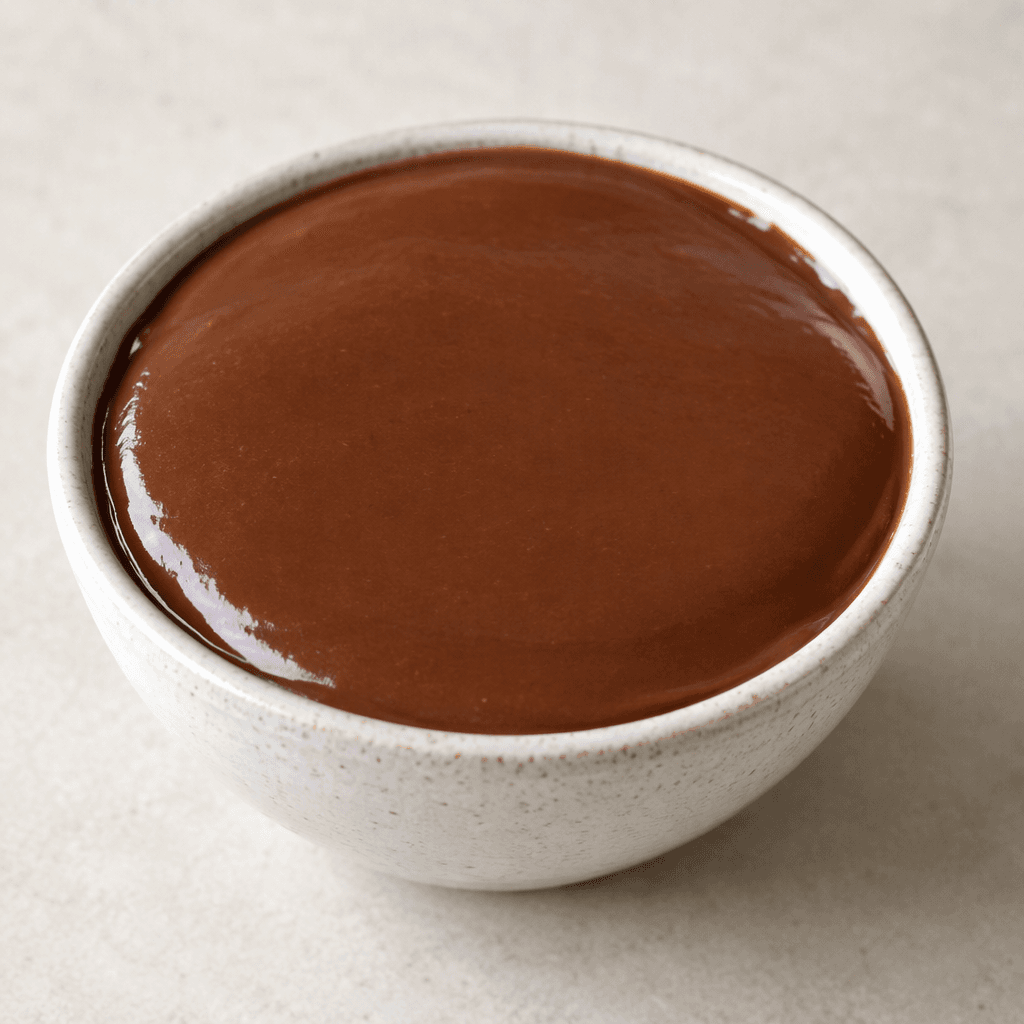
Protein Pudding is a ready-to-eat, spoonable dessert, usually made with a milk base and added protein. It comes in different flavours; the version shown is chocolate-coloured, thick and smooth. Served chilled, it has a creamy, glossy texture and works as a convenient alternative to a more traditional pudding.
You can have it as an afternoon snack, after a meal or alongside tea or coffee. It is also easy to dress up with fresh fruit, oats or a few nuts. Its nutritional profile is notable for relatively high protein and little fat: each 100 g provides 10 g of protein and 1.5 g of fat. For a lighter topping, choose berries or sliced banana rather than a sweet sauce.
Protein Pudding Nutrition Facts
Selected: 100 g
80
KCAL / 100G
Carbs
6g
· 2% DV
Protein
10g
· 20% DV
Fat
1.5g
· 2% DV
Fiber
0.5g
· 2% DV
DV is the share of the daily value covered, on a 2,000 kcal reference diet.
Calories come from: Carbs 31% · Protein 52% · Fat 17%
Protein Pudding Vitamins & Minerals
Vitamins
B12
0.5µg · 21% DV
B2
0.15mg · 12% DV
B5
0.3mg · 6% DV
Biotin
1.5µg · 5% DV
Minerals
Phosphorus
90mg · 13% DV
Calcium
120mg · 12% DV
Zinc
1mg · 9% DV
Selenium
2µg · 4% DV
How Nutritious Is Protein Pudding?
Nutrient density
Medium
How many vitamins, minerals and how much fiber this food carries per calorie. A high score means a lot of nutrition for few calories.
Satiety score
Medium
An EatBetter score computed from fiber, protein and calorie density. A high score means staying full longer on the same calories.
Both scores are calculated per 100 g and do not change with the selected portion. The satiety score is EatBetter's own calculation, not a clinical measure.
Protein Pudding Glycemic Index
GLYCEMIC INDEX
GLYCEMIC LOAD
Accounts for portion size — a more realistic measure than GI alone.
How to Burn Off Protein Pudding
To burn the 80 calories in 100 g:
🚶
Walking (5 km/h)
🏃
Running (8 km/h)
🚴
Cycling
🏊
Swimming
Times are calculated with the MET equation for a 70 kg adult. Actual burn varies with your weight, age and pace.
Is Protein Pudding Processed?
NOVA 3
Processed
1. Unprocessed
2. Minimally Processed
3. Processed
4. Ultra-Processed
NOVA classifies foods into 4 groups by industrial processing. NOVA 1 (unprocessed) is the healthiest.
Does Protein Pudding Contain Allergens?
Contains these allergens:
Which Diets Is Protein Pudding Good For?
Vegan
— Not suitable
Vegetarian
✓ Suitable
Gluten-Free
— Not suitable
Dairy-Free
— Not suitable
Mediterranean
✓ Suitable
Paleo
— Not suitable
Whole30
— Not suitable
DASH
— Not suitable
Keto
— Not suitable
Low FODMAP
— Not suitable
Protein Pudding Fat Profile
SATURATED
0.7g
MONOUNSATURATED
0.4g
POLYUNSATURATED
0.2g
Omega 6:3 ratio 2.7:1
Below the ideal 4:1 — a good omega balance.
Compare Protein Pudding
Foods Similar to Protein Pudding
Frequently Asked Questions About Protein Pudding
Is Protein Pudding good for weight loss?
Protein Pudding can fit into a weight-loss eating plan as a portion-controlled dessert, but it does not cause weight loss by itself. Its protein may make it more filling than a standard pudding; having extra servings can still add substantially to your overall intake.
What is Protein Pudding made of?
Protein Pudding is usually made with milk proteins, flavourings such as cocoa, and ingredients that thicken or sweeten it. Recipes vary by brand, so one product may use different protein sources or sweeteners from another.
How is Protein Pudding different from regular pudding?
Protein Pudding is formulated to provide more protein and typically less fat than regular pudding. Regular pudding is mainly a sweet dessert, while protein versions often use milk protein to give them their thicker texture and higher protein content.
Can Protein Pudding replace a meal?
Protein Pudding is better treated as a snack or dessert than a complete meal. It may provide protein, but a meal usually needs a wider range of foods to supply enough energy and a variety of nutrients.
Is Protein Pudding a good post-workout snack?
Yes, Protein Pudding is a convenient post-workout snack because it provides protein without much preparation. It can be useful when you want something quick, but pair it with other food if you need a more substantial meal after training.
How do you make Protein Pudding at home?
Blend milk or thick yogurt with cocoa and protein powder, then chill the mixture until it thickens. Add the powder gradually to avoid lumps; the amount of liquid needed depends on the type of protein powder and the texture you want.
Why does Protein Pudding turn watery or grainy?
Protein Pudding can turn watery or grainy if it is frozen and thawed, stored too long after opening, or made with a protein powder that does not mix smoothly. Stirring gently may improve the texture, but it will not restore a pudding that has spoiled.
Can you freeze Protein Pudding?
You can freeze Protein Pudding, but freezing often changes its smooth texture. After thawing, it may separate or become grainy, so refrigeration is a better choice if you want to keep it tasting and feeling like pudding.
What can you add to Protein Pudding?
Protein Pudding goes well with fresh berries, sliced banana, chopped nuts, or a little granola. Add toppings just before serving to keep crunchy ingredients from becoming soft, and use a modest amount if you want the pudding to remain a light snack.
Does Protein Pudding need to be refrigerated after opening?
Yes, refrigerate Protein Pudding after opening and keep the container covered. Eat the remaining portion promptly, since opening exposes it to air and handling; follow the package’s storage instructions for that specific product.
Have another question about Protein Pudding?
Ask the AI nutrition coach — calories, portions, alternatives and more, answered in seconds in the app.

Scan calories with your camera
Instant AI nutrition analysis

Nutrition data compiled from USDA FoodData Central and scientific sources.