

Ready & Packaged Foods
All →Vegetables & Legumes
All →Desserts & Confectionery
All →Meat & Protein
All →Grains & Bakery
All →Beverages
All →Milk & Dairy
All →

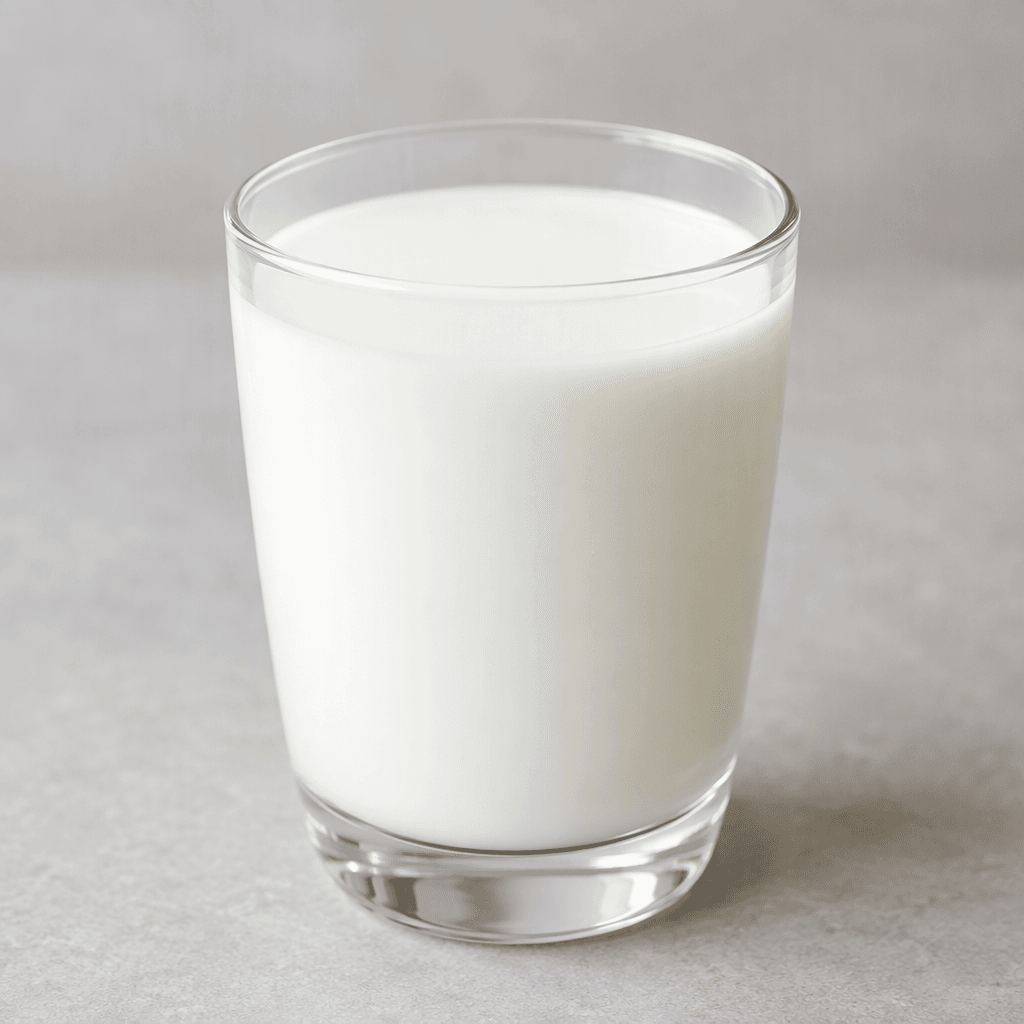
Protein lactose-free milk Calories
High protein, lactose-free, milk alternative
In season: Spring · Summer · Autumn · Winter
CALORIES
GI
POTASSIUM
FIBER
Quick answer
1 cup (medium) of Protein lactose-free milk (250 g) has 120 calories. That works out to 48 calories per 100 g. It contains 10 g of carbs, 15 g of protein, 2.5 g of fat and 0 g of fiber. Its 1.3 µg of B12 covers 52% of the Daily Value. Its glycemic index is 30 (low), so it raises blood sugar slowly.
What is Protein lactose-free milk?
Protein lactose-free milk is dairy milk with its lactose broken down and its protein content increased. Unlike plant-based alternatives, it remains a cow’s-milk product. It usually tastes a little sweeter than regular milk, while the added protein can give it a slightly fuller body, depending on the brand.
Drink it chilled, pour it over cereal, or use it in coffee, smoothies and everyday cooking. It offers a convenient way to add protein, with 6 g per 100 g, while keeping carbohydrates and fat relatively low. Pair it with oats and fruit for a more substantial breakfast, or use it in place of regular milk in recipes when you want a lactose-free option.
Protein lactose-free milk Nutrition Facts
Selected: 100 g
48
KCAL / 100G
Carbs
4g
· 1% DV
Protein
6g
· 12% DV
Fat
1g
· 1% DV
Fiber
0g
· 0% DV
DV is the share of the daily value covered, on a 2,000 kcal reference diet.
Calories come from: Carbs 33% · Protein 49% · Fat 18%
Protein lactose-free milk Vitamins & Minerals
Vitamins
B12
0.5µg · 21% DV
B2
0.18mg · 14% DV
Biotin
3.5µg · 12% DV
B5
0.35mg · 7% DV
Minerals
Phosphorus
95mg · 14% DV
Calcium
120mg · 12% DV
Iodine
15µg · 10% DV
Zinc
1mg · 9% DV
How Nutritious Is Protein lactose-free milk?
Nutrient density
High
How many vitamins, minerals and how much fiber this food carries per calorie. A high score means a lot of nutrition for few calories.
Satiety score
Medium
An EatBetter score computed from fiber, protein and calorie density. A high score means staying full longer on the same calories.
Both scores are calculated per 100 g and do not change with the selected portion. The satiety score is EatBetter's own calculation, not a clinical measure.
Protein lactose-free milk Glycemic Index
GLYCEMIC INDEX
GLYCEMIC LOAD
Accounts for portion size — a more realistic measure than GI alone.
How to Burn Off Protein lactose-free milk
To burn the 48 calories in 100 g:
🚶
Walking (5 km/h)
🏃
Running (8 km/h)
🚴
Cycling
🏊
Swimming
Times are calculated with the MET equation for a 70 kg adult. Actual burn varies with your weight, age and pace.
Is Protein lactose-free milk Processed?
NOVA 3
Processed
1. Unprocessed
2. Minimally Processed
3. Processed
4. Ultra-Processed
NOVA classifies foods into 4 groups by industrial processing. NOVA 1 (unprocessed) is the healthiest.
Does Protein lactose-free milk Contain Allergens?
Contains these allergens:
Which Diets Is Protein lactose-free milk Good For?
Vegan
— Not suitable
Vegetarian
✓ Suitable
Gluten-Free
✓ Suitable
Dairy-Free
— Not suitable
Mediterranean
✓ Suitable
Paleo
— Not suitable
Whole30
— Not suitable
DASH
— Not suitable
Keto
— Not suitable
Low FODMAP
— Not suitable
Protein lactose-free milk Fat Profile
SATURATED
0.65g
MONOUNSATURATED
0.25g
POLYUNSATURATED
0.07g
Omega 6:3 ratio 2:1
Below the ideal 4:1 — a good omega balance.
Compare Protein lactose-free milk
Foods Similar to Protein lactose-free milk
Frequently Asked Questions About Protein lactose-free milk
Is protein lactose-free milk suitable for people with lactose intolerance?
Yes, many people with lactose intolerance can drink protein lactose-free milk because its lactose has been broken down or removed. It is still dairy milk, so it is not suitable for someone with a milk-protein allergy.
Why does protein lactose-free milk taste sweeter than regular milk?
Protein lactose-free milk can taste sweeter because breaking lactose into simpler sugars makes the sweetness easier to notice. That does not necessarily mean sugar has been added; check the ingredients if you need to know whether a particular product contains added sugar.
How is protein lactose-free milk made?
Protein lactose-free milk is usually made by treating cow’s milk with lactase to break down lactose, then increasing its protein through filtration or added milk proteins. The exact process and ingredients vary between products.
Can you put protein lactose-free milk in coffee?
Yes, protein lactose-free milk works in coffee and can be steamed or frothed. Its proteins may react to very hot, acidic coffee and make it look grainy; warming the milk gently and adding coffee gradually can help.
Can protein lactose-free milk be heated or boiled?
Yes, protein lactose-free milk can be heated for drinks, sauces, and cooking. Avoid prolonged boiling, which can alter its taste and texture; warm it gently and stir, especially when adding it to acidic foods.
How long does protein lactose-free milk last after opening?
Opened protein lactose-free milk should be kept refrigerated and tightly closed. How long it lasts depends on whether it is UHT or pasteurized and on the package directions; discard it if it smells sour or develops an unusual texture.
What is the difference between protein lactose-free milk and regular lactose-free milk?
Protein lactose-free milk has been made to contain more protein, while regular lactose-free milk has had its lactose broken down or removed. Both remain dairy milk, and the protein content and thickness vary by product.
Can people with a milk allergy drink protein lactose-free milk?
No, protein lactose-free milk is not suitable for people with a milk allergy. Removing or breaking down lactose does not remove milk proteins, which are what trigger reactions in people with a milk-protein allergy.
Can you freeze protein lactose-free milk?
Yes, you can freeze protein lactose-free milk, but it may separate or turn grainy when thawed. Thaw it in the refrigerator and shake it well; if the texture is unpleasant for drinking, use it in cooking instead.
Can children drink protein lactose-free milk?
Yes, some children can drink protein lactose-free milk, but a high-protein product is not automatically the best everyday choice for every child. Do not give it to a child with a milk allergy, and ask a pediatrician before using it regularly for a young child.
Have another question about Protein lactose-free milk?
Ask the AI nutrition coach — calories, portions, alternatives and more, answered in seconds in the app.

Scan calories with your camera
Instant AI nutrition analysis

Nutrition data compiled from USDA FoodData Central and scientific sources.