

Ready & Packaged Foods
All →Vegetables & Legumes
All →Desserts & Confectionery
All →Meat & Protein
All →Grains & Bakery
All →Beverages
All →Milk & Dairy
All →

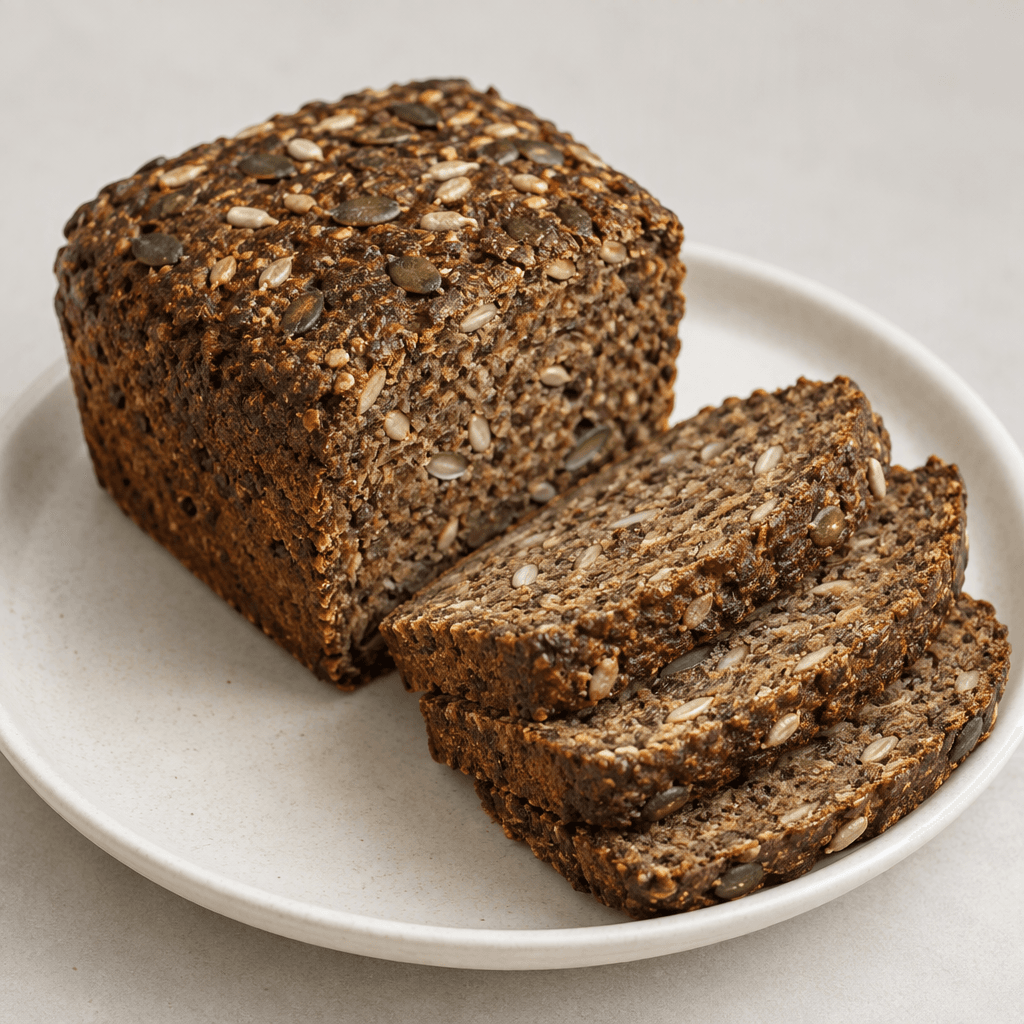
Protein bread Calories
High-protein, fiber-rich, lower-carb bread
In season: Spring · Summer · Autumn · Winter
CALORIES
GI
POTASSIUM
FIBER
Quick answer
1 slice (medium) of Protein bread (40 g) has 92 calories. That works out to 230 calories per 100 g. It contains 5.2 g of carbs, 8 g of protein, 2.8 g of fat and 3.2 g of fiber. Its 0.1 mg of B1 covers 8% of the Daily Value. Its glycemic index is 35 (low), so it raises blood sugar slowly.
What is Protein bread?
Protein bread is a dense loaf made with ingredients that boost its protein content, often alongside seeds such as sunflower or pumpkin. Recipes vary, but it is commonly firm and coarse-textured, with a darker crumb than many everyday loaves.
Enjoy it at breakfast, toasted or plain, or use it for sandwiches with eggs, cheese, vegetables or other favourite fillings. Its protein and fibre content is relatively high, while its carbohydrate content is lower than that of many standard breads; it provides 20 g of protein per 100 g. Because the slices can be substantial, pair one with fresh vegetables or a light topping for a balanced, satisfying meal.
Protein bread Nutrition Facts
Selected: 100 g
230
KCAL / 100G
Carbs
13g
· 5% DV
Protein
20g
· 40% DV
Fat
7g
· 9% DV
Fiber
8g
· 29% DV
DV is the share of the daily value covered, on a 2,000 kcal reference diet.
Calories come from: Carbs 27% · Protein 41% · Fat 32%
Protein bread Vitamins & Minerals
Vitamins
B1
0.25mg · 21% DV
B2
0.18mg · 14% DV
B3
2.1mg · 13% DV
B6
0.18mg · 11% DV
Minerals
Phosphorus
120mg · 17% DV
Sodium
350mg · 15% DV
Selenium
8µg · 15% DV
Iron
2mg · 11% DV
How Nutritious Is Protein bread?
Nutrient density
Medium
How many vitamins, minerals and how much fiber this food carries per calorie. A high score means a lot of nutrition for few calories.
Satiety score
High
An EatBetter score computed from fiber, protein and calorie density. A high score means staying full longer on the same calories.
Both scores are calculated per 100 g and do not change with the selected portion. The satiety score is EatBetter's own calculation, not a clinical measure.
Protein bread Glycemic Index
GLYCEMIC INDEX
GLYCEMIC LOAD
Accounts for portion size — a more realistic measure than GI alone.
How to Burn Off Protein bread
To burn the 230 calories in 100 g:
🚶
Walking (5 km/h)
🏃
Running (8 km/h)
🚴
Cycling
🏊
Swimming
Times are calculated with the MET equation for a 70 kg adult. Actual burn varies with your weight, age and pace.
Is Protein bread Processed?
NOVA 3
Processed
1. Unprocessed
2. Minimally Processed
3. Processed
4. Ultra-Processed
NOVA classifies foods into 4 groups by industrial processing. NOVA 1 (unprocessed) is the healthiest.
Does Protein bread Contain Allergens?
Contains these allergens:
Which Diets Is Protein bread Good For?
Vegan
— Not suitable
Vegetarian
✓ Suitable
Gluten-Free
— Not suitable
Dairy-Free
— Not suitable
Mediterranean
— Not suitable
Paleo
— Not suitable
Whole30
— Not suitable
DASH
— Not suitable
Keto
— Not suitable
Low FODMAP
— Not suitable
Protein bread Fat Profile
SATURATED
1.2g
MONOUNSATURATED
2.5g
POLYUNSATURATED
2g
Omega 6:3 ratio 4.8:1
Above the ideal 4:1 (4.8:1).
Compare Protein bread
Foods Similar to Protein bread
Frequently Asked Questions About Protein bread
What is protein bread, and how is it different from regular bread?
Protein bread is bread made with ingredients chosen to raise its protein content, such as seeds, soy or other legume flours, or wheat protein. Compared with many regular loaves, it often has a denser crumb, though recipes vary.
Is protein bread healthy?
Protein bread can be a useful way to add protein and fibre to a meal. Its overall nutritional value still depends on the recipe and what you eat with it, so pair it with nourishing toppings rather than relying on the bread alone.
Does protein bread help with weight loss?
Protein bread does not cause weight loss by itself. Its protein and fibre may help some people feel satisfied for longer, but toppings and the rest of the meal matter too; using it as a direct replacement for another bread is not a guarantee.
What is protein bread made of?
Protein bread recipes commonly combine wheat flour or wheat protein with seeds, soy, or other legume ingredients. Some versions also use oats or added protein powder. The exact ingredients differ, so one loaf’s recipe cannot be assumed to describe every protein bread.
Is protein bread keto-friendly?
Some protein breads may fit a lower-carbohydrate eating plan, but the name alone does not make a loaf keto-friendly. Recipes vary, and some contain enough flour or other carbohydrate-rich ingredients to affect whether it fits your chosen daily limit.
Can people with diabetes eat protein bread?
People with diabetes can include protein bread in a meal, but its carbohydrate content and serving size vary between products. Blood glucose responses are individual, so a diabetes care professional can help fit a particular loaf into a personal meal plan.
Why is protein bread so dense?
Protein bread is often dense because seeds, added protein, and fibre-rich ingredients make the dough heavier and less airy than a typical wheat loaf. Letting it cool fully before slicing can also help its firm crumb hold together.
How do you make protein bread at home?
To make protein bread at home, combine a suitable flour with seeds and a protein-rich ingredient such as soy or wheat protein, then add the recipe’s liquid and leavening. Bake it in a loaf pan; changing the flour can alter how much liquid the dough needs.
How should you store protein bread?
Keep protein bread sealed in a cool, dry place and use it while it is fresh. Dense, seeded loaves can still develop mould, especially in warm or humid conditions; freeze sliced portions if you will not finish the loaf soon.
Can you toast protein bread?
Yes, protein bread can be toasted. Its dense, seeded slices may need a little longer than ordinary sandwich bread, so toast until the surface is crisp without leaving it unattended, as seeds can brown quickly.
Have another question about Protein bread?
Ask the AI nutrition coach — calories, portions, alternatives and more, answered in seconds in the app.

Scan calories with your camera
Instant AI nutrition analysis

Nutrition data compiled from USDA FoodData Central and scientific sources.