

Ready & Packaged Foods
All →Vegetables & Legumes
All →Desserts & Confectionery
All →Meat & Protein
All →Grains & Bakery
All →Beverages
All →Milk & Dairy
All →

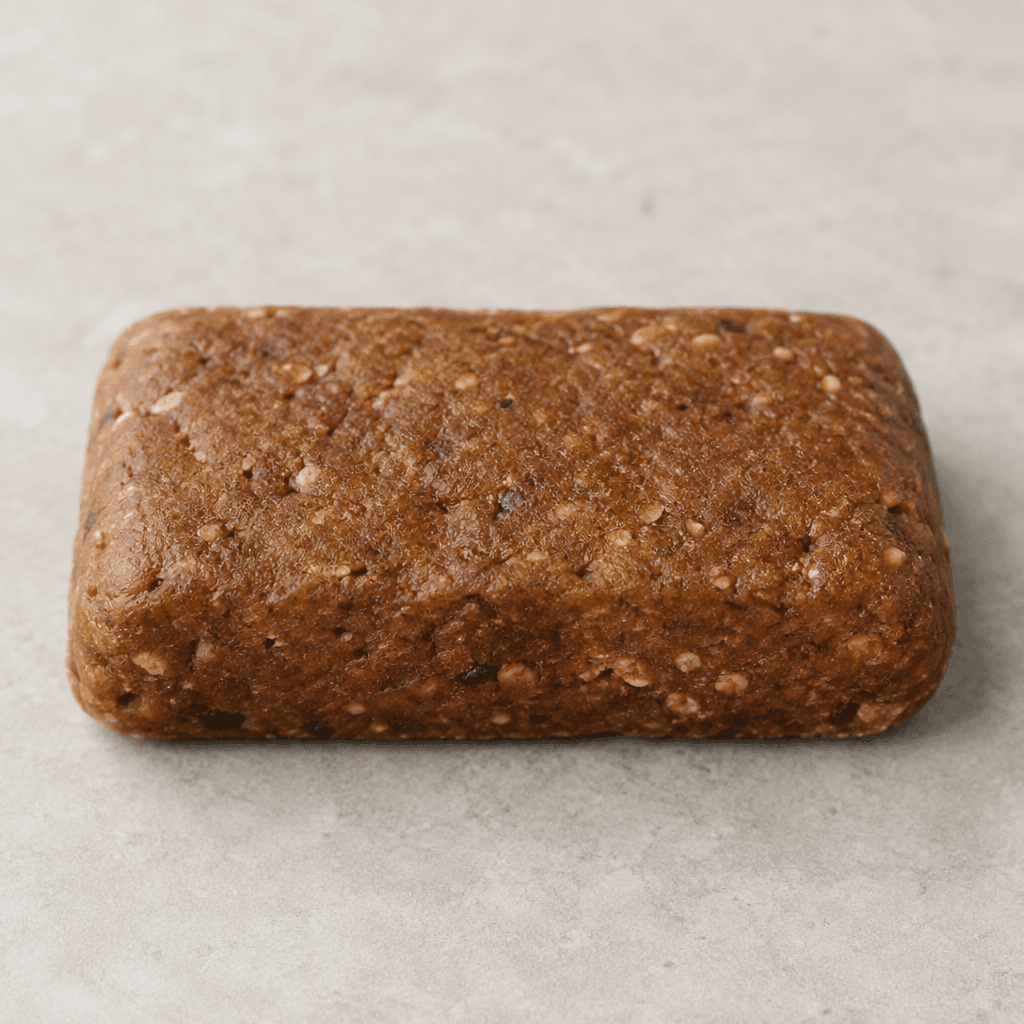
Protein Bar (Sugar-Free) Calories
High protein, sugar-free, low sugar, snack
CALORIES
GI
POTASSIUM
FIBER
Quick answer
1 piece (medium) of Protein Bar (Sugar-Free) (50 g) has 160 calories. That works out to 320 calories per 100 g. It contains 9 g of carbs, 15 g of protein, 5 g of fat and 4 g of fiber. Its 0.1 mg of Copper covers 10% of the Daily Value. Its glycemic index is 25 (low), so it raises blood sugar slowly.
What is Protein Bar (Sugar-Free)?
A sugar-free protein bar is a compact, ready-to-eat snack formulated to provide more protein than a typical sweet bar. Bars in this category are made by combining protein ingredients with components that hold them together; the exact ingredients and texture vary by product. This one is described as dense, with a slightly uneven surface, so it is easy to carry and eat without preparation.
People often reach for one between meals, after exercise, or while travelling, sometimes with coffee or tea. “Sugar-free” does not mean carbohydrate-free, but its 30 g of protein per 100 g makes it a protein-focused snack. Pair it with fruit or plain yoghurt if you want a more substantial break.
Protein Bar (Sugar-Free) Nutrition Facts
Selected: 100 g
320
KCAL / 100G
Carbs
18g
· 7% DV
Protein
30g
· 60% DV
Fat
10g
· 13% DV
Fiber
8g
· 29% DV
DV is the share of the daily value covered, on a 2,000 kcal reference diet.
Calories come from: Carbs 26% · Protein 43% · Fat 31%
Protein Bar (Sugar-Free) Vitamins & Minerals
Vitamins
B6
0.25mg · 15% DV
B2
0.18mg · 14% DV
B1
0.15mg · 13% DV
B12
0.3µg · 13% DV
Minerals
Phosphorus
120mg · 17% DV
Calcium
120mg · 12% DV
Iron
2mg · 11% DV
Magnesium
45mg · 11% DV
How Nutritious Is Protein Bar (Sugar-Free)?
Nutrient density
Medium
How many vitamins, minerals and how much fiber this food carries per calorie. A high score means a lot of nutrition for few calories.
Satiety score
High
An EatBetter score computed from fiber, protein and calorie density. A high score means staying full longer on the same calories.
Both scores are calculated per 100 g and do not change with the selected portion. The satiety score is EatBetter's own calculation, not a clinical measure.
Protein Bar (Sugar-Free) Glycemic Index
GLYCEMIC INDEX
GLYCEMIC LOAD
Accounts for portion size — a more realistic measure than GI alone.
How to Burn Off Protein Bar (Sugar-Free)
To burn the 320 calories in 100 g:
🚶
Walking (5 km/h)
🏃
Running (8 km/h)
🚴
Cycling
🏊
Swimming
Times are calculated with the MET equation for a 70 kg adult. Actual burn varies with your weight, age and pace.
Is Protein Bar (Sugar-Free) Processed?
NOVA 3
Processed
1. Unprocessed
2. Minimally Processed
3. Processed
4. Ultra-Processed
NOVA classifies foods into 4 groups by industrial processing. NOVA 1 (unprocessed) is the healthiest.
Does Protein Bar (Sugar-Free) Contain Allergens?
No known major allergens
Which Diets Is Protein Bar (Sugar-Free) Good For?
Vegan
— Not suitable
Vegetarian
✓ Suitable
Gluten-Free
✓ Suitable
Dairy-Free
— Not suitable
Mediterranean
✓ Suitable
Paleo
✓ Suitable
Whole30
— Not suitable
DASH
— Not suitable
Keto
✓ Suitable
Low FODMAP
— Not suitable
Protein Bar (Sugar-Free) Fat Profile
SATURATED
2.8g
MONOUNSATURATED
3.5g
POLYUNSATURATED
2.5g
Omega 6:3 ratio 8:1
Above the ideal 4:1 (8:1).
Compare Protein Bar (Sugar-Free)
Foods Similar to Protein Bar (Sugar-Free)
Frequently Asked Questions About Protein Bar (Sugar-Free)
What is a sugar-free protein bar sweetened with?
Sugar-free protein bars are usually sweetened with alternatives such as stevia, sucralose, or sugar alcohols, but the formula varies by product. Check the ingredient list for the specific sweetener; sugar alcohols can cause gas or bloating in some people.
Are sugar-free protein bars actually sugar-free?
They may contain little or no sugar, but “sugar-free” does not mean carbohydrate-free. Some bars contain starches, fibers, or sugar alcohols, so the full nutrition panel gives a clearer picture than the front-of-pack claim.
Can a sugar-free protein bar help with weight loss?
It can be a convenient, filling snack for some people, but a sugar-free protein bar does not cause weight loss on its own. Use it in place of a less satisfying snack rather than adding it on top of what you normally eat.
Is a sugar-free protein bar good before or after a workout?
A sugar-free protein bar can work either before or after a workout, depending on when you last ate and how your stomach responds. If it feels heavy before exercise, have it earlier or save it for after your session.
Can you eat a sugar-free protein bar every day?
Yes, many people can have one daily, but it need not be your only snack or protein source. Rotate it with whole-food options, since different bars vary in sweeteners, added fibers, and other ingredients.
Do sugar-free protein bars cause bloating or diarrhea?
They can, especially if they contain sugar alcohols or added fibers that your gut does not tolerate well. If symptoms occur, try a smaller amount or a different bar with a sweetener and fiber blend that suits you better.
Are sugar-free protein bars suitable for people with diabetes?
Some people with diabetes may be able to include one, but “sugar-free” does not mean it cannot affect blood glucose. Carbohydrate content and sweeteners vary; ask your diabetes care team how to fit a particular bar into your plan.
Can a sugar-free protein bar replace a meal?
Usually, a sugar-free protein bar is better treated as a snack than a full meal. It may not provide the range of foods and nutrients of a balanced meal, so pair it with other foods if you need something more substantial.
How should you store an opened sugar-free protein bar?
Wrap an opened sugar-free protein bar tightly or place it in an airtight container, then keep it in a cool, dry place. Follow any storage instructions on its wrapper; exposure to air can make the bar dry or stale.
How do you make a homemade sugar-free protein bar?
Combine a protein source, oats or another binder, and nut butter, then press the mixture into a lined pan and chill until firm. Add cocoa or spices for flavor; homemade bars vary in texture and sweetness depending on the ingredients.
Have another question about Protein Bar (Sugar-Free)?
Ask the AI nutrition coach — calories, portions, alternatives and more, answered in seconds in the app.

Scan calories with your camera
Instant AI nutrition analysis

Nutrition data compiled from USDA FoodData Central and scientific sources.