

Ready & Packaged Foods
All →Vegetables & Legumes
All →Desserts & Confectionery
All →Meat & Protein
All →Grains & Bakery
All →Beverages
All →Milk & Dairy
All →

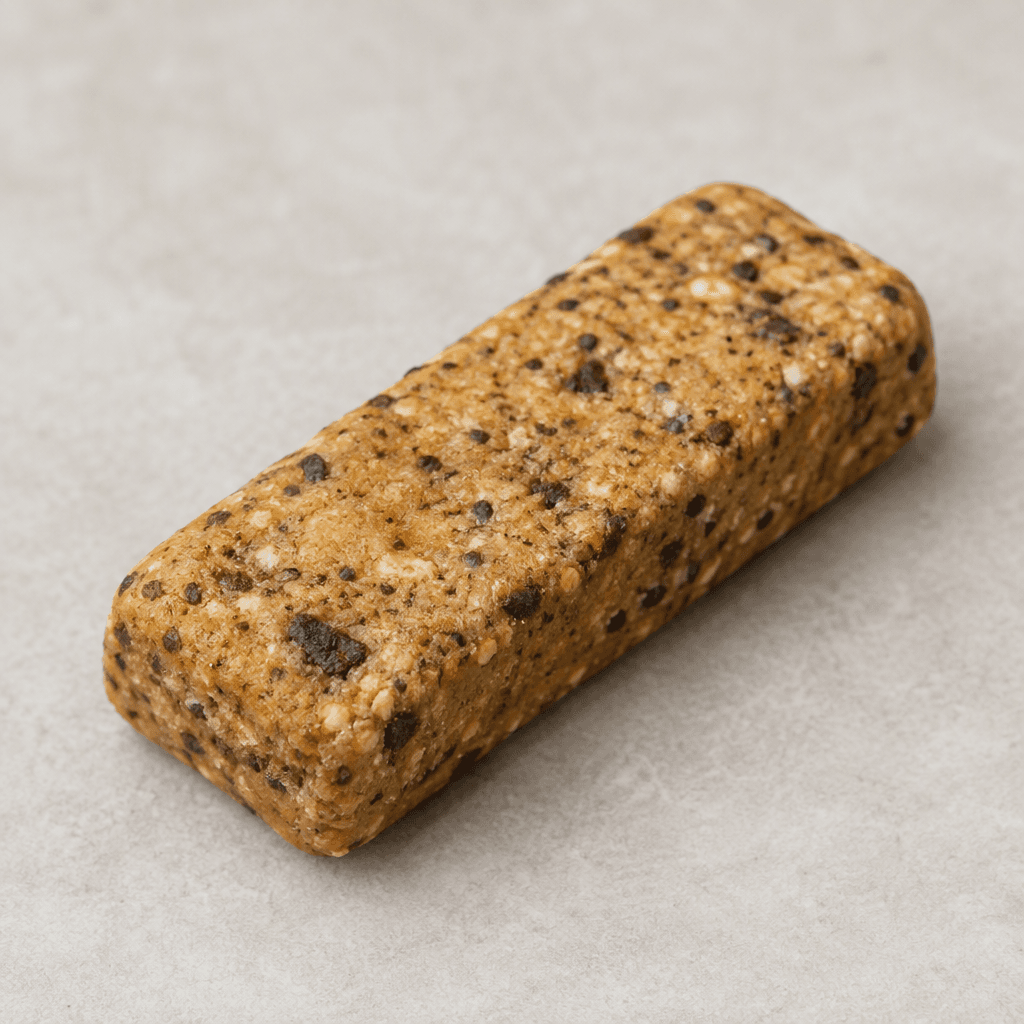
Protein Bar (Cookie Flavor) Calories
High-protein, cookie-flavored snack bar
CALORIES
GI
POTASSIUM
FIBER
Quick answer
1 piece (medium) of Protein Bar (Cookie Flavor) (60 g) has 222 calories. That works out to 370 calories per 100 g. It contains 21 g of carbs, 18 g of protein, 6 g of fat and 4.2 g of fiber. Its 0.5 µg of B12 covers 20% of the Daily Value. Its glycemic index is 40 (medium), so it raises blood sugar at a moderate pace.
What is Protein Bar (Cookie Flavor)?
A cookie-flavoured protein bar is a ready-to-eat packaged snack designed to offer a sweet, cookie-like taste alongside a substantial amount of protein. Its compact shape makes it easy to carry for a busy day, a packed lunch or a quick bite after activity.
The texture can range from soft and chewy to firmer, depending on the brand. It works as an occasional snack between meals, including on the go, rather than as a stand-in for a varied meal. With 30 g of protein per 100 g, it is notably protein-rich; it also contains carbohydrates and fat. Pair it with fruit or a drink if you want a more filling snack, and check the label if you have dietary requirements.
Protein Bar (Cookie Flavor) Nutrition Facts
Selected: 100 g
370
KCAL / 100G
Carbs
35g
· 13% DV
Protein
30g
· 60% DV
Fat
10g
· 13% DV
Fiber
7g
· 25% DV
DV is the share of the daily value covered, on a 2,000 kcal reference diet.
Calories come from: Carbs 40% · Protein 34% · Fat 26%
Protein Bar (Cookie Flavor) Vitamins & Minerals
Vitamins
B12
0.8µg · 33% DV
B2
0.4mg · 31% DV
Biotin
8µg · 27% DV
B1
0.3mg · 25% DV
Minerals
Phosphorus
220mg · 31% DV
Iron
4mg · 22% DV
Calcium
200mg · 20% DV
Zinc
2mg · 18% DV
How Nutritious Is Protein Bar (Cookie Flavor)?
Nutrient density
Medium
How many vitamins, minerals and how much fiber this food carries per calorie. A high score means a lot of nutrition for few calories.
Satiety score
High
An EatBetter score computed from fiber, protein and calorie density. A high score means staying full longer on the same calories.
Both scores are calculated per 100 g and do not change with the selected portion. The satiety score is EatBetter's own calculation, not a clinical measure.
Protein Bar (Cookie Flavor) Glycemic Index
GLYCEMIC INDEX
GLYCEMIC LOAD
Accounts for portion size — a more realistic measure than GI alone.
How to Burn Off Protein Bar (Cookie Flavor)
To burn the 370 calories in 100 g:
🚶
Walking (5 km/h)
🏃
Running (8 km/h)
🚴
Cycling
🏊
Swimming
Times are calculated with the MET equation for a 70 kg adult. Actual burn varies with your weight, age and pace.
Is Protein Bar (Cookie Flavor) Processed?
NOVA 4
Ultra-Processed
1. Unprocessed
2. Minimally Processed
3. Processed
4. Ultra-Processed
NOVA classifies foods into 4 groups by industrial processing. NOVA 1 (unprocessed) is the healthiest.
Does Protein Bar (Cookie Flavor) Contain Allergens?
Contains these allergens:
Which Diets Is Protein Bar (Cookie Flavor) Good For?
Vegan
— Not suitable
Vegetarian
✓ Suitable
Gluten-Free
— Not suitable
Dairy-Free
— Not suitable
Mediterranean
— Not suitable
Paleo
— Not suitable
Whole30
— Not suitable
DASH
— Not suitable
Keto
— Not suitable
Low FODMAP
— Not suitable
Protein Bar (Cookie Flavor) Fat Profile
SATURATED
3.5g
MONOUNSATURATED
2.8g
POLYUNSATURATED
2.2g
Omega 6:3 ratio 8:1
Above the ideal 4:1 (8:1).
Compare Protein Bar (Cookie Flavor)
Foods Similar to Protein Bar (Cookie Flavor)
Frequently Asked Questions About Protein Bar (Cookie Flavor)
Is a cookie-flavored protein bar a good snack for weight loss?
It can be a convenient, filling snack, but a cookie-flavored protein bar does not cause weight loss by itself. Use it instead of another snack rather than routinely adding it on top of your usual meals.
Should you eat a cookie-flavored protein bar before or after a workout?
Either can work. Have a cookie-flavored protein bar before exercise if it sits comfortably, or afterward as a convenient protein-containing snack. It is not a substitute for an overall eating pattern that supports training and recovery.
Can a cookie-flavored protein bar replace a meal?
Usually not. A cookie-flavored protein bar is designed as a portable snack, and one bar may not provide the range of foods and staying power of a meal. Pair it with fruit or yogurt if you need something more substantial.
Does a cookie-flavored protein bar actually contain cookie pieces?
Not necessarily. The cookie flavor may come from flavorings, crunchy pieces, or both, and recipes vary by brand. Read the ingredient list if you want to know whether the bar contains actual cookie pieces.
Why does a cookie-flavored protein bar taste different from a cookie?
A cookie-flavored protein bar is formulated as a protein snack, so its texture and sweetness can differ from a baked cookie. Protein ingredients and any added crisp pieces or sweeteners influence the taste and chewiness.
Can you eat a cookie-flavored protein bar every day?
Yes, it can fit into a daily routine if you enjoy it and it suits your needs. Still, use a cookie-flavored protein bar for convenience rather than letting it routinely displace varied meals and snacks.
Can a cookie-flavored protein bar cause bloating?
It can for some people. Ingredients such as certain sweeteners, added fiber, or dairy may cause gas or bloating in sensitive individuals, but recipes differ. If symptoms follow this bar repeatedly, try a different product or avoid it.
How should you store a cookie-flavored protein bar after opening it?
Keep the opened cookie-flavored protein bar wrapped or in an airtight container in a cool, dry place, and eat it promptly so it does not dry out. Follow the package directions if they specify different storage.
Is a cookie-flavored protein bar a better choice than a regular cookie?
Not automatically. A cookie-flavored protein bar may provide more protein, but its sugar, sweeteners, and overall ingredients vary. Choose it when its convenience or protein content suits your needs, not because the flavor guarantees it is healthier.
Can people with diabetes eat a cookie-flavored protein bar?
Some people with diabetes can include one, but the carbohydrate and sweetener content varies between products and may affect blood glucose. Consider the specific bar within your meal plan, and ask your clinician or dietitian if you need individualized guidance.
Have another question about Protein Bar (Cookie Flavor)?
Ask the AI nutrition coach — calories, portions, alternatives and more, answered in seconds in the app.

Scan calories with your camera
Instant AI nutrition analysis

Nutrition data compiled from USDA FoodData Central and scientific sources.