

Ready & Packaged Foods
All →Vegetables & Legumes
All →Desserts & Confectionery
All →Meat & Protein
All →Grains & Bakery
All →Beverages
All →Milk & Dairy
All →

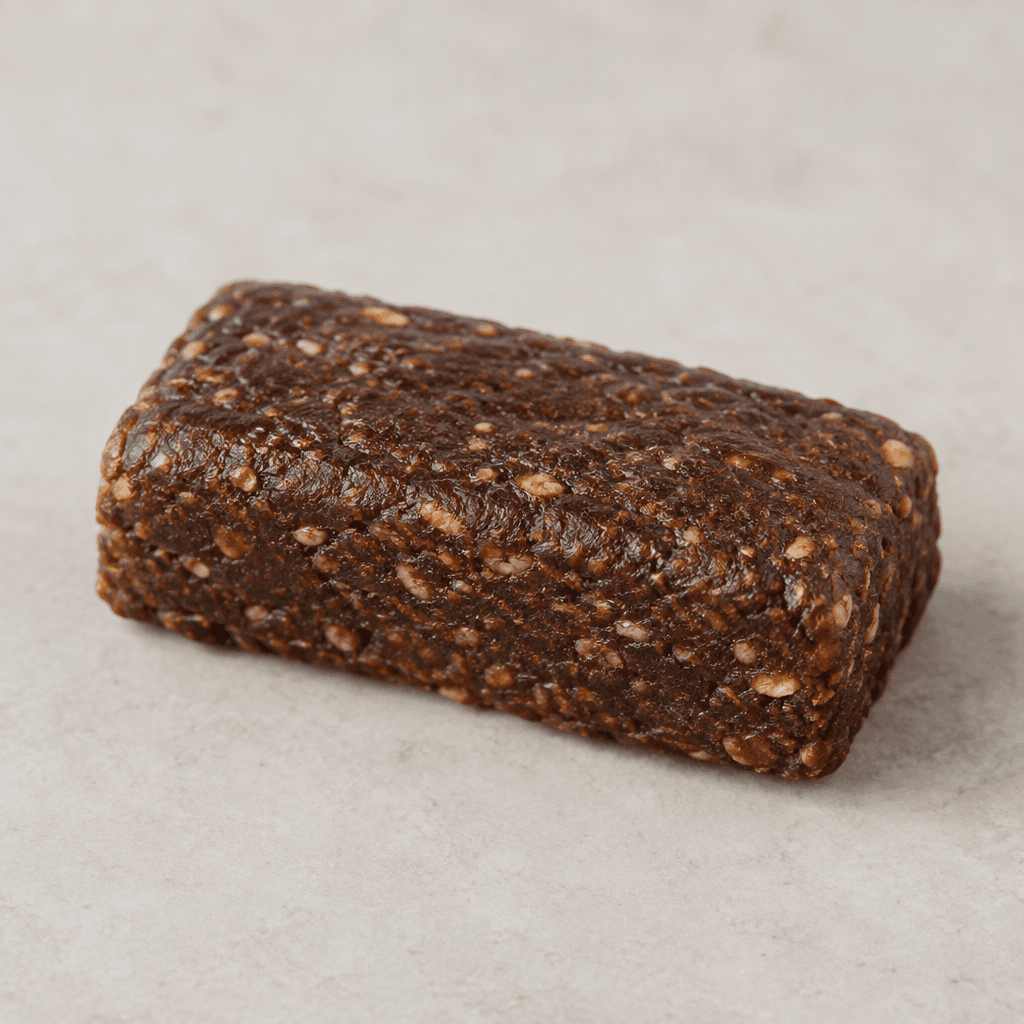
Protein Bar (Cocoa) Calories
High protein, cocoa flavored, post-workout snack
CALORIES
GI
POTASSIUM
FIBER
Quick answer
1 piece (medium) of Protein Bar (Cocoa) (50 g) has 185 calories. That works out to 370 calories per 100 g. It contains 17.5 g of carbs, 14 g of protein, 5 g of fat and 3.5 g of fiber. Its 0.2 mg of Copper covers 17% of the Daily Value. Its glycemic index is 45 (medium), so it raises blood sugar at a moderate pace.
What is Protein Bar (Cocoa)?
A cocoa protein bar is a compact, ready-to-eat snack made to provide protein in a portable, single-piece form. Its dense, chewy texture makes it convenient to keep in a gym bag or desk drawer, and it is commonly chosen as a quick bite rather than as a traditional meal or a food tied to one particular cuisine.
The cocoa flavour is usually sweet, while the bar itself is firm and filling. People often eat one after a workout or between meals; it also travels easily for a commute or a day out. With 28 g of protein per 100 g, it is a protein-forward snack. Pair it with fruit for a more rounded break, or have a smaller portion if you want something lighter.
Protein Bar (Cocoa) Nutrition Facts
Selected: 100 g
370
KCAL / 100G
Carbs
35g
· 13% DV
Protein
28g
· 56% DV
Fat
10g
· 13% DV
Fiber
7g
· 25% DV
DV is the share of the daily value covered, on a 2,000 kcal reference diet.
Calories come from: Carbs 41% · Protein 33% · Fat 26%
Protein Bar (Cocoa) Vitamins & Minerals
Vitamins
B2
0.22mg · 17% DV
B12
0.4µg · 17% DV
B1
0.18mg · 15% DV
B5
0.7mg · 14% DV
Minerals
Phosphorus
180mg · 26% DV
Iron
3mg · 17% DV
Magnesium
65mg · 15% DV
Calcium
120mg · 12% DV
How Nutritious Is Protein Bar (Cocoa)?
Nutrient density
Medium
How many vitamins, minerals and how much fiber this food carries per calorie. A high score means a lot of nutrition for few calories.
Satiety score
High
An EatBetter score computed from fiber, protein and calorie density. A high score means staying full longer on the same calories.
Both scores are calculated per 100 g and do not change with the selected portion. The satiety score is EatBetter's own calculation, not a clinical measure.
Protein Bar (Cocoa) Glycemic Index
GLYCEMIC INDEX
GLYCEMIC LOAD
Accounts for portion size — a more realistic measure than GI alone.
How to Burn Off Protein Bar (Cocoa)
To burn the 370 calories in 100 g:
🚶
Walking (5 km/h)
🏃
Running (8 km/h)
🚴
Cycling
🏊
Swimming
Times are calculated with the MET equation for a 70 kg adult. Actual burn varies with your weight, age and pace.
Is Protein Bar (Cocoa) Processed?
NOVA 3
Processed
1. Unprocessed
2. Minimally Processed
3. Processed
4. Ultra-Processed
NOVA classifies foods into 4 groups by industrial processing. NOVA 1 (unprocessed) is the healthiest.
Does Protein Bar (Cocoa) Contain Allergens?
Contains these allergens:
Which Diets Is Protein Bar (Cocoa) Good For?
Vegan
— Not suitable
Vegetarian
✓ Suitable
Gluten-Free
— Not suitable
Dairy-Free
— Not suitable
Mediterranean
— Not suitable
Paleo
— Not suitable
Whole30
— Not suitable
DASH
— Not suitable
Keto
— Not suitable
Low FODMAP
— Not suitable
Protein Bar (Cocoa) Fat Profile
SATURATED
3.8g
MONOUNSATURATED
2.8g
POLYUNSATURATED
2.2g
Omega 6:3 ratio 11.7:1
Above the ideal 4:1 (11.7:1).
Compare Protein Bar (Cocoa)
Foods Similar to Protein Bar (Cocoa)
Frequently Asked Questions About Protein Bar (Cocoa)
Are cocoa protein bars good for building muscle?
Cocoa protein bars can help you meet your protein needs, but they do not build muscle on their own. Muscle growth also requires resistance training and enough food overall; use a bar as a convenient snack rather than a substitute for those basics.
Are cocoa protein bars good for weight loss?
A cocoa protein bar can fit into a weight-loss plan, but it does not cause weight loss by itself. Its protein may make it a more filling snack than some sweets, but adding it on top of your usual food can increase your overall intake.
Can a cocoa protein bar replace breakfast?
A cocoa protein bar is not a complete breakfast on its own. It is handy when you are short on time, but pairing it with fruit or another food can make breakfast more varied and satisfying.
Does a cocoa protein bar contain caffeine?
A cocoa protein bar may contain a small amount of naturally occurring caffeine from cocoa. The amount depends on the cocoa and recipe, so do not assume every bar has the same caffeine content; check the product information if you avoid caffeine.
Why does a cocoa protein bar upset my stomach?
A cocoa protein bar may upset your stomach if an ingredient does not agree with you. Some bars contain sugar alcohols, added fibers, or dairy-based proteins that can cause bloating or discomfort in sensitive people; the specific ingredients vary by product.
Is it okay to eat a cocoa protein bar before bed?
Yes, eating a cocoa protein bar before bed is generally fine if it suits your routine. Cocoa can contain a little caffeine, and the bar may feel heavy for some people, so choose another snack if either affects your sleep or comfort.
How should you store a cocoa protein bar?
Store a cocoa protein bar in its sealed wrapper in a cool, dry place. Heat can soften or melt it, while moisture can affect its texture; follow the package directions after opening.
Why are cocoa protein bars so chewy?
Cocoa protein bars are often chewy because concentrated protein ingredients are combined with binders and sometimes added fibers. Cocoa can also make the texture seem drier or denser, and different recipes produce noticeably different levels of chewiness.
Are cocoa protein bars better than chocolate bars?
Cocoa protein bars usually provide more protein than ordinary chocolate bars, but that does not automatically make them better for every occasion. They serve different purposes, and their sweetness and ingredients vary, so choose based on whether you want a snack or a sweet treat.
Can a cocoa protein bar be eaten every day?
Yes, you can eat a cocoa protein bar every day if it fits your meals and routine. It is best used for convenience rather than as your only protein source, since whole foods offer more variety in what you eat.
Have another question about Protein Bar (Cocoa)?
Ask the AI nutrition coach — calories, portions, alternatives and more, answered in seconds in the app.

Scan calories with your camera
Instant AI nutrition analysis

Nutrition data compiled from USDA FoodData Central and scientific sources.