

Ready & Packaged Foods
All →Vegetables & Legumes
All →Desserts & Confectionery
All →Meat & Protein
All →Grains & Bakery
All →Beverages
All →Milk & Dairy
All →

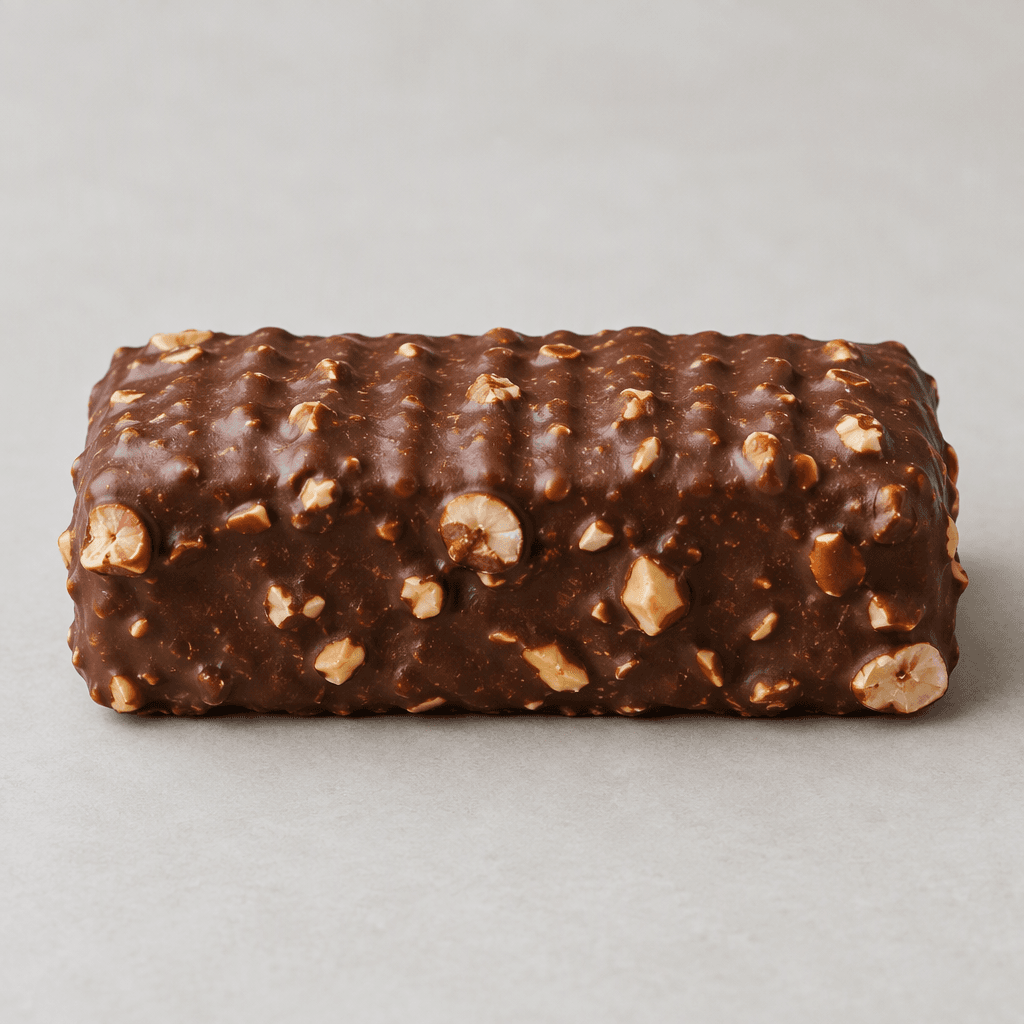
Protein Bar (Chocolate Hazelnut) Calories
High protein, chocolate and hazelnut flavor, post-workout snack
CALORIES
GI
POTASSIUM
FIBER
Quick answer
1 piece (medium) of Protein Bar (Chocolate Hazelnut) (50 g) has 185 calories. That works out to 370 calories per 100 g. It contains 16 g of carbs, 14 g of protein, 6.5 g of fat and 3.5 g of fiber. Its 0.3 µg of B12 covers 13% of the Daily Value. Its glycemic index is 45 (medium), so it raises blood sugar at a moderate pace.
What is Protein Bar (Chocolate Hazelnut)?
A chocolate hazelnut protein bar is a compact, ready-to-eat snack with a chocolate coating and pieces of hazelnut. It is made as a convenient way to add protein between meals or after exercise. The coating may have a slight crunch, while the centre is usually denser and chewy; sweet chocolate and toasted, nutty flavours make it feel more like a treat than a plain supplement.
It works well in a gym bag, at a desk, or as a portable snack when a proper meal is not handy. With 28 g of protein per 100 g and some fibre, it is more filling than many sweet bars. Pair it with fruit or water for a simple snack, or share a medium piece if you want a smaller portion.
Protein Bar (Chocolate Hazelnut) Nutrition Facts
Selected: 100 g
370
KCAL / 100G
Carbs
32g
· 12% DV
Protein
28g
· 56% DV
Fat
13g
· 17% DV
Fiber
7g
· 25% DV
DV is the share of the daily value covered, on a 2,000 kcal reference diet.
Calories come from: Carbs 36% · Protein 31% · Fat 33%
Protein Bar (Chocolate Hazelnut) Vitamins & Minerals
Vitamins
B12
0.6µg · 25% DV
B2
0.22mg · 17% DV
B1
0.18mg · 15% DV
B6
0.25mg · 15% DV
Minerals
Phosphorus
160mg · 23% DV
Iron
3mg · 17% DV
Magnesium
55mg · 13% DV
Selenium
7µg · 13% DV
How Nutritious Is Protein Bar (Chocolate Hazelnut)?
Nutrient density
Medium
How many vitamins, minerals and how much fiber this food carries per calorie. A high score means a lot of nutrition for few calories.
Satiety score
High
An EatBetter score computed from fiber, protein and calorie density. A high score means staying full longer on the same calories.
Both scores are calculated per 100 g and do not change with the selected portion. The satiety score is EatBetter's own calculation, not a clinical measure.
Protein Bar (Chocolate Hazelnut) Glycemic Index
GLYCEMIC INDEX
GLYCEMIC LOAD
Accounts for portion size — a more realistic measure than GI alone.
How to Burn Off Protein Bar (Chocolate Hazelnut)
To burn the 370 calories in 100 g:
🚶
Walking (5 km/h)
🏃
Running (8 km/h)
🚴
Cycling
🏊
Swimming
Times are calculated with the MET equation for a 70 kg adult. Actual burn varies with your weight, age and pace.
Is Protein Bar (Chocolate Hazelnut) Processed?
NOVA 3
Processed
1. Unprocessed
2. Minimally Processed
3. Processed
4. Ultra-Processed
NOVA classifies foods into 4 groups by industrial processing. NOVA 1 (unprocessed) is the healthiest.
Does Protein Bar (Chocolate Hazelnut) Contain Allergens?
Contains these allergens:
Which Diets Is Protein Bar (Chocolate Hazelnut) Good For?
Vegan
— Not suitable
Vegetarian
✓ Suitable
Gluten-Free
— Not suitable
Dairy-Free
— Not suitable
Mediterranean
— Not suitable
Paleo
— Not suitable
Whole30
— Not suitable
DASH
— Not suitable
Keto
— Not suitable
Low FODMAP
— Not suitable
Protein Bar (Chocolate Hazelnut) Fat Profile
SATURATED
4.2g
MONOUNSATURATED
5.6g
POLYUNSATURATED
2.2g
Omega 6:3 ratio 15:1
Above the ideal 4:1 (15:1).
Compare Protein Bar (Chocolate Hazelnut)
Foods Similar to Protein Bar (Chocolate Hazelnut)
Frequently Asked Questions About Protein Bar (Chocolate Hazelnut)
When should you eat a chocolate hazelnut protein bar?
A chocolate hazelnut protein bar works well as a convenient snack between meals or after exercise. It is not necessary to eat one at a particular time; choose it when you want a portable snack rather than as an automatic addition to every meal.
Is a chocolate hazelnut protein bar good for you?
A chocolate hazelnut protein bar can be a useful, convenient snack, especially when you need something portable with protein. It is still a packaged sweet-style food, so it makes sense as one option in a varied diet rather than a replacement for everyday meals.
Is a chocolate hazelnut protein bar better before or after a workout?
Either timing can work: a chocolate hazelnut protein bar can be eaten before or after exercise. If you plan to eat it beforehand, leave enough time for digestion; after a workout, it can be a convenient snack alongside your usual meals.
Can a chocolate hazelnut protein bar help with weight loss?
It may fit into a weight-loss plan as a portioned snack, but a chocolate hazelnut protein bar does not cause weight loss by itself. Using it in place of a less filling snack may be practical; regularly adding it on top of meals can add extra energy.
Can a chocolate hazelnut protein bar replace a meal?
Usually, no. A chocolate hazelnut protein bar is convenient but does not offer the variety of a balanced meal. If you need a more substantial snack, pair it with fruit or yogurt instead of relying on the bar as your regular lunch or dinner.
Does a chocolate hazelnut protein bar help build muscle?
A chocolate hazelnut protein bar can contribute protein to your diet, but eating the bar alone will not build muscle. Muscle growth also depends on regular resistance training, sufficient overall food and protein, and recovery.
How many chocolate hazelnut protein bars can you eat in a day?
There is no need to eat several chocolate hazelnut protein bars in a day; one can serve as a convenient snack when it suits your routine. Get most of your daily nourishment from varied foods rather than relying on bars as your main protein source.
How should you store a chocolate hazelnut protein bar?
Keep a chocolate hazelnut protein bar in a cool, dry place away from direct sunlight. Heat can soften the chocolate coating. After opening, reseal the wrapper if possible and eat the bar soon so it does not dry out or pick up odors.
Does a chocolate hazelnut protein bar contain real hazelnuts?
The hazelnut name and visible hazelnut pieces indicate that this bar is hazelnut-containing, though the amount and form can vary. Anyone with a tree-nut allergy should avoid assuming it is safe and review the package allergen information before eating it.
Does the chocolate coating on a chocolate hazelnut protein bar melt?
Yes, the chocolate coating on a chocolate hazelnut protein bar can soften or melt in warm conditions. Keep it out of direct sun and hot cars, and store it somewhere cool to help preserve its shape and texture.
Have another question about Protein Bar (Chocolate Hazelnut)?
Ask the AI nutrition coach — calories, portions, alternatives and more, answered in seconds in the app.

Scan calories with your camera
Instant AI nutrition analysis

Nutrition data compiled from USDA FoodData Central and scientific sources.