

Ready & Packaged Foods
All →Vegetables & Legumes
All →Desserts & Confectionery
All →Meat & Protein
All →Grains & Bakery
All →Beverages
All →Milk & Dairy
All →

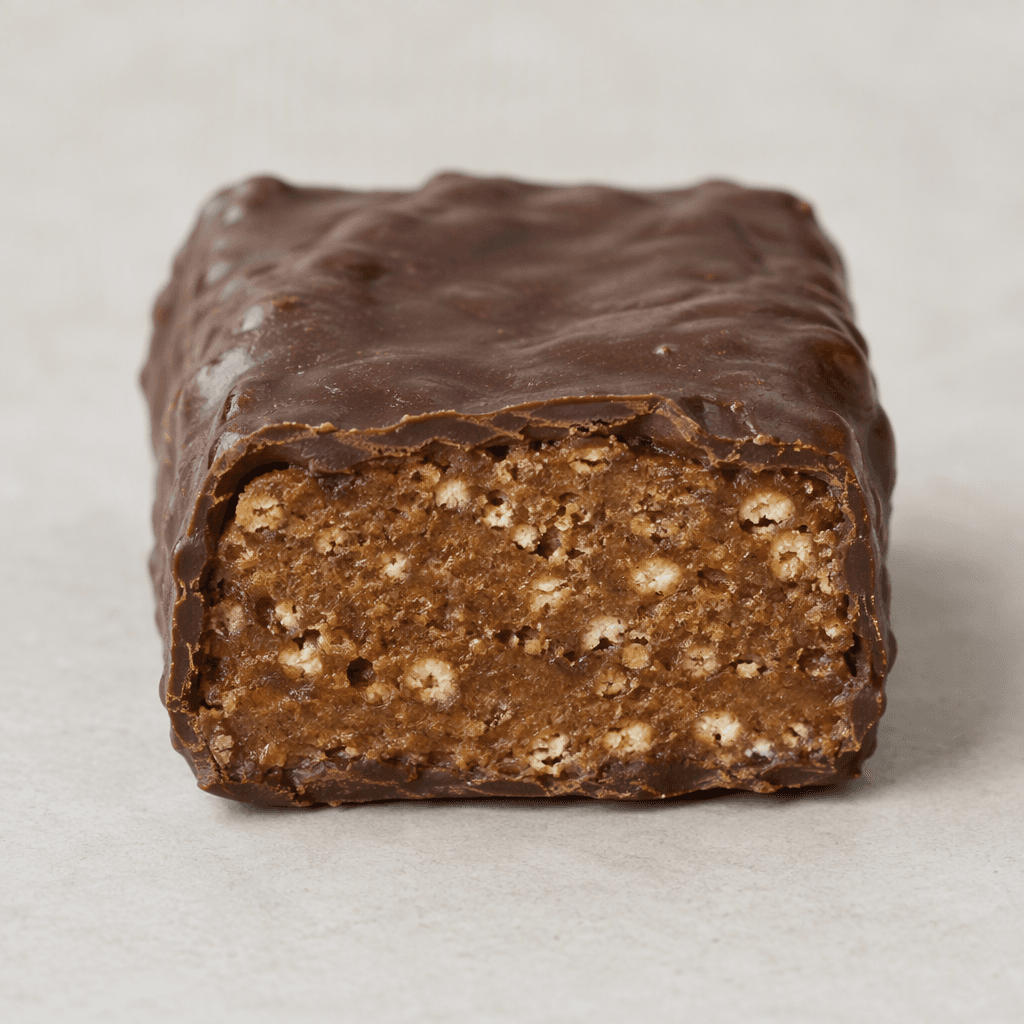
Protein Bar (Chocolate) Calories
High protein, chocolate flavored, fitness snack
CALORIES
GI
POTASSIUM
FIBER
Quick answer
1 piece (medium) of Protein Bar (Chocolate) (50 g) has 185 calories. That works out to 370 calories per 100 g. It contains 17.5 g of carbs, 14 g of protein, 5.5 g of fat and 3.5 g of fiber. Its 0.4 µg of B12 covers 15% of the Daily Value. Its glycemic index is 45 (medium), so it raises blood sugar at a moderate pace.
What is Protein Bar (Chocolate)?
A chocolate protein bar is a compact, ready-to-eat snack made to provide protein in a portable format, with chocolate flavour and often a dense texture. This one has a chocolate-brown coating and small crisp pieces, though ingredients and texture vary between brands.
It is commonly carried for a snack between meals or eaten around a workout; for readers elsewhere, it also fits easily into a work bag or travel snack stash. With 28 g of protein per 100 g, it offers a convenient protein boost, but need not stand in for a balanced meal. Pair it with fruit for a more substantial snack, or enjoy it with coffee or tea when you want something sweet.
Protein Bar (Chocolate) Nutrition Facts
Selected: 100 g
370
KCAL / 100G
Carbs
35g
· 13% DV
Protein
28g
· 56% DV
Fat
11g
· 14% DV
Fiber
7g
· 25% DV
DV is the share of the daily value covered, on a 2,000 kcal reference diet.
Calories come from: Carbs 40% · Protein 32% · Fat 28%
Protein Bar (Chocolate) Vitamins & Minerals
Vitamins
B12
0.7µg · 29% DV
B2
0.22mg · 17% DV
B1
0.15mg · 13% DV
Biotin
4µg · 13% DV
Minerals
Phosphorus
180mg · 26% DV
Selenium
7µg · 13% DV
Calcium
120mg · 12% DV
Iron
2mg · 11% DV
How Nutritious Is Protein Bar (Chocolate)?
Nutrient density
Medium
How many vitamins, minerals and how much fiber this food carries per calorie. A high score means a lot of nutrition for few calories.
Satiety score
High
An EatBetter score computed from fiber, protein and calorie density. A high score means staying full longer on the same calories.
Both scores are calculated per 100 g and do not change with the selected portion. The satiety score is EatBetter's own calculation, not a clinical measure.
Protein Bar (Chocolate) Glycemic Index
GLYCEMIC INDEX
GLYCEMIC LOAD
Accounts for portion size — a more realistic measure than GI alone.
How to Burn Off Protein Bar (Chocolate)
To burn the 370 calories in 100 g:
🚶
Walking (5 km/h)
🏃
Running (8 km/h)
🚴
Cycling
🏊
Swimming
Times are calculated with the MET equation for a 70 kg adult. Actual burn varies with your weight, age and pace.
Is Protein Bar (Chocolate) Processed?
NOVA 3
Processed
1. Unprocessed
2. Minimally Processed
3. Processed
4. Ultra-Processed
NOVA classifies foods into 4 groups by industrial processing. NOVA 1 (unprocessed) is the healthiest.
Does Protein Bar (Chocolate) Contain Allergens?
Contains these allergens:
Which Diets Is Protein Bar (Chocolate) Good For?
Vegan
— Not suitable
Vegetarian
✓ Suitable
Gluten-Free
— Not suitable
Dairy-Free
— Not suitable
Mediterranean
— Not suitable
Paleo
— Not suitable
Whole30
— Not suitable
DASH
— Not suitable
Keto
— Not suitable
Low FODMAP
— Not suitable
Protein Bar (Chocolate) Fat Profile
SATURATED
4.2g
MONOUNSATURATED
3.6g
POLYUNSATURATED
2.1g
Omega 6:3 ratio 15:1
Above the ideal 4:1 (15:1).
Compare Protein Bar (Chocolate)
Foods Similar to Protein Bar (Chocolate)
Frequently Asked Questions About Protein Bar (Chocolate)
Are chocolate protein bars good for you?
A chocolate protein bar can be a useful portable snack, especially when you need a convenient source of protein. It is not automatically a healthier choice than other snacks: recipes vary, so consider how it fits into your usual meals rather than relying on the name alone.
Should you eat a chocolate protein bar before or after a workout?
You can eat a chocolate protein bar either before or after exercise, depending on convenience and how it sits with you. Its dense texture may feel uncomfortable just before training, so leave time to digest it if that happens.
Can a chocolate protein bar replace a meal?
Usually, no. A chocolate protein bar is designed as a convenient snack, not a reliably complete meal with the variety of foods a meal can provide. If you need a meal on the go, pair it with something like fruit and yogurt.
Do chocolate protein bars help with weight loss?
A chocolate protein bar does not cause weight loss by itself. It may make a planned snack more filling than a low-protein sweet, but adding it on top of your usual food can work against your goal.
How many chocolate protein bars can you eat in a day?
There is no universal daily limit for chocolate protein bars. They can be convenient occasionally, but using several as routine snacks may crowd out meals and protein from varied foods.
Do chocolate protein bars contain caffeine?
Most chocolate protein bars are not intended to be caffeine products, but the amount can vary if the recipe contains coffee, added caffeine, or substantial cocoa. Check the ingredients for those additions if you are avoiding caffeine, particularly later in the day.
Are chocolate protein bars good for building muscle?
A chocolate protein bar can help you get protein conveniently, but eating one does not build muscle on its own. Muscle growth also requires progressive resistance training and enough food and protein across your overall diet.
Can a chocolate protein bar cause bloating?
Yes, a chocolate protein bar can cause bloating in some people. Certain bars contain sugar alcohols, added fibres, or dairy ingredients that may trigger gas or discomfort; the response depends on the specific recipe and your tolerance.
Are chocolate protein bars safe for people with diabetes?
They are not automatically suitable or unsuitable for diabetes; chocolate protein bars differ in their carbohydrate, sugar, and sweetener contents. Compare the specific product with your meal plan, and ask your diabetes care team if you need advice tailored to your medication.
How should you store a chocolate protein bar after opening it?
Seal an opened chocolate protein bar or place it in an airtight container, then keep it somewhere cool and dry. Heat can soften or melt a chocolate coating, and the package instructions take priority if they specify different storage.
Have another question about Protein Bar (Chocolate)?
Ask the AI nutrition coach — calories, portions, alternatives and more, answered in seconds in the app.

Scan calories with your camera
Instant AI nutrition analysis

Nutrition data compiled from USDA FoodData Central and scientific sources.