

Ready & Packaged Foods
All →Vegetables & Legumes
All →Desserts & Confectionery
All →Meat & Protein
All →Grains & Bakery
All →Beverages
All →Milk & Dairy
All →

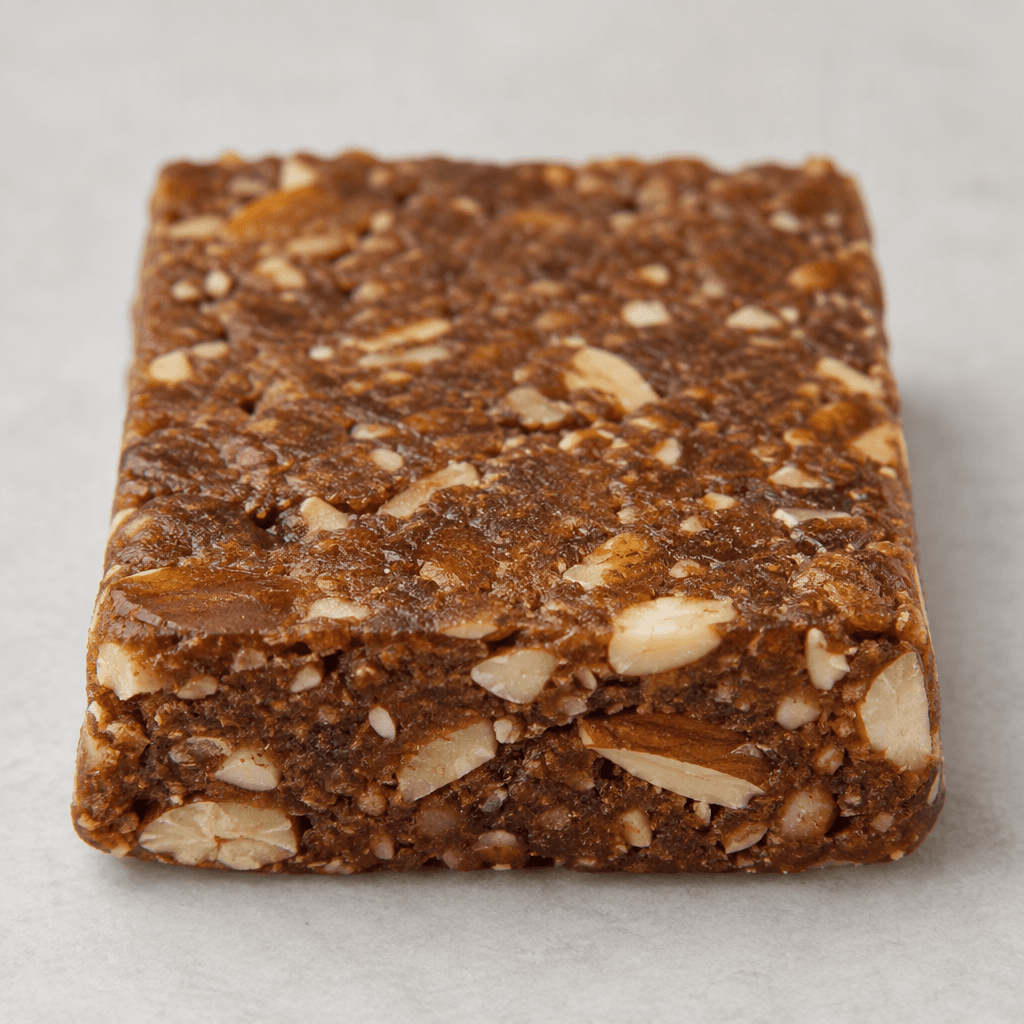
Protein Bar (Almond) Calories
High protein, almond, snack, energy source
In season: Spring · Summer · Autumn · Winter
CALORIES
GI
POTASSIUM
FIBER
Quick answer
1 piece (medium) of Protein Bar (Almond) (50 g) has 205 calories. That works out to 410 calories per 100 g. It contains 16 g of carbs, 14 g of protein, 8 g of fat and 3.5 g of fiber. Its 0.2 mg of Copper covers 22% of the Daily Value. Its glycemic index is 45 (medium), so it raises blood sugar at a moderate pace.
What is Protein Bar (Almond)?
A protein bar (almond) is a compact, ready-to-eat snack with almond pieces in a firm, dense base. Protein bars are made for convenience, and the exact ingredients and protein source can vary by product, so check the wrapper if those details matter to you.
Its mildly sweet, nutty flavour and chewy texture make it easy to eat on the go, between meals, or alongside coffee or tea. The protein and fibre make it more substantial than many sweet snacks, while its energy content is still worth bearing in mind. For a lighter snack, have half a bar with a piece of fruit; it can also be handy to pack for a busy day or after exercise.
Protein Bar (Almond) Nutrition Facts
Selected: 100 g
410
KCAL / 100G
Carbs
32g
· 12% DV
Protein
28g
· 56% DV
Fat
16g
· 21% DV
Fiber
7g
· 25% DV
DV is the share of the daily value covered, on a 2,000 kcal reference diet.
Calories come from: Carbs 33% · Protein 29% · Fat 38%
Protein Bar (Almond) Vitamins & Minerals
Vitamins
Vitamin E
4.2mg · 28% DV
B12
0.6µg · 25% DV
B2
0.22mg · 17% DV
B1
0.18mg · 15% DV
Minerals
Manganese
1mg · 43% DV
Phosphorus
210mg · 30% DV
Magnesium
90mg · 21% DV
Calcium
120mg · 12% DV
How Nutritious Is Protein Bar (Almond)?
Nutrient density
Medium
How many vitamins, minerals and how much fiber this food carries per calorie. A high score means a lot of nutrition for few calories.
Satiety score
High
An EatBetter score computed from fiber, protein and calorie density. A high score means staying full longer on the same calories.
Both scores are calculated per 100 g and do not change with the selected portion. The satiety score is EatBetter's own calculation, not a clinical measure.
Protein Bar (Almond) Glycemic Index
GLYCEMIC INDEX
GLYCEMIC LOAD
Accounts for portion size — a more realistic measure than GI alone.
How to Burn Off Protein Bar (Almond)
To burn the 410 calories in 100 g:
🚶
Walking (5 km/h)
🏃
Running (8 km/h)
🚴
Cycling
🏊
Swimming
Times are calculated with the MET equation for a 70 kg adult. Actual burn varies with your weight, age and pace.
Is Protein Bar (Almond) Processed?
NOVA 3
Processed
1. Unprocessed
2. Minimally Processed
3. Processed
4. Ultra-Processed
NOVA classifies foods into 4 groups by industrial processing. NOVA 1 (unprocessed) is the healthiest.
Does Protein Bar (Almond) Contain Allergens?
Contains these allergens:
Which Diets Is Protein Bar (Almond) Good For?
Vegan
— Not suitable
Vegetarian
✓ Suitable
Gluten-Free
— Not suitable
Dairy-Free
— Not suitable
Mediterranean
— Not suitable
Paleo
— Not suitable
Whole30
— Not suitable
DASH
— Not suitable
Keto
— Not suitable
Low FODMAP
— Not suitable
Protein Bar (Almond) Fat Profile
SATURATED
2.8g
MONOUNSATURATED
8.2g
POLYUNSATURATED
4.1g
Omega 6:3 ratio 35.6:1
Above the ideal 4:1 (35.6:1).
Compare Protein Bar (Almond)
Foods Similar to Protein Bar (Almond)
Frequently Asked Questions About Protein Bar (Almond)
Are almond protein bars good for you?
Almond protein bars can be a convenient snack, but their overall value depends on the ingredients and how often you rely on them. This bar provides protein and fibre; it is best used alongside a varied diet rather than as a substitute for whole foods.
Can almond protein bars help build muscle?
An almond protein bar can contribute protein to your diet, but eating one does not build muscle by itself. Muscle growth also requires regular resistance training and enough food and recovery; the bar is simply a portable option when a meal is inconvenient.
Should you eat an almond protein bar before or after a workout?
Either timing can work. Eat an almond protein bar before exercise if it sits comfortably in your stomach, or afterward as a convenient snack; it does not need to be eaten immediately after your workout.
Can an almond protein bar replace a meal?
Usually, no. An almond protein bar is designed as a compact snack and does not offer the variety of foods found in a balanced meal. Pair it with something like fruit or yogurt if you need a more substantial option.
Are almond protein bars good for weight loss?
They may be useful when you want a portable, filling snack, but an almond protein bar does not cause weight loss on its own. Using it instead of a less filling snack may help some people; adding it on top of usual meals may not.
Can people with diabetes eat almond protein bars?
Some people with diabetes can include an almond protein bar, but its carbohydrates need to fit their individual blood glucose plan. Check the specific bar’s nutrition information and ask your doctor or dietitian if you need advice tailored to your medication or targets.
How long does an almond protein bar last after opening?
There is no single safe time for every almond protein bar after opening. Follow the package instructions, reseal it tightly, and eat it promptly; discard it if its smell, appearance, or texture changes noticeably.
Can you freeze almond protein bars?
Yes, you can freeze an almond protein bar in a well-sealed, freezer-safe wrap or container. Let it thaw before eating; freezing may make its texture firmer or affect the chewiness, so the result may differ from a freshly opened bar.
Are almond protein bars suitable for kids?
An almond protein bar can be an occasional snack for an older child, but it should not replace a varied meal. Almond pieces can pose an allergy risk, so do not give it to a child with a tree-nut allergy.
Why are almond protein bars so dense?
Almond protein bars are often dense because they are compact snacks made to hold together, with ingredients such as nuts and protein sources bound into a firm bar. The exact texture varies by recipe; letting a chilled bar come to room temperature may soften it.
Have another question about Protein Bar (Almond)?
Ask the AI nutrition coach — calories, portions, alternatives and more, answered in seconds in the app.

Scan calories with your camera
Instant AI nutrition analysis

Nutrition data compiled from USDA FoodData Central and scientific sources.