

Ready & Packaged Foods
All →Vegetables & Legumes
All →Desserts & Confectionery
All →Meat & Protein
All →Grains & Bakery
All →Beverages
All →Milk & Dairy
All →

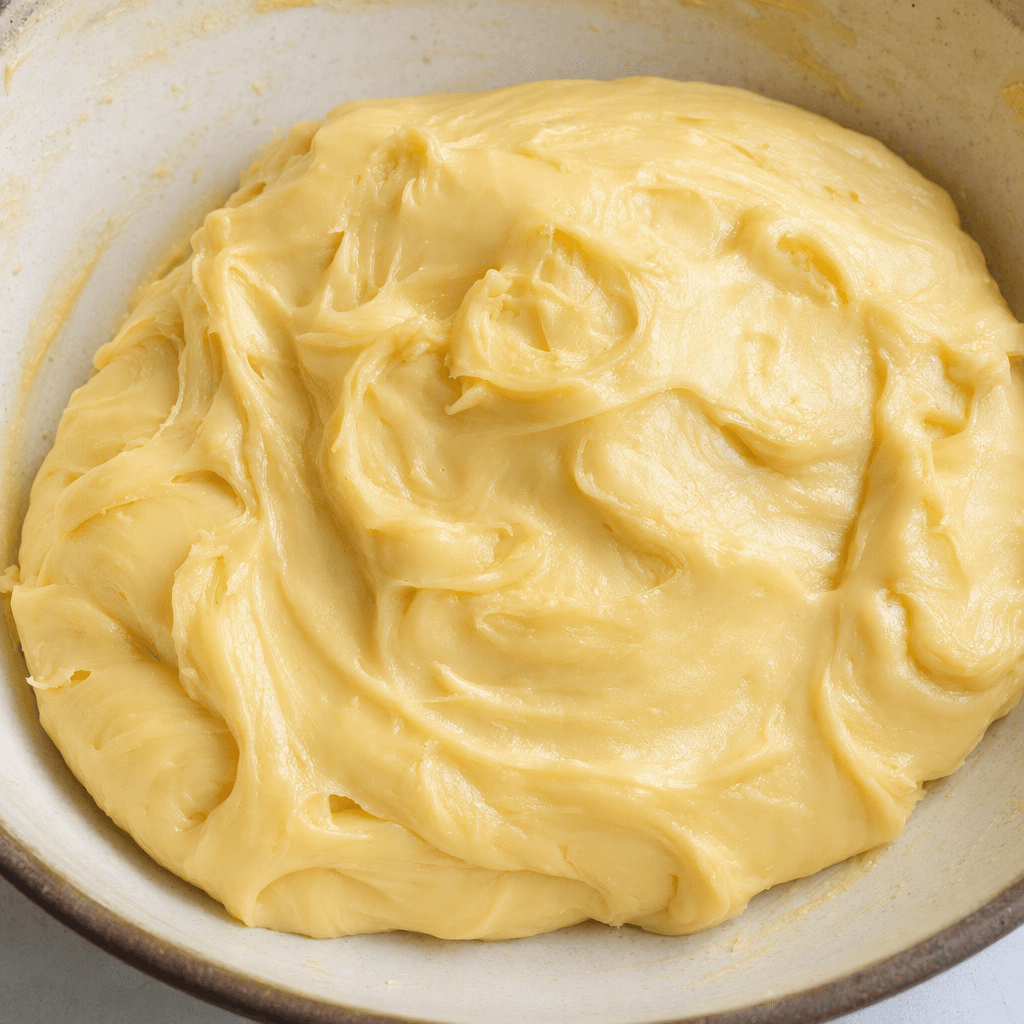
Profiterole dough Calories
Profiterole dough
CALORIES · 100 G
GI
POTASSIUM · 100 G
FIBER · 100 G
Quick answer
1 piece (medium) of Profiterole dough (20 g) has 54 calories. That works out to 270 calories per 100 g. It contains 6.4 g of carbs, 1.4 g of protein, 2.4 g of fat and 0.2 g of fiber. Its 1.4 µg of Biotin covers 5% of the Daily Value. Its glycemic index is 65 (medium), so it raises blood sugar at a moderate pace.
Profiterole dough Nutrition Facts
Selected: 1 piece (medium) · 20 g
54
KCAL / 20G
Carbs
6.4g
· 2% DV
Protein
1.4g
· 3% DV
Fat
2.4g
· 3% DV
Fiber
0.2g
· 1% DV
DV is the share of the daily value covered, on a 2,000 kcal reference diet.
Calories come from: Carbs 48% · Protein 11% · Fat 41%
Profiterole dough nutrition facts table · 1 piece (medium) (20 g)
| Nutrient | Amount | % DV |
|---|---|---|
| Calories | 54 kcal | |
| Total fat | 2.4 g | 3% |
| Saturated fat | 1.24 g | 6% |
| Trans fat | 0.02 g | |
| Sodium | 42 mg | 2% |
| Total carbohydrate | 6.4 g | 2% |
| Fiber | 0.2 g | 1% |
| Protein | 1.4 g | 3% |
Calories: Calories measure energy. Average daily need is 2,000 kcal. Excess calories are stored as fat, too few cause weight loss.
Carbs: Your body's primary energy source. The brain runs exclusively on carbs. Daily need: 275g.
Protein: Essential for muscle repair and cell growth. Daily need: 50g. Keeps you full and boosts metabolism.
Fat: Needed for hormone production and vitamin absorption. Daily need: 78g. Limit saturated fats, choose unsaturated.
Fiber: Critical for digestive health and satiety. Daily need: 28g. Stabilizes blood sugar, lowers cholesterol.

Log this food in EatBetter
100,000+ people use it
- Get your daily calorie target
- Snap your meal, log it in seconds
- See every vitamin and mineral

📸 Scan the code to get the app free.

How Many Calories in 1 Medium Profiterole dough?
| Serving | Amount | Calories |
|---|---|---|
| 1 piece (medium) | 20 g | 54 kcal |
| 1 piece (small) | 15 g | 41 kcal |
| 1 piece (large) | 30 g | 81 kcal |
| 2 piece (medium) | 40 g | 108 kcal |
| 1 serving (large) | 50 g | 135 kcal |
| 100 g | 100 g | 270 kcal |
| 1 cup (chopped) | 100 g | 270 kcal |
| 1 pack (jumbo) | 200 g | 540 kcal |
Calculated from 270 calories per 100 g.
Frequently Asked Questions About Profiterole dough
What is Profiterole dough made of?
Profiterole dough is made with flour, water or milk, butter, and eggs, usually with a little salt. The liquid and butter are heated first, the flour is stirred in and cooked, and the eggs are added after the mixture cools.
Why does Profiterole dough not rise in the oven?
Profiterole dough may not rise if the oven is not hot enough or the cooked flour mixture contains too much moisture. Cook the flour mixture until it pulls away from the pan, let it cool before adding eggs, and preheat the oven fully.
Why does Profiterole dough collapse after baking?
Profiterole dough often collapses when its hollow center is still damp and the shell has not dried enough. Bake until the shells feel firm, then let steam escape through a small opening or leave them briefly in the switched-off oven with the door ajar.
How can you tell when Profiterole dough is baked?
Baked Profiterole dough should be deeply golden, firm, and light for its size, not pale or soft. If you break one open, the inside should not look wet or gummy; return soft shells to the oven to dry rather than filling them.
Can Profiterole dough be made ahead?
Yes, Profiterole dough can be piped onto a tray and refrigerated for a few hours before baking. Cover it so the surface does not dry out, and bake it straight from the refrigerator; leaving it much longer can make the shells rise less reliably.
Can you freeze Profiterole dough?
Yes, freeze baked Profiterole dough shells once they have cooled completely. Store them airtight, then crisp them in the oven before filling. Freezing the unbaked dough is less reliable because its texture and rise can change during thawing.
Why do you add eggs one at a time to Profiterole dough?
Adding eggs gradually lets Profiterole dough absorb them evenly and helps you stop at the right consistency. Egg size and how much moisture cooked out of the flour mixture both affect the amount needed, so the dough can become too loose if all the eggs go in at once.
Can you fix runny Profiterole dough?
Runny Profiterole dough is difficult to fix once all the eggs have been mixed in. Avoid adding raw flour, which can leave a floury taste; next time, dry the cooked flour mixture longer and add the eggs gradually, stopping when the dough holds its shape.
Why is my Profiterole dough raw inside?
Profiterole dough stays raw inside when the shells are too large or are removed before enough moisture has evaporated. Bake them until the outside is firm and golden, and check one shell before taking the whole tray out.
What is the difference between Profiterole dough and éclair dough?
There is usually no ingredient difference: both Profiterole dough and éclair dough are choux pastry. They are piped into different shapes—small rounds for profiteroles and long strips for éclairs—so their baking time may differ.
Profiterole dough Vitamins & Minerals
Vitamins
Biotin
1.4µg · 5% DV
B2
0.04mg · 3% DV
B12
0.06µg · 3% DV
Vitamin A
18µg · 2% DV
Minerals
Selenium
1.6µg · 3% DV
Phosphorus
18mg · 3% DV
Sodium
42mg · 2% DV
Copper
0.02mg · 2% DV
Potassium ⭐
18mg · 1% DV
Profiterole dough Glycemic Index
GLYCEMIC INDEX
GLYCEMIC LOAD
Accounts for portion size — a more realistic measure than GI alone.
How to Burn Off Profiterole dough
To burn the 54 calories in 1 piece (medium) (20 g):
🚶
Walking (5 km/h)
🏃
Running (8 km/h)
🚴
Cycling
🏊
Swimming
Times are calculated with the MET equation for a 70 kg adult. Actual burn varies with your weight, age and pace.
What is Profiterole dough?
Profiterole dough is a cooked-and-baked choux pastry, made by stirring flour into hot water or milk and butter, then beating in eggs. The method comes from French cooking; baked portions puff into light shells with a hollow centre, ready to fill.
The shells are mild in flavour, with a delicate crisp outside and soft interior. They are most often filled with pastry cream and finished with chocolate sauce as profiteroles, served as a dessert in France and internationally. The dough provides a mix of carbohydrates and fat, along with some protein. For a lighter dessert, use a smaller amount of filling or serve the shells with fresh fruit instead of a generous layer of sauce.
How Nutritious Is Profiterole dough?
Nutrient density
Low
How many vitamins, minerals and how much fiber this food carries per calorie. A high score means a lot of nutrition for few calories.
Satiety score
Low
An EatBetter score computed from fiber, protein and calorie density. A high score means staying full longer on the same calories.
Both scores are calculated per 100 g and do not change with the selected portion. The satiety score is EatBetter's own calculation, not a clinical measure.
Is Profiterole dough Processed?
NOVA 3
Processed
1. Unprocessed
2. Minimally Processed
3. Processed
4. Ultra-Processed
NOVA classifies foods into 4 groups by industrial processing. NOVA 1 (unprocessed) is the healthiest.
Does Profiterole dough Contain Allergens?
Contains these allergens:
Which Diets Is Profiterole dough Good For?
Vegan
— Not suitable
Vegetarian
✓ Suitable
Gluten-Free
— Not suitable
Dairy-Free
— Not suitable
Mediterranean
✓ Suitable
Paleo
— Not suitable
Whole30
— Not suitable
DASH
— Not suitable
Keto
— Not suitable
Low FODMAP
— Not suitable
Profiterole dough Fat Profile
SATURATED
1.24g
MONOUNSATURATED
0.74g
POLYUNSATURATED
0.24g
Omega 6:3 ratio 22:1
Above the ideal 4:1 (22:1).
Compare Profiterole dough
Foods Similar to Profiterole dough
Have another question about Profiterole dough?
Ask the AI nutrition coach — calories, portions, alternatives and more, answered in seconds in the app.

Scan calories with your camera
Instant AI nutrition analysis

Nutrition data compiled from USDA FoodData Central and scientific sources.