

Ready & Packaged Foods
All →Vegetables & Legumes
All →Desserts & Confectionery
All →Meat & Protein
All →Grains & Bakery
All →Beverages
All →Milk & Dairy
All →

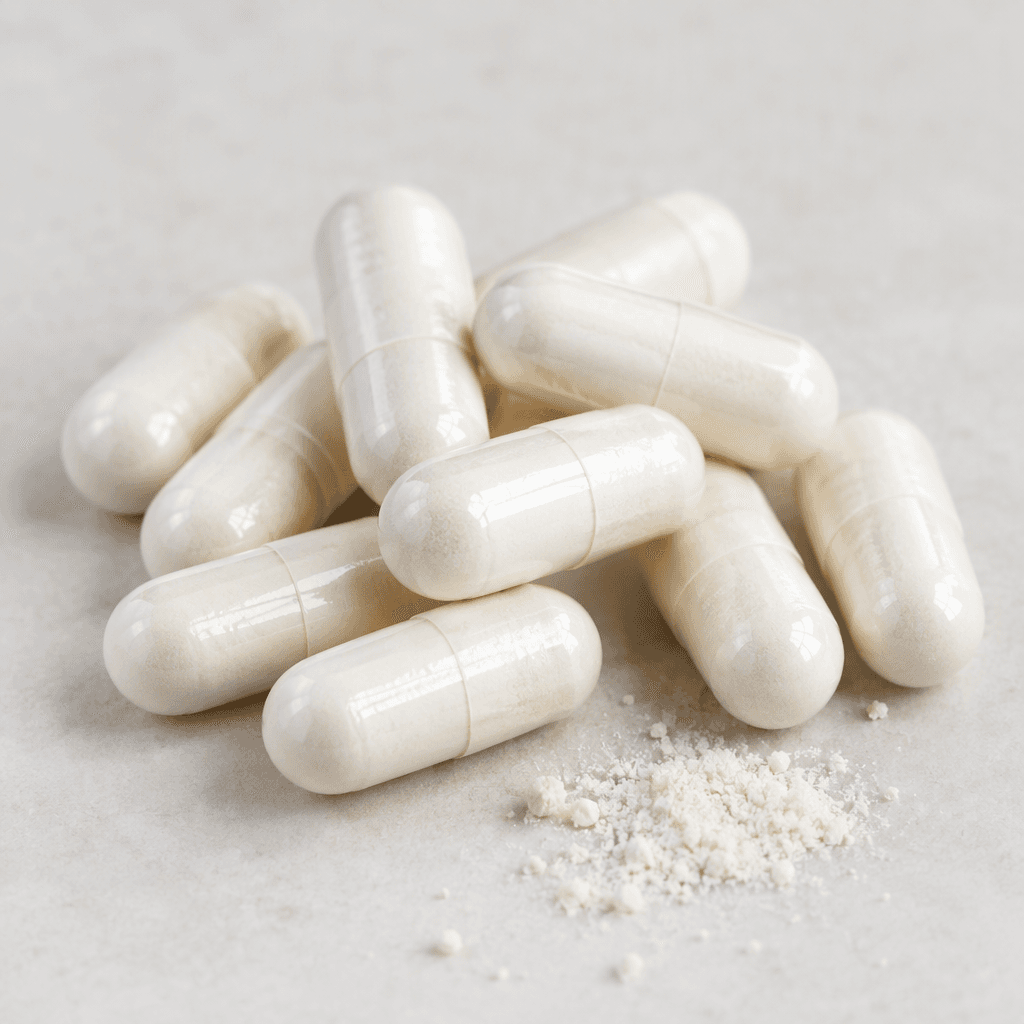
Probiotic Supplement Calories
Supports digestive health, improves gut flora
CALORIES
GI
POTASSIUM
FIBER
Quick answer
1 piece (medium) of Probiotic Supplement (2 g) has 0 calories. That works out to 20 calories per 100 g. It contains 0.1 g of carbs, 0 g of protein, 0 g of fat and 0 g of fiber. Its glycemic index is 5 (low), so it raises blood sugar slowly.
What is Probiotic Supplement?
A Probiotic Supplement provides selected live microorganisms, usually in capsules or powder. The strains and amounts can vary from one product to another, so check the label for directions and storage advice rather than assuming all supplements are alike.
People commonly take it with water, following the product instructions; whether it is best taken with food depends on the formula. It is not a meal or a meaningful source of everyday nourishment: its nutritional value is secondary to the cultures it contains, and a typical serving is small. If you are considering one alongside medicines or for a particular health concern, ask a qualified health professional whether it is appropriate for you.
Probiotic Supplement Nutrition Facts
Selected: 100 g
20
KCAL / 100G
Carbs
3g
· 1% DV
Protein
2g
· 4% DV
Fat
0.5g
· 1% DV
Fiber
1g
· 4% DV
DV is the share of the daily value covered, on a 2,000 kcal reference diet.
Calories come from: Carbs 49% · Protein 33% · Fat 18%
Probiotic Supplement Vitamins & Minerals
Vitamins
B12
0.1µg · 4% DV
B2
0.02mg · 2% DV
B1
0.01mg · 1% DV
B3
0.1mg · 1% DV
Minerals
Calcium
10mg · 1% DV
Selenium
0.5µg · 1% DV
Phosphorus
5mg · 1% DV
Iron
0mg · 0% DV
How Nutritious Is Probiotic Supplement?
Nutrient density
Low
How many vitamins, minerals and how much fiber this food carries per calorie. A high score means a lot of nutrition for few calories.
Satiety score
Medium
An EatBetter score computed from fiber, protein and calorie density. A high score means staying full longer on the same calories.
Both scores are calculated per 100 g and do not change with the selected portion. The satiety score is EatBetter's own calculation, not a clinical measure.
Probiotic Supplement Glycemic Index
GLYCEMIC INDEX
GLYCEMIC LOAD
Accounts for portion size — a more realistic measure than GI alone.
How to Burn Off Probiotic Supplement
To burn the 20 calories in 100 g:
🚶
Walking (5 km/h)
🏃
Running (8 km/h)
🚴
Cycling
🏊
Swimming
Times are calculated with the MET equation for a 70 kg adult. Actual burn varies with your weight, age and pace.
Is Probiotic Supplement Processed?
NOVA 3
Processed
1. Unprocessed
2. Minimally Processed
3. Processed
4. Ultra-Processed
NOVA classifies foods into 4 groups by industrial processing. NOVA 1 (unprocessed) is the healthiest.
Does Probiotic Supplement Contain Allergens?
No known major allergens
Which Diets Is Probiotic Supplement Good For?
Vegan
✓ Suitable
Vegetarian
✓ Suitable
Gluten-Free
✓ Suitable
Dairy-Free
— Not suitable
Mediterranean
✓ Suitable
Paleo
— Not suitable
Whole30
— Not suitable
DASH
— Not suitable
Keto
— Not suitable
Low FODMAP
— Not suitable
Probiotic Supplement Fat Profile
SATURATED
0.1g
MONOUNSATURATED
0.2g
POLYUNSATURATED
0.1g
Compare Probiotic Supplement
Foods Similar to Probiotic Supplement
Frequently Asked Questions About Probiotic Supplement
What is a probiotic supplement?
A probiotic supplement contains live microorganisms, usually specific bacterial or yeast strains, in a capsule, powder, or liquid. Different products contain different strains, so one probiotic supplement cannot automatically be expected to have the same effects as another.
What does a probiotic supplement do?
A probiotic supplement may support the gut microbiome and digestive health, but its effects depend on the specific strains and the reason for taking it. Evidence for one strain does not establish that every probiotic supplement helps with every digestive concern.
When is the best time to take a probiotic supplement?
There is no universally best time to take a probiotic supplement. Follow the product’s directions, since some formulations are intended to be taken with a meal and others have different instructions; taking it consistently is a practical approach.
Should you take a probiotic supplement with antibiotics?
A probiotic supplement may be taken during an antibiotic course, but taking it a few hours apart from the antibiotic can help limit direct exposure. The best approach depends on the product and medication, so ask a pharmacist or clinician if unsure.
Does a probiotic supplement need to be refrigerated?
Not always. Some probiotic supplements are shelf-stable, while others need refrigeration to maintain the viability of their strains. Follow the storage directions on the specific product and keep it away from excess heat and moisture.
Can a probiotic supplement cause gas or bloating?
Yes, a probiotic supplement can temporarily cause gas, bloating, or changes in bowel habits, particularly when first started. If symptoms are severe or persistent, stop taking it and seek medical advice rather than continuing through the discomfort.
How do you choose a probiotic supplement strain?
Choose a probiotic supplement based on the strain named on the product and the intended use, not just a broad label such as “Lactobacillus.” Research findings are strain-specific, so a benefit shown for one strain may not apply to another.
How long should you take a probiotic supplement?
There is no standard duration for taking a probiotic supplement. The appropriate period depends on the strain and intended use; avoid continuing indefinitely without a clear reason or following the product’s directions.
Can a probiotic supplement help with diarrhea?
Some probiotic supplement strains may reduce the risk of antibiotic-associated diarrhea, but the effect varies by strain and person. Seek medical care for severe or persistent diarrhea, fever, or signs of dehydration instead of relying on a supplement.
Is a probiotic supplement safe during pregnancy?
Some probiotic supplements may be suitable during pregnancy, but safety information differs by strain and product. If you are pregnant, breastfeeding, or have a weakened immune system, ask your clinician before starting one.
Have another question about Probiotic Supplement?
Ask the AI nutrition coach — calories, portions, alternatives and more, answered in seconds in the app.

Scan calories with your camera
Instant AI nutrition analysis

Nutrition data compiled from USDA FoodData Central and scientific sources.