

Ready & Packaged Foods
All →Vegetables & Legumes
All →Desserts & Confectionery
All →Meat & Protein
All →Grains & Bakery
All →Beverages
All →Milk & Dairy
All →

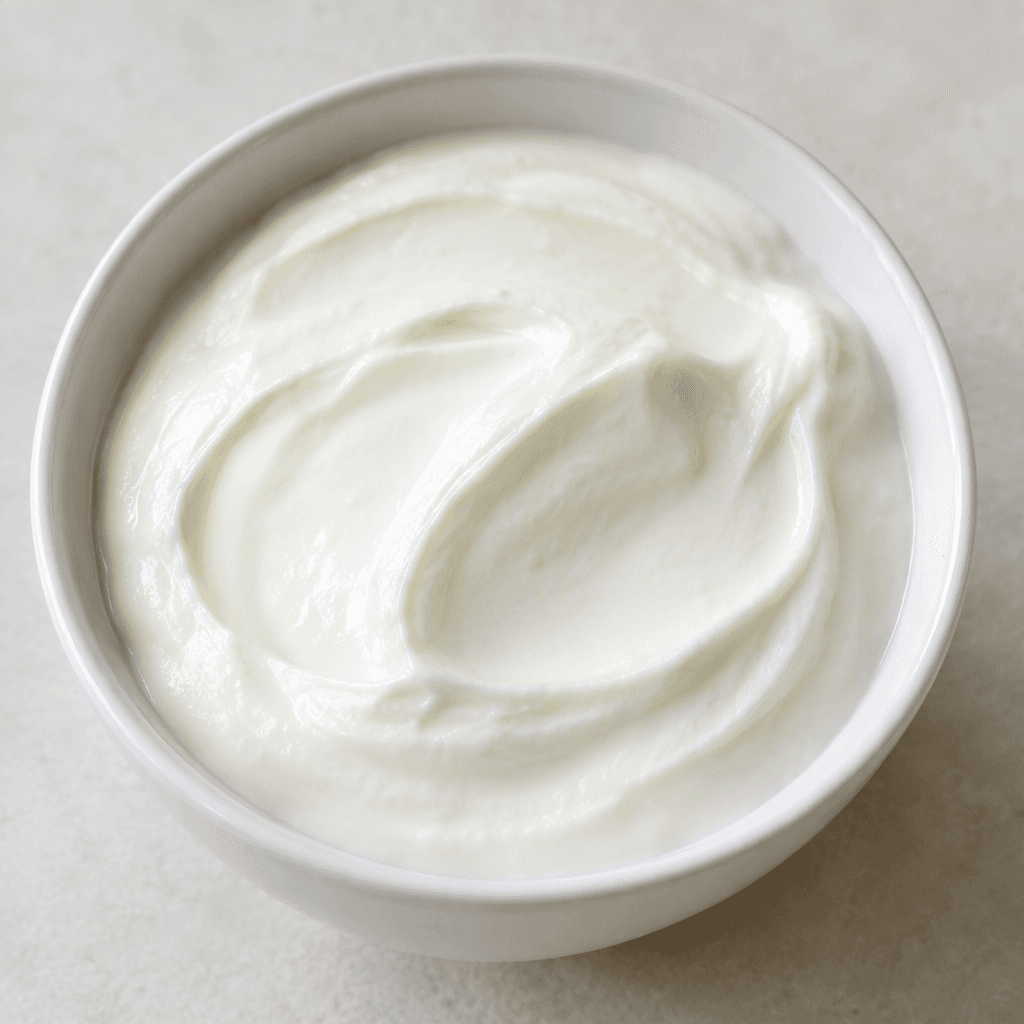
Probiotic Yogurt (Plain) Calories
Live probiotics, high calcium, protein source
In season: Spring · Summer · Autumn · Winter
CALORIES
GI
POTASSIUM
FIBER
Quick answer
1 cup (medium) of Probiotic Yogurt (Plain) (200 g) has 130 calories. That works out to 65 calories per 100 g. It contains 10 g of carbs, 7.4 g of protein, 6 g of fat and 0 g of fiber. Its 0.9 µg of B12 covers 38% of the Daily Value. Its glycemic index is 35 (low), so it raises blood sugar slowly.
What is Probiotic Yogurt (Plain)?
Plain probiotic yogurt is milk fermented with live cultures, including strains described as probiotic. Yogurt has a long history across West Asia and the Balkans, and this plain version keeps the flavour simple, without fruit or added flavourings.
Its smooth, spoonable texture and gentle tang work at breakfast or as a snack, eaten on its own or with fruit and oats. It is also used in dips, dressings and sauces; in Turkey, yogurt is a familiar side with meals and a base for cacık. It provides protein and calcium, making it an easy fit in everyday meals. Add it after cooking rather than boiling it if you want to retain its live cultures.
Probiotic Yogurt (Plain) Nutrition Facts
Selected: 100 g
65
KCAL / 100G
Carbs
5g
· 2% DV
Protein
3.7g
· 7% DV
Fat
3g
· 4% DV
Fiber
0g
· 0% DV
DV is the share of the daily value covered, on a 2,000 kcal reference diet.
Calories come from: Carbs 32% · Protein 24% · Fat 44%
Probiotic Yogurt (Plain) Vitamins & Minerals
Vitamins
B12
0.45µg · 19% DV
B2
0.18mg · 14% DV
B5
0.35mg · 7% DV
Biotin
2µg · 7% DV
Minerals
Phosphorus
95mg · 14% DV
Calcium
120mg · 12% DV
Iodine
15µg · 10% DV
Zinc
1mg · 9% DV
How Nutritious Is Probiotic Yogurt (Plain)?
Nutrient density
High
How many vitamins, minerals and how much fiber this food carries per calorie. A high score means a lot of nutrition for few calories.
Satiety score
Medium
An EatBetter score computed from fiber, protein and calorie density. A high score means staying full longer on the same calories.
Both scores are calculated per 100 g and do not change with the selected portion. The satiety score is EatBetter's own calculation, not a clinical measure.
Probiotic Yogurt (Plain) Glycemic Index
GLYCEMIC INDEX
GLYCEMIC LOAD
Accounts for portion size — a more realistic measure than GI alone.
How to Burn Off Probiotic Yogurt (Plain)
To burn the 65 calories in 100 g:
🚶
Walking (5 km/h)
🏃
Running (8 km/h)
🚴
Cycling
🏊
Swimming
Times are calculated with the MET equation for a 70 kg adult. Actual burn varies with your weight, age and pace.
Is Probiotic Yogurt (Plain) Processed?
NOVA 2
Minimally Processed
1. Unprocessed
2. Minimally Processed
3. Processed
4. Ultra-Processed
NOVA classifies foods into 4 groups by industrial processing. NOVA 1 (unprocessed) is the healthiest.
Does Probiotic Yogurt (Plain) Contain Allergens?
Contains these allergens:
Which Diets Is Probiotic Yogurt (Plain) Good For?
Vegan
— Not suitable
Vegetarian
✓ Suitable
Gluten-Free
— Not suitable
Dairy-Free
— Not suitable
Mediterranean
✓ Suitable
Paleo
— Not suitable
Whole30
— Not suitable
DASH
— Not suitable
Keto
— Not suitable
Low FODMAP
— Not suitable
Probiotic Yogurt (Plain) Fat Profile
SATURATED
1.9g
MONOUNSATURATED
0.7g
POLYUNSATURATED
0.1g
Omega 6:3 ratio 2.5:1
Below the ideal 4:1 — a good omega balance.
Compare Probiotic Yogurt (Plain)
Foods Similar to Probiotic Yogurt (Plain)
Frequently Asked Questions About Probiotic Yogurt (Plain)
What makes plain probiotic yogurt different from regular yogurt?
Plain probiotic yogurt may contain specific probiotic strains in addition to the cultures used to make yogurt. Regular yogurt is also fermented with live cultures, but the strains and amounts can differ between products.
Does plain probiotic yogurt help with gut health?
It can support gut health if it contains live probiotic cultures, but effects vary by bacterial strain. Plain probiotic yogurt is a food, not a treatment, and different products do not necessarily have the same effects.
Can you eat plain probiotic yogurt every day?
Yes, most people can eat plain probiotic yogurt daily as part of meals or snacks. There is no single required daily amount; choose a serving that suits you and notice whether it causes any discomfort.
Does plain probiotic yogurt contain lactose?
Yes, plain probiotic yogurt usually contains some lactose. Fermentation reduces part of the milk’s lactose, but does not automatically make yogurt lactose-free; people with lactose intolerance may still react to it.
When is the best time to eat plain probiotic yogurt?
There is no established best time to eat plain probiotic yogurt. Have it with breakfast, as a snack, or alongside a meal; choose the timing that is comfortable and convenient for you.
Does heating plain probiotic yogurt kill its probiotics?
Heating plain probiotic yogurt can reduce or destroy many of its live bacteria. For a cool sauce or topping, stir it into food after cooking rather than boiling or simmering it.
How should you store plain probiotic yogurt after opening?
Keep plain probiotic yogurt covered in the refrigerator and use a clean spoon each time. Follow the storage directions and use-by date on its container, since products can differ.
Can you freeze plain probiotic yogurt?
Yes, plain probiotic yogurt can be frozen, but thawing may make it watery or grainy. Freezing can also affect some live cultures, so thaw it in the refrigerator and use it in smoothies or cooking.
Can plain probiotic yogurt be used to make more yogurt?
Yes, plain probiotic yogurt with live cultures can sometimes serve as a starter. Results depend on its cultures and your fermentation conditions, so the next batch may differ in texture and probiotic content.
Can you use plain probiotic yogurt instead of sour cream?
Yes, plain probiotic yogurt can replace sour cream in dips, dressings, and many toppings, though it tastes tangier and is often less rich. Add it to hot dishes off the heat to limit separation and preserve live cultures.
Have another question about Probiotic Yogurt (Plain)?
Ask the AI nutrition coach — calories, portions, alternatives and more, answered in seconds in the app.

Scan calories with your camera
Instant AI nutrition analysis

Nutrition data compiled from USDA FoodData Central and scientific sources.