

Ready & Packaged Foods
All →Vegetables & Legumes
All →Desserts & Confectionery
All →Meat & Protein
All →Grains & Bakery
All →Beverages
All →Milk & Dairy
All →

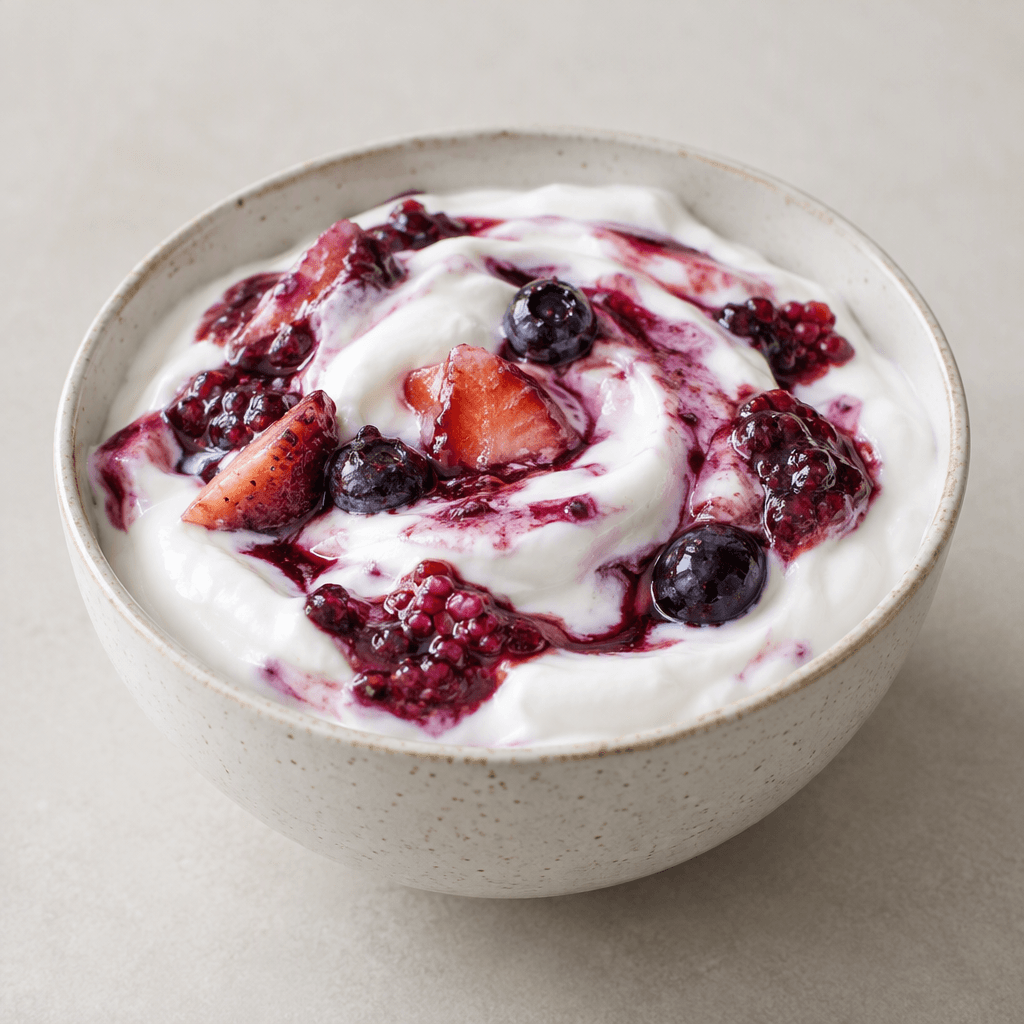
Probiotic Fruit Yogurt Calories
Live probiotics, calcium, protein, enriched with fruit
In season: Spring · Summer · Autumn · Winter
CALORIES
GI
POTASSIUM
FIBER
Quick answer
1 cup (medium) of Probiotic Fruit Yogurt (150 g) has 135 calories. That works out to 90 calories per 100 g. It contains 21.3 g of carbs, 5.3 g of protein, 3.3 g of fat and 1 g of fiber. Its 0.6 µg of B12 covers 26% of the Daily Value. Its glycemic index is 45 (medium), so it raises blood sugar at a moderate pace.
What is Probiotic Fruit Yogurt?
Probiotic fruit yogurt combines cultured yogurt with fruit purée or soft fruit pieces. It is commonly sold in individual pots as a ready-to-eat dairy snack, with a creamy base and a sweet, fruity swirl. The exact fruit and sweetness vary by product.
In places where yogurt is a regular part of breakfast or snacks, it is often eaten chilled on its own, spooned over cereal, or served with fresh fruit. It also makes a quick option between meals for readers elsewhere. The yogurt contributes protein and calcium, while the fruit adds sweetness and a little fibre; it provides 3.5 g of protein per 100 g. For a less sweet bowl, mix it with plain yogurt or add fresh fruit instead of extra toppings.
Probiotic Fruit Yogurt Nutrition Facts
Selected: 100 g
90
KCAL / 100G
Carbs
14.2g
· 5% DV
Protein
3.5g
· 7% DV
Fat
2.2g
· 3% DV
Fiber
0.7g
· 3% DV
DV is the share of the daily value covered, on a 2,000 kcal reference diet.
Calories come from: Carbs 63% · Protein 15% · Fat 22%
Probiotic Fruit Yogurt Vitamins & Minerals
Vitamins
B12
0.42µg · 18% DV
B2
0.18mg · 14% DV
B5
0.45mg · 9% DV
Biotin
2.2µg · 7% DV
Minerals
Phosphorus
95mg · 14% DV
Calcium
120mg · 12% DV
Iodine
13µg · 9% DV
Selenium
2.8µg · 5% DV
How Nutritious Is Probiotic Fruit Yogurt?
Nutrient density
Medium
How many vitamins, minerals and how much fiber this food carries per calorie. A high score means a lot of nutrition for few calories.
Satiety score
Medium
An EatBetter score computed from fiber, protein and calorie density. A high score means staying full longer on the same calories.
Both scores are calculated per 100 g and do not change with the selected portion. The satiety score is EatBetter's own calculation, not a clinical measure.
Probiotic Fruit Yogurt Glycemic Index
GLYCEMIC INDEX
GLYCEMIC LOAD
Accounts for portion size — a more realistic measure than GI alone.
How to Burn Off Probiotic Fruit Yogurt
To burn the 90 calories in 100 g:
🚶
Walking (5 km/h)
🏃
Running (8 km/h)
🚴
Cycling
🏊
Swimming
Times are calculated with the MET equation for a 70 kg adult. Actual burn varies with your weight, age and pace.
Is Probiotic Fruit Yogurt Processed?
NOVA 3
Processed
1. Unprocessed
2. Minimally Processed
3. Processed
4. Ultra-Processed
NOVA classifies foods into 4 groups by industrial processing. NOVA 1 (unprocessed) is the healthiest.
Does Probiotic Fruit Yogurt Contain Allergens?
Contains these allergens:
Which Diets Is Probiotic Fruit Yogurt Good For?
Vegan
— Not suitable
Vegetarian
✓ Suitable
Gluten-Free
— Not suitable
Dairy-Free
— Not suitable
Mediterranean
✓ Suitable
Paleo
— Not suitable
Whole30
— Not suitable
DASH
— Not suitable
Keto
— Not suitable
Low FODMAP
— Not suitable
Probiotic Fruit Yogurt Fat Profile
SATURATED
1.3g
MONOUNSATURATED
0.6g
POLYUNSATURATED
0.08g
Omega 6:3 ratio 2:1
Below the ideal 4:1 — a good omega balance.
Compare Probiotic Fruit Yogurt
Foods Similar to Probiotic Fruit Yogurt
Frequently Asked Questions About Probiotic Fruit Yogurt
Is probiotic fruit yogurt good for your gut?
It can support gut health because it contains live cultures, but the specific strains and amounts vary by product. Probiotic fruit yogurt is a food, not a treatment for digestive symptoms.
Does probiotic fruit yogurt contain live cultures?
Yes, probiotic fruit yogurt is made with live probiotic cultures. Keep it refrigerated as directed, since poor storage can reduce the number of living cultures before you eat it.
How is probiotic fruit yogurt different from regular fruit yogurt?
Probiotic fruit yogurt is made with probiotic cultures intended to remain live in the finished product. Regular fruit yogurt may contain yogurt cultures too, but it is not necessarily marketed with added probiotic strains.
Does probiotic fruit yogurt have added sugar?
Often, yes: fruit preparations in probiotic fruit yogurt may include added sugar, though the amount varies among products. Natural sugars from milk and fruit are also present, so the total carbohydrate figure is not the same as added sugar.
Can you eat probiotic fruit yogurt if you are lactose intolerant?
Some people with lactose intolerance tolerate yogurt better than milk, but probiotic fruit yogurt is not automatically lactose-free. Check whether the product is specifically labeled lactose-free, and avoid it if you have a milk allergy.
Can probiotic fruit yogurt be used in smoothies?
Yes, probiotic fruit yogurt works well in a smoothie and adds both fruit flavor and a creamy texture. Blend it with cold ingredients; avoid heating the smoothie if you want to preserve live cultures.
Does heating probiotic fruit yogurt kill the probiotics?
Yes, high heat can kill or damage the live cultures in probiotic fruit yogurt. Add it after a cooked dish has cooled, or eat it cold rather than boiling or baking it.
How long does probiotic fruit yogurt last after opening?
Keep probiotic fruit yogurt refrigerated after opening, use a clean spoon, and follow the package’s use-by guidance. Discard it if you notice mold, an unusual smell, or a change in texture.
Can babies have probiotic fruit yogurt?
Babies who have started eating complementary foods can generally have plain, pasteurized yogurt in an age-appropriate amount. Fruit versions may contain added sugar, so check the ingredients and ask your child’s clinician if you have concerns.
Can you freeze probiotic fruit yogurt?
Yes, you can freeze probiotic fruit yogurt, but freezing and thawing may change its texture and reduce the number of live cultures. Thawed yogurt is often better blended into a smoothie than eaten with a spoon.
Have another question about Probiotic Fruit Yogurt?
Ask the AI nutrition coach — calories, portions, alternatives and more, answered in seconds in the app.

Scan calories with your camera
Instant AI nutrition analysis

Nutrition data compiled from USDA FoodData Central and scientific sources.