

Ready & Packaged Foods
All →Vegetables & Legumes
All →Desserts & Confectionery
All →Meat & Protein
All →Grains & Bakery
All →Beverages
All →Milk & Dairy
All →

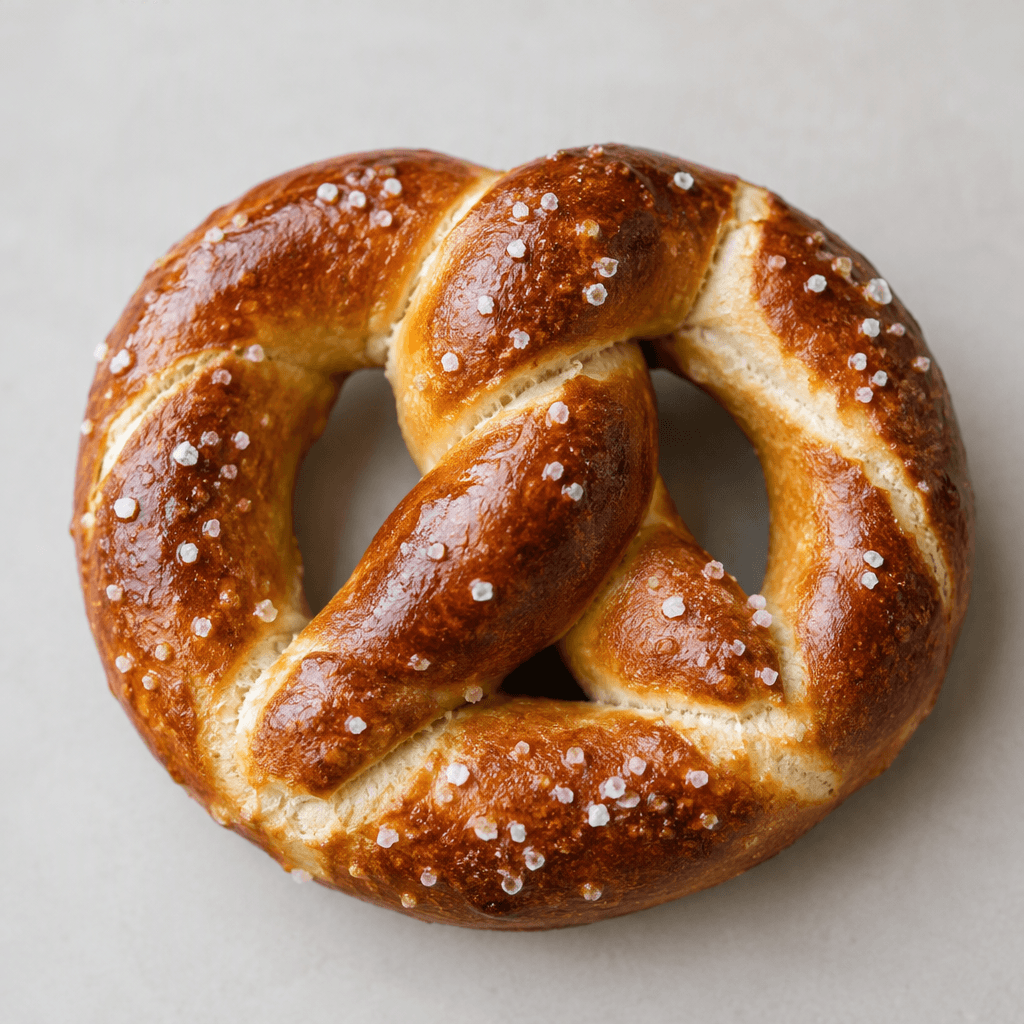
Pretzel Calories
Traditional German snack, low fat, moderate carbs
In season: Spring · Summer · Autumn · Winter
CALORIES
GI
POTASSIUM
FIBER
Quick answer
1 piece (medium) of Pretzel (60 g) has 228 calories. That works out to 380 calories per 100 g. It contains 46.8 g of carbs, 5.4 g of protein, 1.2 g of fat and 1.8 g of fiber. Its 720 mg of Sodium covers 31% of the Daily Value. Its glycemic index is 70 (high), so it raises blood sugar quickly.
What is Pretzel?
A pretzel is a knotted bread roll associated especially with southern Germany, where the salted version is a familiar bakery and beer-garden staple. Its dough is shaped into a distinctive twist and baked until the crust turns deep golden and glossy; coarse salt is a common topping.
The outside is pleasantly chewy, while the center stays soft and bread-like. In Germany, pretzels are eaten plain, with butter, or alongside sausages and other hearty foods. Elsewhere, they make an easy snack with tea or coffee, or can be split and filled like a sandwich. They are mostly carbohydrate and relatively low in fat; pair one with cheese, yogurt, or another protein-rich food for a more substantial bite.
Pretzel Nutrition Facts
Selected: 100 g
380
KCAL / 100G
Carbs
78g
· 28% DV
Protein
9g
· 18% DV
Fat
2g
· 3% DV
Fiber
3g
· 11% DV
DV is the share of the daily value covered, on a 2,000 kcal reference diet.
Calories come from: Carbs 85% · Protein 10% · Fat 5%
Pretzel Vitamins & Minerals
Vitamins
B1
0.25mg · 21% DV
B3
2.1mg · 13% DV
B2
0.15mg · 12% DV
Folate
35µg · 9% DV
Minerals
Sodium
1200mg · 52% DV
Selenium
10µg · 18% DV
Iron
3mg · 17% DV
Phosphorus
80mg · 11% DV
How Nutritious Is Pretzel?
Nutrient density
Low
How many vitamins, minerals and how much fiber this food carries per calorie. A high score means a lot of nutrition for few calories.
Satiety score
Low
An EatBetter score computed from fiber, protein and calorie density. A high score means staying full longer on the same calories.
Both scores are calculated per 100 g and do not change with the selected portion. The satiety score is EatBetter's own calculation, not a clinical measure.
Pretzel Glycemic Index
GLYCEMIC INDEX
GLYCEMIC LOAD
Accounts for portion size — a more realistic measure than GI alone.
How to Burn Off Pretzel
To burn the 380 calories in 100 g:
🚶
Walking (5 km/h)
🏃
Running (8 km/h)
🚴
Cycling
🏊
Swimming
Times are calculated with the MET equation for a 70 kg adult. Actual burn varies with your weight, age and pace.
Is Pretzel Processed?
NOVA 3
Processed
1. Unprocessed
2. Minimally Processed
3. Processed
4. Ultra-Processed
NOVA classifies foods into 4 groups by industrial processing. NOVA 1 (unprocessed) is the healthiest.
Does Pretzel Contain Allergens?
Contains these allergens:
Which Diets Is Pretzel Good For?
Vegan
— Not suitable
Vegetarian
✓ Suitable
Gluten-Free
— Not suitable
Dairy-Free
— Not suitable
Mediterranean
— Not suitable
Paleo
— Not suitable
Whole30
— Not suitable
DASH
— Not suitable
Keto
— Not suitable
Low FODMAP
— Not suitable
Pretzel Fat Profile
SATURATED
0.4g
MONOUNSATURATED
0.5g
POLYUNSATURATED
0.2g
Omega 6:3 ratio 18:1
Above the ideal 4:1 (18:1).
Compare Pretzel
Foods Similar to Pretzel
Frequently Asked Questions About Pretzel
What is a pretzel, and where did it come from?
A pretzel is a baked bread snack, traditionally shaped into a distinctive knot and associated with Germany. It is commonly sold as a soft, chewy bread or as a smaller, crisp snack; the exact history of its shape is uncertain.
Why are pretzels shaped like a knot?
The knot is the pretzel’s traditional shape and makes it easy to recognize. Bakers form it by rolling dough into a rope, crossing the ends, and folding them back onto the body; stories explaining the shape’s origins are varied rather than settled.
Why are pretzels dipped in lye before baking?
A brief dip in food-grade alkaline solution gives traditional pretzels their deep brown, glossy crust and characteristic flavor. Home recipes often use a baking-soda bath as a milder alternative; never handle household drain-cleaning lye as a food ingredient.
How do you make soft pretzels at home?
Make a yeast dough, let it rise, shape it into ropes and twist each rope into a knot. Dip the shaped dough in an alkaline bath, add toppings such as coarse salt, and bake until browned; this produces the classic chewy center and dark crust.
Why does salt fall off a pretzel?
Coarse salt can fall off a pretzel because the crystals do not always stick firmly to the crust, especially after cooling or reheating. Applying the salt while the dough is still damp after its bath helps it adhere before baking.
How are German pretzels different from American pretzels?
German-style pretzels are often soft, chewy, and finished with coarse salt, while American snack pretzels are commonly smaller and crisp. Both can have the familiar twisted shape, but recipes and toppings vary, so the distinction is not absolute.
What dip goes best with a pretzel?
Mustard is a classic savory dip for a pretzel, and cheese sauce is another popular choice. A soft pretzel also pairs well with a sweet dip such as cinnamon sugar or chocolate, depending on whether you want a savory or dessert-style snack.
How should you store soft pretzels?
Keep soft pretzels in an airtight container at room temperature and eat them soon for the best texture. Refrigeration can make bread stale more quickly. Store-bought crunchy pretzels stay crisp when their package is tightly resealed after opening.
Can you freeze pretzels?
Yes, soft pretzels freeze well once fully cooled. Seal them in a freezer-safe bag, then thaw and warm them in the oven before serving. Some coarse salt may loosen during freezing or reheating, but the pretzel’s texture can still be refreshed.
How can you make a stale pretzel taste fresh again?
Warm a stale soft pretzel briefly in the oven to revive some of its softness. A light sprinkle of water can help if the crust is dry, but avoid prolonged heating, which can make the bread tougher rather than fresher.
Have another question about Pretzel?
Ask the AI nutrition coach — calories, portions, alternatives and more, answered in seconds in the app.

Scan calories with your camera
Instant AI nutrition analysis

Nutrition data compiled from USDA FoodData Central and scientific sources.