

Ready & Packaged Foods
All →Vegetables & Legumes
All →Desserts & Confectionery
All →Meat & Protein
All →Grains & Bakery
All →Beverages
All →Milk & Dairy
All →

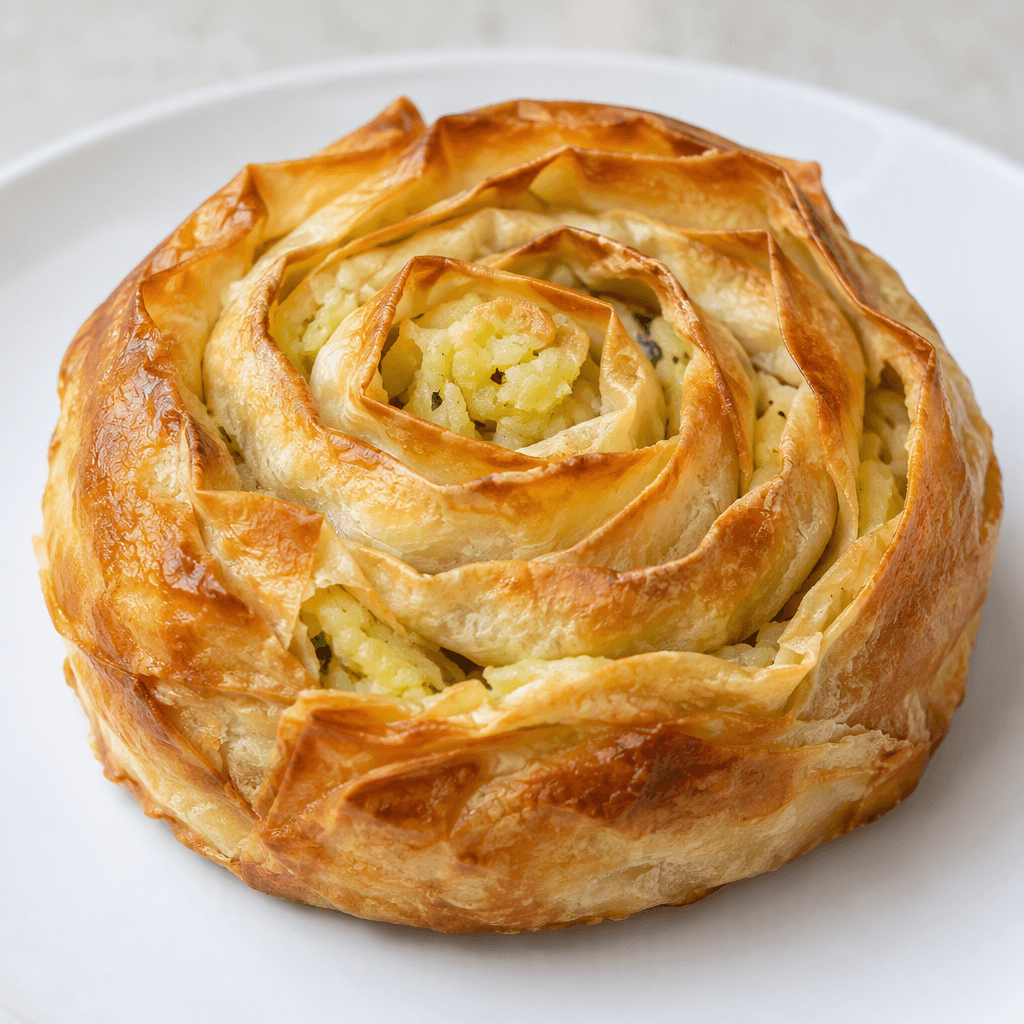
Potato rose börek Calories
Classic Turkish börek, potato filling, rolled in rose shape, oven-baked.
In season: Spring · Summer · Autumn · Winter
CALORIES
GI
POTASSIUM
FIBER
Quick answer
1 piece (medium) of Potato rose börek (70 g) has 147 calories. That works out to 210 calories per 100 g. It contains 20.3 g of carbs, 3.2 g of protein, 5.9 g of fat and 1.5 g of fiber. Its 231 mg of Sodium covers 10% of the Daily Value. Its glycemic index is 65 (medium), so it raises blood sugar at a moderate pace.
What is Potato rose börek?
Potato rose börek is a Turkish pastry made by wrapping seasoned mashed potato in thin yufka, then coiling it into a rose shape and baking it until golden. It belongs to the wider family of börek, filled pastries found across Turkey and neighbouring regions. The layered pastry turns crisp at the edges, while the potato centre stays soft and substantial.
In Turkey, it is often served warm for breakfast, with tea, or as part of a spread for guests; it also works as a light lunch. Elsewhere, you can enjoy it as a savoury snack or an easy shared dish. It is filling and mainly provides energy from its pastry and potato, rather than much protein. Serve with plain yoghurt, a crisp salad or fresh herbs for a lighter-feeling meal.
Potato rose börek Nutrition Facts
Selected: 100 g
210
KCAL / 100G
Carbs
29g
· 11% DV
Protein
4.5g
· 9% DV
Fat
8.5g
· 11% DV
Fiber
2.2g
· 8% DV
DV is the share of the daily value covered, on a 2,000 kcal reference diet.
Calories come from: Carbs 55% · Protein 9% · Fat 36%
Potato rose börek Vitamins & Minerals
Vitamins
B1
0.09mg · 8% DV
B6
0.13mg · 8% DV
B3
1.1mg · 7% DV
Biotin
2.2µg · 7% DV
Minerals
Sodium
330mg · 14% DV
Phosphorus
55mg · 8% DV
Potassium ⭐
230mg · 7% DV
Iron
1mg · 6% DV
How Nutritious Is Potato rose börek?
Nutrient density
Medium
How many vitamins, minerals and how much fiber this food carries per calorie. A high score means a lot of nutrition for few calories.
Satiety score
Medium
An EatBetter score computed from fiber, protein and calorie density. A high score means staying full longer on the same calories.
Both scores are calculated per 100 g and do not change with the selected portion. The satiety score is EatBetter's own calculation, not a clinical measure.
Potato rose börek Glycemic Index
GLYCEMIC INDEX
GLYCEMIC LOAD
Accounts for portion size — a more realistic measure than GI alone.
How to Burn Off Potato rose börek
To burn the 210 calories in 100 g:
🚶
Walking (5 km/h)
🏃
Running (8 km/h)
🚴
Cycling
🏊
Swimming
Times are calculated with the MET equation for a 70 kg adult. Actual burn varies with your weight, age and pace.
Is Potato rose börek Processed?
NOVA 3
Processed
1. Unprocessed
2. Minimally Processed
3. Processed
4. Ultra-Processed
NOVA classifies foods into 4 groups by industrial processing. NOVA 1 (unprocessed) is the healthiest.
Does Potato rose börek Contain Allergens?
Contains these allergens:
Which Diets Is Potato rose börek Good For?
Vegan
— Not suitable
Vegetarian
✓ Suitable
Gluten-Free
— Not suitable
Dairy-Free
— Not suitable
Mediterranean
✓ Suitable
Paleo
— Not suitable
Whole30
— Not suitable
DASH
— Not suitable
Keto
— Not suitable
Low FODMAP
— Not suitable
Potato rose börek Fat Profile
SATURATED
2.2g
MONOUNSATURATED
3.2g
POLYUNSATURATED
1.1g
Omega 6:3 ratio 20:1
Above the ideal 4:1 (20:1).
Compare Potato rose börek
Foods Similar to Potato rose börek
Frequently Asked Questions About Potato rose börek
How do you make potato rose börek?
Potato rose börek is made by spreading seasoned mashed potato on strips of yufka, rolling them up, then coiling each roll into a rose. Tuck the loose end underneath, arrange the pieces on a baking tray, and bake until golden.
What is potato rose börek?
Potato rose börek is a Turkish savory pastry made with thin yufka wrapped around a potato filling and shaped into individual spirals. Its rose-like form gives it crisp, layered edges while the mashed-potato center stays soft.
What goes in the filling for potato rose börek?
The basic filling for potato rose börek is boiled, mashed potato seasoned with salt and spices. Many home cooks add sautéed onion, black pepper, or paprika; cool the filling before wrapping so it does not make the pastry soggy.
How do you shape potato rose börek without it unraveling?
To keep potato rose börek from unraveling, spread the filling in a thin, even line and roll the yufka snugly without tearing it. Coil the roll into a spiral, tuck its end underneath, and set it seam-side down on the tray.
Can you make potato rose börek with phyllo pastry?
Yes, phyllo can stand in for yufka when making potato rose börek, though it is thinner and more delicate. Keep unused sheets covered, work with a few layers for strength, and brush them lightly with oil or melted butter so they bend without cracking.
How long should potato rose börek bake?
Bake potato rose börek in a preheated oven until the pastry is crisp and evenly golden. The exact time depends on the size of the spirals and your oven, so check the color and make sure the pastry layers are cooked through.
Can you add cheese to potato rose börek?
Yes, crumbled Turkish white cheese or grated kaşar can be mixed into potato rose börek filling. Taste before adding extra salt, since the cheese may already be salty, and avoid adding so much that the filling becomes wet.
What should you serve with potato rose börek?
Potato rose börek goes well with plain yogurt, ayran, or a crisp salad. In Turkey it is also a popular choice for a tea table; serve it warm so the pastry stays crisp around the soft potato center.
Can you freeze potato rose börek?
Yes, potato rose börek can be frozen either before or after baking. Freeze uncooked shaped pieces separately until firm, then transfer them to a sealed container; wrap baked börek only after it has cooled completely.
How do you store and reheat potato rose börek?
Store cooled potato rose börek in a covered container in the refrigerator and eat it within a few days. Reheat it in an oven to bring back some crispness; microwaving is quicker but tends to soften the yufka.
Have another question about Potato rose börek?
Ask the AI nutrition coach — calories, portions, alternatives and more, answered in seconds in the app.

Scan calories with your camera
Instant AI nutrition analysis

Nutrition data compiled from USDA FoodData Central and scientific sources.