

Ready & Packaged Foods
All →Vegetables & Legumes
All →Desserts & Confectionery
All →Meat & Protein
All →Grains & Bakery
All →Beverages
All →Milk & Dairy
All →

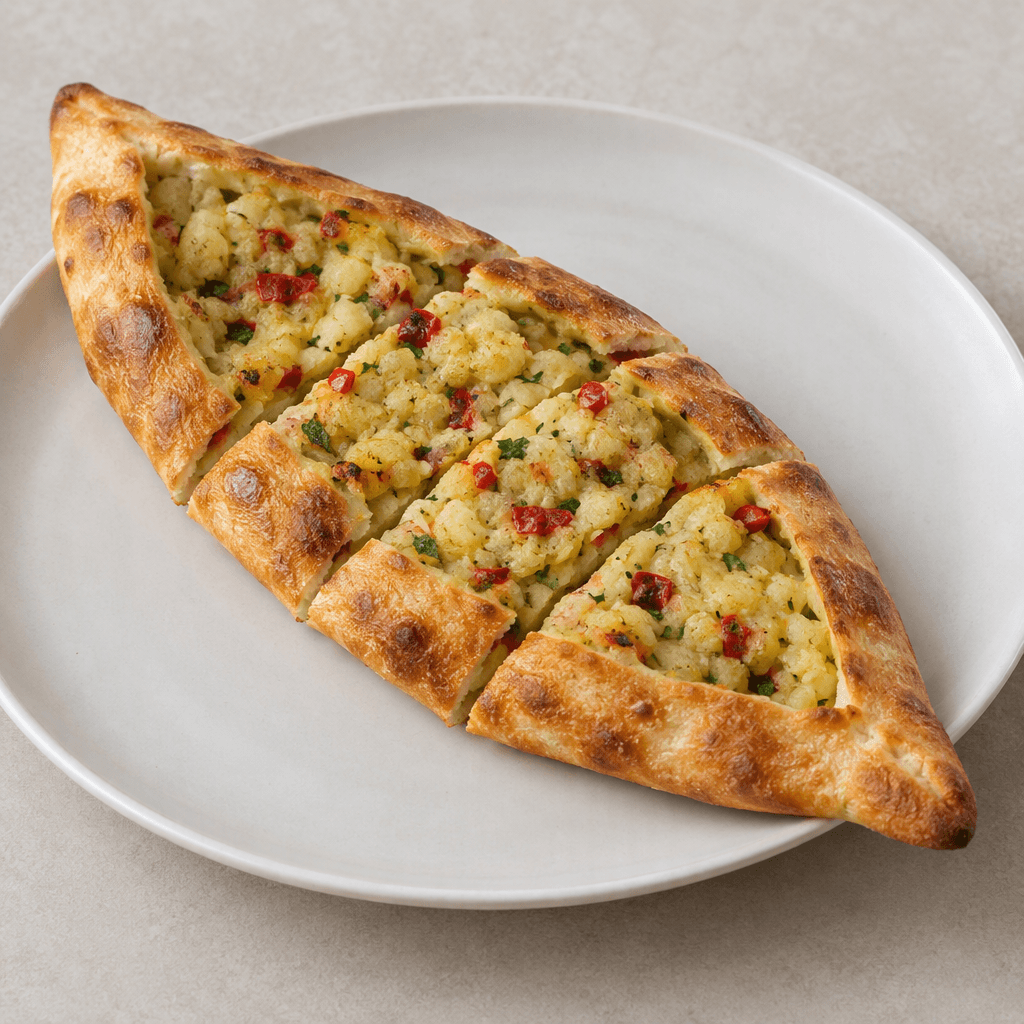
Potato Pide Calories
Traditional Turkish pide dough, potato filling, source of carbs and fiber
In season: Spring · Summer · Autumn · Winter
CALORIES
GI
POTASSIUM
FIBER
Quick answer
1 piece (medium) of Potato Pide (180 g) has 378 calories. That works out to 210 calories per 100 g. It contains 69.3 g of carbs, 9.4 g of protein, 7.6 g of fat and 4.9 g of fiber. Its 576 mg of Sodium covers 25% of the Daily Value. Its glycemic index is 65 (medium), so it raises blood sugar at a moderate pace.
What is Potato Pide?
Potato pide is a Turkish baked flatbread made from pide dough and filled with seasoned potato. Often shaped like a long boat, it has a browned, slightly crisp edge around a soft, hearty centre. The filling may include pepper and herbs, adding savoury warmth to the mild potato.
In Turkey, it is commonly sliced and shared as a meal or snack, sometimes with salad or ayran; it also makes a filling choice alongside tea. For English-speaking diners elsewhere, it works well as a casual lunch or a centrepiece for a simple dinner. Its energy comes chiefly from the dough and potato, with some fibre. Pair a smaller portion with fresh salad for a lighter meal.
Potato Pide Nutrition Facts
Selected: 100 g
210
KCAL / 100G
Carbs
38.5g
· 14% DV
Protein
5.2g
· 10% DV
Fat
4.2g
· 5% DV
Fiber
2.7g
· 10% DV
DV is the share of the daily value covered, on a 2,000 kcal reference diet.
Calories come from: Carbs 72% · Protein 10% · Fat 18%

Log this food in EatBetter
100,000+ people use it
- Get your daily calorie target
- Snap your meal, log it in seconds
- See every vitamin and mineral

📸 Scan the code to get the app free.

Potato Pide Vitamins & Minerals
Vitamins
B6
0.13mg · 8% DV
B1
0.09mg · 8% DV
B3
1.1mg · 7% DV
Vitamin C
6mg · 7% DV
Minerals
Sodium
320mg · 14% DV
Phosphorus
58mg · 8% DV
Selenium
4µg · 7% DV
Potassium ⭐
160mg · 5% DV
Copper
0mg · 0% DV
How Nutritious Is Potato Pide?
Nutrient density
Medium
How many vitamins, minerals and how much fiber this food carries per calorie. A high score means a lot of nutrition for few calories.
Satiety score
Medium
An EatBetter score computed from fiber, protein and calorie density. A high score means staying full longer on the same calories.
Both scores are calculated per 100 g and do not change with the selected portion. The satiety score is EatBetter's own calculation, not a clinical measure.
Potato Pide Glycemic Index
GLYCEMIC INDEX
GLYCEMIC LOAD
Accounts for portion size — a more realistic measure than GI alone.
How to Burn Off Potato Pide
To burn the 210 calories in 100 g:
🚶
Walking (5 km/h)
🏃
Running (8 km/h)
🚴
Cycling
🏊
Swimming
Times are calculated with the MET equation for a 70 kg adult. Actual burn varies with your weight, age and pace.
Is Potato Pide Processed?
NOVA 3
Processed
1. Unprocessed
2. Minimally Processed
3. Processed
4. Ultra-Processed
NOVA classifies foods into 4 groups by industrial processing. NOVA 1 (unprocessed) is the healthiest.
Does Potato Pide Contain Allergens?
Contains these allergens:
Which Diets Is Potato Pide Good For?
Vegan
— Not suitable
Vegetarian
✓ Suitable
Gluten-Free
— Not suitable
Dairy-Free
— Not suitable
Mediterranean
✓ Suitable
Paleo
— Not suitable
Whole30
— Not suitable
DASH
— Not suitable
Keto
— Not suitable
Low FODMAP
— Not suitable
Potato Pide Fat Profile
SATURATED
0.9g
MONOUNSATURATED
1.2g
POLYUNSATURATED
0.4g
Omega 6:3 ratio 6.5:1
Above the ideal 4:1 (6.5:1).
Compare Potato Pide
Foods Similar to Potato Pide
Frequently Asked Questions About Potato Pide
What is potato pide?
Potato pide is a Turkish boat-shaped flatbread filled with seasoned potato and baked until the dough is golden. It is usually served in slices, either as a light meal or alongside soup, salad, or other shared dishes.
How is potato pide different from potato börek?
Potato pide uses a leavened bread dough shaped around its filling, while potato börek is made with thin pastry sheets or dough folded around potato. Pide has a bread-like crust; börek is typically layered or crisp and flaky.
What goes into potato pide filling?
Potato pide filling is commonly made with cooked, mashed or roughly crushed potatoes, often seasoned with onion, pepper, and herbs. Recipes vary, but the filling should be thick enough to stay in place rather than make the dough soggy.
Is potato pide made with mashed or sliced potatoes?
Potato pide is most often filled with cooked mashed or chunky potatoes, though recipes can differ. A coarse mash gives the filling a soft texture while still leaving pieces; raw potato slices are less typical because they need longer to cook through.
How do you keep potato pide crust crisp?
Bake potato pide in a fully preheated oven and avoid making the potato filling wet or piling it too thickly. After baking, place the pide on a wire rack rather than leaving it on a hot, steamy tray.
What do you serve with potato pide?
Potato pide pairs well with a crisp salad, yogurt, or a glass of ayran, a Turkish yogurt drink. It can also be served with soup for a fuller meal or shared as part of a spread of Turkish dishes.
Can you make potato pide without yeast?
Yes, you can make potato pide with an unleavened dough, but the crust will be flatter and less bread-like than the traditional yeasted version. Roll the dough evenly so it cooks through before the potato filling dries out.
Can potato pide be made ahead?
Yes, you can prepare the potato filling ahead and refrigerate it in a covered container, then assemble and bake the pide when ready. Let the filling cool first; adding hot filling to raw dough can make it harder to shape.
How do you reheat potato pide?
Reheat potato pide in an oven or covered skillet to warm the center while restoring some crispness to the crust. A microwave is quicker, but it tends to make the bread softer, so use it only when convenience matters most.
Can you freeze potato pide?
Yes, baked potato pide freezes well when cooled and wrapped airtight in individual portions. Thaw it before reheating, or warm it from frozen in the oven for longer; the crust may be less crisp than when freshly baked.
Have another question about Potato Pide?
Ask the AI nutrition coach — calories, portions, alternatives and more, answered in seconds in the app.

Scan calories with your camera
Instant AI nutrition analysis

Nutrition data compiled from USDA FoodData Central and scientific sources.