

Ready & Packaged Foods
All →Vegetables & Legumes
All →Desserts & Confectionery
All →Meat & Protein
All →Grains & Bakery
All →Beverages
All →Milk & Dairy
All →

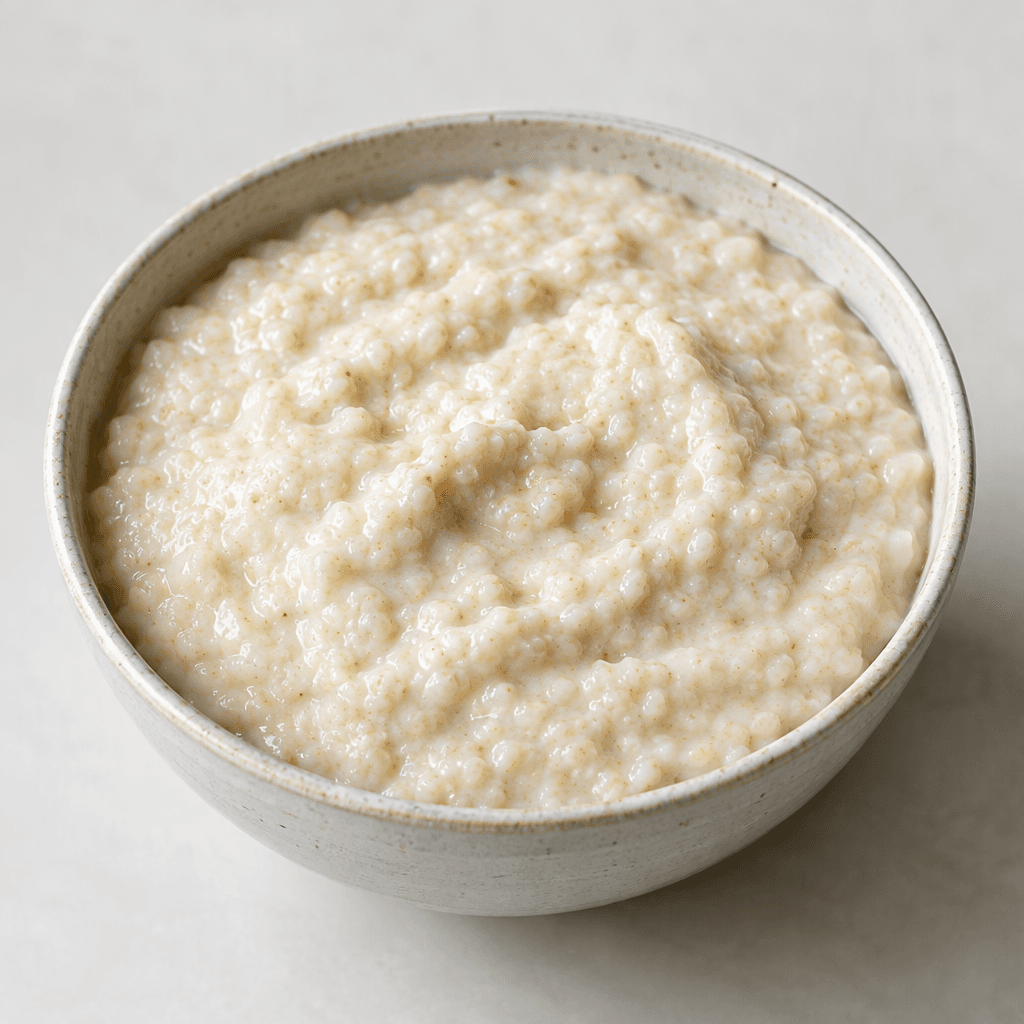
Porridge Calories
Oat porridge, high in fiber and vitamins
In season: Spring · Summer · Autumn · Winter
CALORIES
GI
POTASSIUM
FIBER
Quick answer
1 cup (medium) of Porridge (200 g) has 140 calories. That works out to 70 calories per 100 g. It contains 24 g of carbs, 5 g of protein, 3 g of fat and 4.2 g of fiber. Its 0.6 mg of Manganese covers 26% of the Daily Value. Its glycemic index is 55 (medium), so it raises blood sugar at a moderate pace.
What is Porridge?
Porridge is a warm dish made by simmering oats in water or milk until soft and spoonable. It has long been a simple everyday meal, and oat porridge is especially associated with Scotland and Britain, where it remains a familiar breakfast.
Its flavour is mild and its texture can range from loose and creamy to thick, with a little softness from the cooked oats. Serve it warm with fruit, nuts, cinnamon or a drizzle of honey; in some homes, savoury toppings are welcome too. It is a fibre-containing, grain-based breakfast, though plain porridge is not especially high in protein. For a lighter bowl, use water or a milk of your choice and add fresh fruit; nuts or yoghurt make it more substantial.
Porridge Nutrition Facts
Selected: 100 g
70
KCAL / 100G
Carbs
12g
· 4% DV
Protein
2.5g
· 5% DV
Fat
1.5g
· 2% DV
Fiber
2.1g
· 8% DV
DV is the share of the daily value covered, on a 2,000 kcal reference diet.
Calories come from: Carbs 67% · Protein 14% · Fat 19%

Log this food in EatBetter
100,000+ people use it
- Get your daily calorie target
- Snap your meal, log it in seconds
- See every vitamin and mineral

📸 Scan the code to get the app free.

Porridge Vitamins & Minerals
Vitamins
B1
0.08mg · 7% DV
Biotin
2µg · 7% DV
B5
0.2mg · 4% DV
B3
0.4mg · 3% DV
Minerals
Zinc
1mg · 9% DV
Phosphorus
50mg · 7% DV
Potassium ⭐
60mg · 2% DV
Manganese
0mg · 0% DV
Copper
0mg · 0% DV
How Nutritious Is Porridge?
Nutrient density
High
How many vitamins, minerals and how much fiber this food carries per calorie. A high score means a lot of nutrition for few calories.
Satiety score
Medium
An EatBetter score computed from fiber, protein and calorie density. A high score means staying full longer on the same calories.
Both scores are calculated per 100 g and do not change with the selected portion. The satiety score is EatBetter's own calculation, not a clinical measure.
Porridge Glycemic Index
GLYCEMIC INDEX
GLYCEMIC LOAD
Accounts for portion size — a more realistic measure than GI alone.
How to Burn Off Porridge
To burn the 70 calories in 100 g:
🚶
Walking (5 km/h)
🏃
Running (8 km/h)
🚴
Cycling
🏊
Swimming
Times are calculated with the MET equation for a 70 kg adult. Actual burn varies with your weight, age and pace.
Is Porridge Processed?
NOVA 2
Minimally Processed
1. Unprocessed
2. Minimally Processed
3. Processed
4. Ultra-Processed
NOVA classifies foods into 4 groups by industrial processing. NOVA 1 (unprocessed) is the healthiest.
Does Porridge Contain Allergens?
No known major allergens
Which Diets Is Porridge Good For?
Vegan
✓ Suitable
Vegetarian
✓ Suitable
Gluten-Free
✓ Suitable
Dairy-Free
— Not suitable
Mediterranean
✓ Suitable
Paleo
— Not suitable
Whole30
— Not suitable
DASH
— Not suitable
Keto
— Not suitable
Low FODMAP
— Not suitable
Porridge Fat Profile
SATURATED
0.3g
MONOUNSATURATED
0.4g
POLYUNSATURATED
0.4g
Omega 6:3 ratio 17.5:1
Above the ideal 4:1 (17.5:1).
Compare Porridge
Foods Similar to Porridge
Frequently Asked Questions About Porridge
How do you make porridge?
Porridge is made by simmering oats with milk or water until soft and thick. Stir as it cooks to keep it from sticking, then add your preferred toppings. The cooking time varies with the type of oats you use.
What is porridge made of?
Porridge is commonly made from oats cooked in water or milk, though the word can also describe a similar dish made with other grains. Oat porridge may use rolled, quick, or steel-cut oats, which produce different textures.
Is porridge better with milk or water?
Porridge can be made with either milk or water. Milk gives it a creamier texture and a richer taste, while water lets the oat flavour stand out more. You can also use a mixture of both.
How much liquid should you use for porridge?
A useful starting point for porridge is about two parts liquid to one part rolled oats. Add a little more liquid if you prefer a looser texture, or simmer it longer if you want it thicker.
Can you make porridge in the microwave?
Yes, porridge can be cooked in the microwave. Combine the oats and liquid in a large microwave-safe bowl, heat in short intervals, and stir between them. A large bowl helps prevent the mixture from bubbling over.
How do you stop porridge from going lumpy?
To prevent lumpy porridge, stir the oats into the liquid before heating and keep stirring as they cook. Use low heat on the stove; if cooking in a microwave, pause to stir at intervals so the oats soften evenly.
Can you make porridge overnight without cooking it?
Yes, oats can soften overnight in milk or another liquid in the refrigerator, making a no-cook version of porridge. It is usually eaten cold, or you can warm it in the morning; it tends to be thicker than freshly cooked porridge.
What are the best toppings for porridge?
Fruit, nuts, seeds, and spices are popular porridge toppings. Banana with cinnamon or berries with nuts add flavour and texture; add sweeteners sparingly, since dried fruit, syrup, and honey can make the bowl much sweeter.
How long does cooked porridge last in the fridge?
Cooked porridge can be kept in a covered container in the refrigerator and reheated later. It thickens as it cools, so stir in a splash of milk or water while reheating. Refrigerate leftovers promptly rather than leaving them out.
Does porridge help with weight loss?
Porridge may help some people feel full because oats contain fibre, but it does not cause weight loss on its own. Large portions and toppings such as sugar, syrup, or cream can make a bowl much more energy-dense.
Have another question about Porridge?
Ask the AI nutrition coach — calories, portions, alternatives and more, answered in seconds in the app.

Scan calories with your camera
Instant AI nutrition analysis

Nutrition data compiled from USDA FoodData Central and scientific sources.