

Ready & Packaged Foods
All →Vegetables & Legumes
All →Desserts & Confectionery
All →Meat & Protein
All →Grains & Bakery
All →Beverages
All →Milk & Dairy
All →

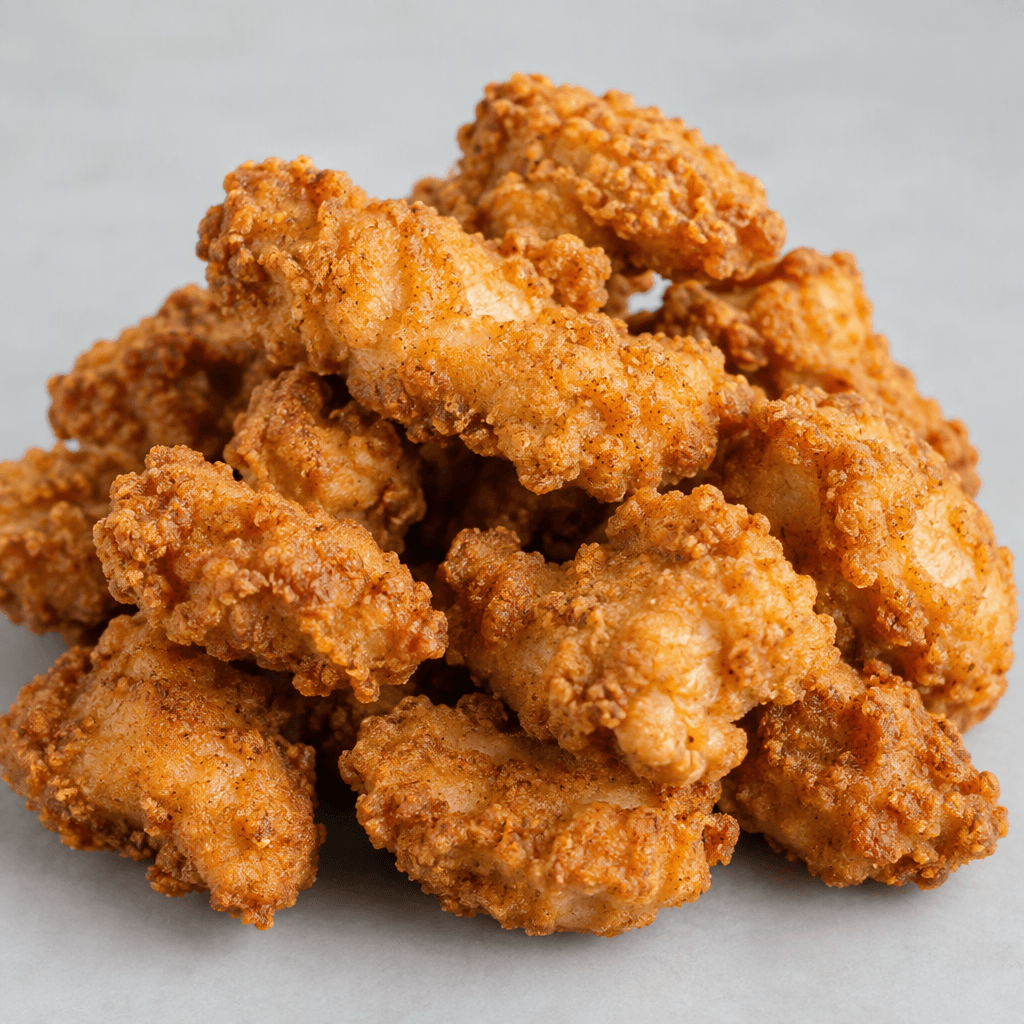
Popchicken Calories
Small, fried chicken pieces, typically served as a snack.
In season: Spring · Summer · Autumn · Winter
CALORIES
GI
POTASSIUM
FIBER
Quick answer
1 serving (medium) of Popchicken (80 g) has 208 calories. That works out to 260 calories per 100 g. It contains 14.4 g of carbs, 12.8 g of protein, 10.4 g of fat and 1 g of fiber. Its 4.2 mg of B3 covers 26% of the Daily Value. Its glycemic index is 65 (medium), so it raises blood sugar at a moderate pace.
What is Popchicken?
Popchicken is made from small pieces of chicken coated and fried until crisp. It is best understood as a casual fast-food or snack-style preparation rather than a dish tied to one particular regional tradition.
The coating is craggy and crunchy, while the chicken inside stays tender. Popchicken is usually served hot, often with dipping sauces and fries as a quick snack or part of a meal; it also works well for sharing. Chicken provides protein, while the coating adds carbohydrates and frying contributes fat. For a lighter, more complete plate, pair it with a salad or vegetables and choose a modest amount of sauce.
Popchicken Nutrition Facts
Selected: 100 g
260
KCAL / 100G
Carbs
18g
· 7% DV
Protein
16g
· 32% DV
Fat
13g
· 17% DV
Fiber
1.2g
· 4% DV
DV is the share of the daily value covered, on a 2,000 kcal reference diet.
Calories come from: Carbs 28% · Protein 25% · Fat 47%
Popchicken Vitamins & Minerals
Vitamins
B3
5.2mg · 33% DV
B6
0.32mg · 19% DV
B5
0.85mg · 17% DV
Biotin
3.2µg · 11% DV
Minerals
Selenium
13µg · 24% DV
Sodium
520mg · 23% DV
Phosphorus
140mg · 20% DV
Zinc
1mg · 9% DV
How Nutritious Is Popchicken?
Nutrient density
Medium
How many vitamins, minerals and how much fiber this food carries per calorie. A high score means a lot of nutrition for few calories.
Satiety score
Medium
An EatBetter score computed from fiber, protein and calorie density. A high score means staying full longer on the same calories.
Both scores are calculated per 100 g and do not change with the selected portion. The satiety score is EatBetter's own calculation, not a clinical measure.
Popchicken Glycemic Index
GLYCEMIC INDEX
GLYCEMIC LOAD
Accounts for portion size — a more realistic measure than GI alone.
How to Burn Off Popchicken
To burn the 260 calories in 100 g:
🚶
Walking (5 km/h)
🏃
Running (8 km/h)
🚴
Cycling
🏊
Swimming
Times are calculated with the MET equation for a 70 kg adult. Actual burn varies with your weight, age and pace.
Is Popchicken Processed?
NOVA 3
Processed
1. Unprocessed
2. Minimally Processed
3. Processed
4. Ultra-Processed
NOVA classifies foods into 4 groups by industrial processing. NOVA 1 (unprocessed) is the healthiest.
Does Popchicken Contain Allergens?
Contains these allergens:
Which Diets Is Popchicken Good For?
Vegan
— Not suitable
Vegetarian
— Not suitable
Gluten-Free
— Not suitable
Dairy-Free
— Not suitable
Mediterranean
— Not suitable
Paleo
— Not suitable
Whole30
— Not suitable
DASH
— Not suitable
Keto
— Not suitable
Low FODMAP
— Not suitable
Popchicken Fat Profile
SATURATED
2.7g
MONOUNSATURATED
4.2g
POLYUNSATURATED
2.1g
Omega 6:3 ratio 15:1
Above the ideal 4:1 (15:1).
Compare Popchicken
Foods Similar to Popchicken
Frequently Asked Questions About Popchicken
What is Popchicken?
Popchicken is bite-sized chicken coated in a seasoned crust and fried until crisp. It is usually served as a snack or appetizer, often with dipping sauce; recipes and ready-made versions can differ in their coating and seasoning.
Is Popchicken the same as popcorn chicken?
Popchicken is generally a name for small, crispy chicken bites, much like popcorn chicken. The names do not guarantee an identical recipe: piece size, seasoning, coating, and whether the chicken is made from whole pieces can vary by seller.
How do you stop the coating from falling off Popchicken?
Pat the chicken dry before coating it, then press the breading onto each piece so it adheres. Let the coated Popchicken rest briefly before frying, and avoid crowding the pan, which can make the coating loose or soggy.
Can you cook frozen Popchicken in an air fryer?
Yes, frozen Popchicken can usually be air-fried, but follow the package directions for that product. Arrange the pieces in a single layer, turn them partway through, and make sure the centers are piping hot before serving.
What sauces go best with Popchicken?
Ranch, barbecue, honey mustard, and hot sauce are popular with Popchicken. Serve sauces on the side rather than tossing the chicken in them, so the coating stays crisp for longer.
Can you make Popchicken ahead for a party?
Yes, you can fry Popchicken ahead and re-crisp it shortly before serving. Cool the pieces promptly, refrigerate them in a covered container, then heat them in an oven or air fryer; avoid stacking them while they are hot.
Is Popchicken made with breast or thigh meat?
Popchicken can be made with either boneless chicken breast or thigh meat. Breast gives a leaner, firmer bite, while thigh tends to stay juicier; check the product description if you are buying it ready-made.
How can homemade Popchicken be made less greasy?
For less greasy homemade Popchicken, bake or air-fry the coated pieces with a light brush or spray of oil instead of deep-frying. Keep them spaced apart so hot air can crisp the coating rather than trapping steam.
Can Popchicken be eaten cold the next day?
Yes, Popchicken can be eaten cold if it was refrigerated promptly and kept chilled. The coating will no longer be as crisp, so reheating it in an oven or air fryer is a better choice when you want the original texture.
Does Popchicken work as a meal or only as a snack?
Popchicken can be part of a meal, not just a snack. Serve it with a substantial side such as a grain, vegetables, or salad; a pile of chicken bites on its own may not make as filling a meal.
Have another question about Popchicken?
Ask the AI nutrition coach — calories, portions, alternatives and more, answered in seconds in the app.

Scan calories with your camera
Instant AI nutrition analysis

Nutrition data compiled from USDA FoodData Central and scientific sources.