

Ready & Packaged Foods
All →Vegetables & Legumes
All →Desserts & Confectionery
All →Meat & Protein
All →Grains & Bakery
All →Beverages
All →Milk & Dairy
All →

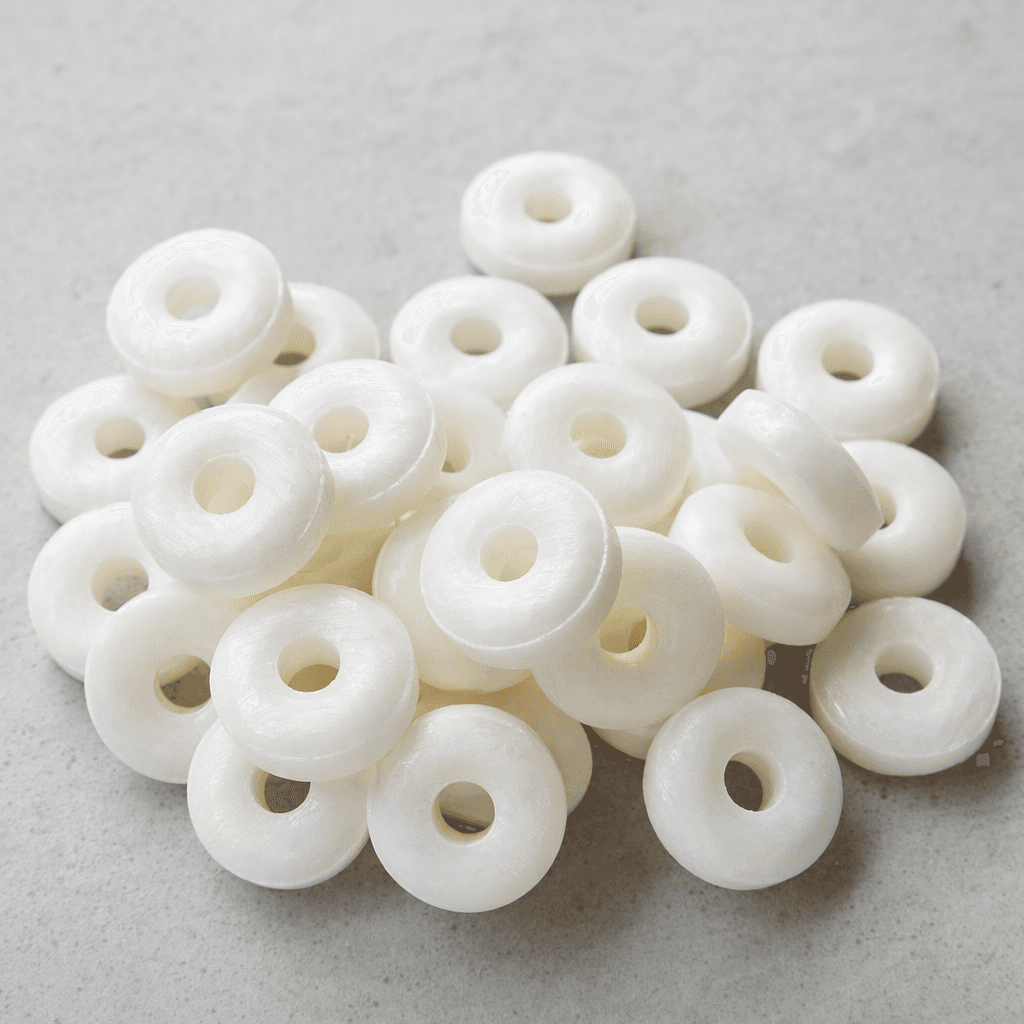
Polo mint candy Calories
Refreshing mint candy, low in calories, virtually no fat or protein
CALORIES
GI
POTASSIUM
FIBER
Quick answer
1 piece (medium) of Polo mint candy (2 g) has 9 calories. That works out to 390 calories per 100 g. It contains 2.4 g of carbs, 0 g of protein, 0 g of fat and 0 g of fiber. Its glycemic index is 70 (high), so it raises blood sugar quickly.
What is Polo mint candy?
Polo mint candy is a British hard mint, recognised by its smooth white ring and clean hole through the centre. It has a crisp texture and a straightforward, sweet peppermint flavour that gradually softens in the mouth. In the UK it is often enjoyed after a meal or kept handy for a quick mint; elsewhere, it works just as well as a small sweet to carry around or offer with tea or coffee. Its energy comes almost entirely from carbohydrates, with virtually no fat or protein, so it is a treat rather than a filling snack. If you enjoy a strong mint taste, have one on its own; keep portions modest if you are limiting sweets.
Polo mint candy Nutrition Facts
Selected: 100 g
390
KCAL / 100G
Carbs
98.5g
· 36% DV
Protein
0g
· 0% DV
Fat
0g
· 0% DV
Fiber
0g
· 0% DV
DV is the share of the daily value covered, on a 2,000 kcal reference diet.
Calories come from: Carbs 100% · Protein 0% · Fat 0%
Polo mint candy Vitamins & Minerals
Vitamins
Vitamin A
0µg · 0% DV
B1
0mg · 0% DV
B2
0mg · 0% DV
B3
0mg · 0% DV
Minerals
Calcium
2mg · 0% DV
Iron
0mg · 0% DV
Magnesium
0mg · 0% DV
Zinc
0mg · 0% DV
How Nutritious Is Polo mint candy?
Nutrient density
Low
How many vitamins, minerals and how much fiber this food carries per calorie. A high score means a lot of nutrition for few calories.
Satiety score
Low
An EatBetter score computed from fiber, protein and calorie density. A high score means staying full longer on the same calories.
Both scores are calculated per 100 g and do not change with the selected portion. The satiety score is EatBetter's own calculation, not a clinical measure.
Polo mint candy Glycemic Index
GLYCEMIC INDEX
GLYCEMIC LOAD
Accounts for portion size — a more realistic measure than GI alone.
How to Burn Off Polo mint candy
To burn the 390 calories in 100 g:
🚶
Walking (5 km/h)
🏃
Running (8 km/h)
🚴
Cycling
🏊
Swimming
Times are calculated with the MET equation for a 70 kg adult. Actual burn varies with your weight, age and pace.
Is Polo mint candy Processed?
NOVA 4
Ultra-Processed
1. Unprocessed
2. Minimally Processed
3. Processed
4. Ultra-Processed
NOVA classifies foods into 4 groups by industrial processing. NOVA 1 (unprocessed) is the healthiest.
Does Polo mint candy Contain Allergens?
No known major allergens
Which Diets Is Polo mint candy Good For?
Vegan
✓ Suitable
Vegetarian
✓ Suitable
Gluten-Free
✓ Suitable
Dairy-Free
— Not suitable
Mediterranean
— Not suitable
Paleo
— Not suitable
Whole30
— Not suitable
DASH
— Not suitable
Keto
— Not suitable
Low FODMAP
— Not suitable
Polo mint candy Fat Profile
SATURATED
0g
MONOUNSATURATED
0g
POLYUNSATURATED
0g
Compare Polo mint candy
Foods Similar to Polo mint candy
Frequently Asked Questions About Polo mint candy
Why does Polo mint candy have a hole in the middle?
The hole is part of Polo mint candy’s distinctive ring shape and brand identity; it has no special health or digestive purpose. The opening also does not make a hard mint safe to swallow whole.
What is Polo mint candy made of?
Classic Polo mint candy is mainly made with sugar and glucose syrup, plus mint flavouring and other ingredients used in manufacturing. It is an ultra-processed confectionery product, and the exact recipe can differ between markets and varieties.
Is Polo mint candy sugar-free?
No, classic Polo mint candy contains sugar. Sugar-free mints may use different sweeteners, so don’t assume that every product sold under the Polo name has the same recipe.
Does Polo mint candy freshen your breath?
Polo mint candy can temporarily mask bad breath with its mint flavour, but it does not remove the underlying cause. Its sugar can also be used by mouth bacteria, so a mint is not a substitute for brushing and flossing.
Can Polo mint candy soothe a sore throat?
Polo mint candy may give your mouth and throat a brief cooling sensation, but it does not treat a sore throat. Its mint taste can feel refreshing; the candy is not medicine for an infection or cough.
Can Polo mint candy damage your teeth?
Yes, sugary Polo mint candy can contribute to tooth decay. As a hard sweet dissolves, sugar stays in contact with teeth; frequent snacking increases that exposure. Enjoy it occasionally and keep up your usual oral hygiene.
Where did Polo mint candy originate?
Polo mint candy originated in the United Kingdom and was first launched by Rowntree’s. Nestlé now owns the brand, and availability and product varieties differ from country to country.
Is Polo mint candy safe for children?
Polo mint candy is a small, hard sweet and can pose a choking risk, particularly for young children. Don’t give it to a child who cannot safely suck hard candy; older children should eat it seated and supervised.
Can dogs eat Polo mint candy?
No, don’t give Polo mint candy to dogs. The sugar is unsuitable for them, and some sugar-free sweets contain xylitol, which is highly toxic to dogs; keep all mints out of reach.
How should you store Polo mint candy?
Keep Polo mint candy in its closed packet in a cool, dry place. Moisture can make the mints sticky and affect their texture; follow the date printed on the pack.
Have another question about Polo mint candy?
Ask the AI nutrition coach — calories, portions, alternatives and more, answered in seconds in the app.

Scan calories with your camera
Instant AI nutrition analysis

Nutrition data compiled from USDA FoodData Central and scientific sources.