

Ready & Packaged Foods
All →Vegetables & Legumes
All →Desserts & Confectionery
All →Meat & Protein
All →Grains & Bakery
All →Beverages
All →Milk & Dairy
All →

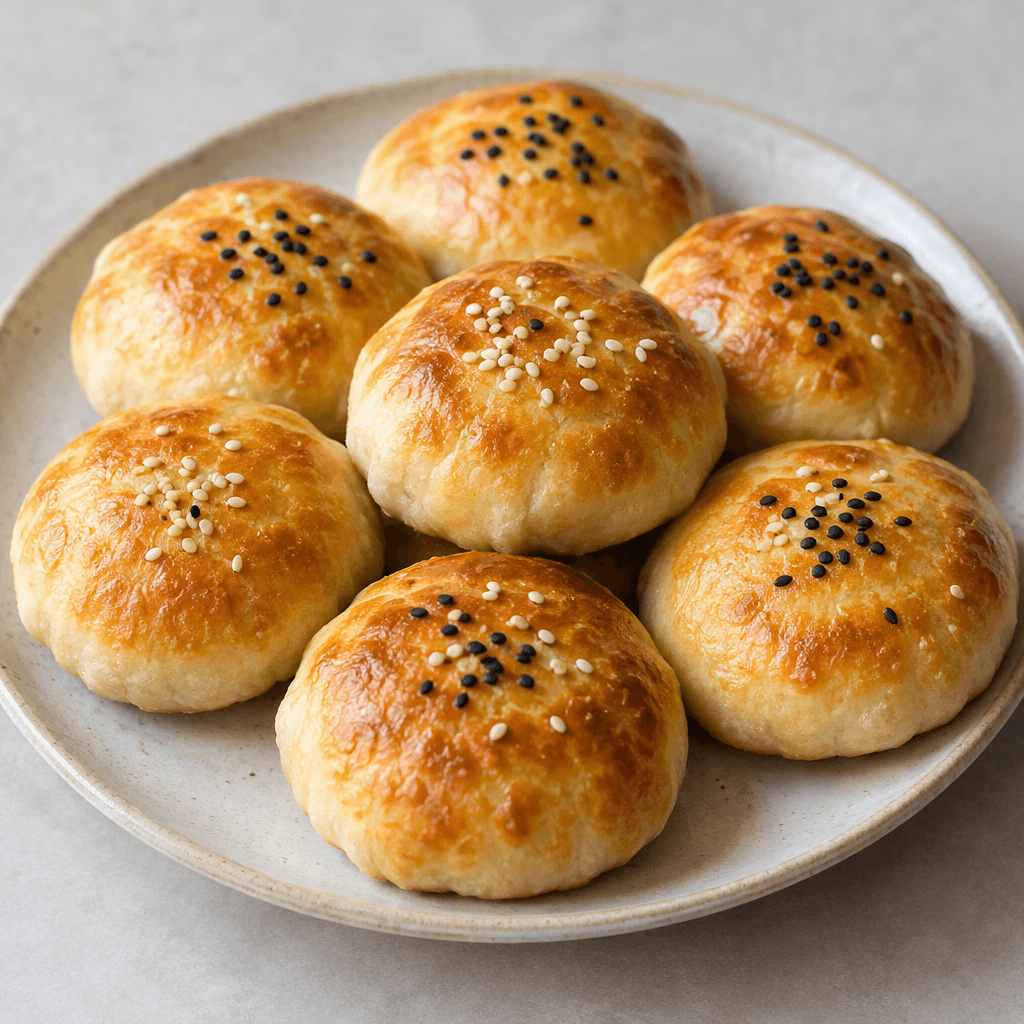
Pogaca Calories
Traditional Turkish savory pastry, often filled with cheese or potato.
In season: Spring · Summer · Autumn · Winter
CALORIES
GI
POTASSIUM
FIBER
Quick answer
1 piece (medium) of Pogaca (60 g) has 192 calories. That works out to 320 calories per 100 g. It contains 24 g of carbs, 4.5 g of protein, 8.4 g of fat and 1.3 g of fiber. Its 0.1 mg of B1 covers 11% of the Daily Value. Its glycemic index is 65 (medium), so it raises blood sugar at a moderate pace.
What is Pogaca?
Pogaca is a Turkish baked pastry made from a soft dough, commonly enriched with yogurt, milk or fat. It may be plain or filled with cheese, potato, olives or minced meat, and the top is sometimes finished with sesame or nigella seeds. Recipes and shapes vary between bakeries and households.
The crust is lightly golden, while the inside is tender and fine-crumbed; the filling gives it a savoury, satisfying flavour. In Turkey, Pogaca is often eaten at breakfast, bought from a bakery as a quick snack, or served with tea. For English-speaking readers elsewhere, it works well as a portable savoury pastry or part of a brunch spread. It is relatively energy-dense for its size, so pair it with fresh vegetables or salad for a lighter, more balanced meal.
Pogaca Nutrition Facts
Selected: 100 g
320
KCAL / 100G
Carbs
40g
· 15% DV
Protein
7.5g
· 15% DV
Fat
14g
· 18% DV
Fiber
2.2g
· 8% DV
DV is the share of the daily value covered, on a 2,000 kcal reference diet.
Calories come from: Carbs 51% · Protein 9% · Fat 40%
Pogaca Vitamins & Minerals
Vitamins
B1
0.22mg · 18% DV
B2
0.18mg · 14% DV
B3
2.1mg · 13% DV
Folate
35µg · 9% DV
Minerals
Sodium
390mg · 17% DV
Selenium
7µg · 13% DV
Phosphorus
85mg · 12% DV
Zinc
1mg · 9% DV
How Nutritious Is Pogaca?
Nutrient density
Medium
How many vitamins, minerals and how much fiber this food carries per calorie. A high score means a lot of nutrition for few calories.
Satiety score
Low
An EatBetter score computed from fiber, protein and calorie density. A high score means staying full longer on the same calories.
Both scores are calculated per 100 g and do not change with the selected portion. The satiety score is EatBetter's own calculation, not a clinical measure.
Pogaca Glycemic Index
GLYCEMIC INDEX
GLYCEMIC LOAD
Accounts for portion size — a more realistic measure than GI alone.
How to Burn Off Pogaca
To burn the 320 calories in 100 g:
🚶
Walking (5 km/h)
🏃
Running (8 km/h)
🚴
Cycling
🏊
Swimming
Times are calculated with the MET equation for a 70 kg adult. Actual burn varies with your weight, age and pace.
Is Pogaca Processed?
NOVA 3
Processed
1. Unprocessed
2. Minimally Processed
3. Processed
4. Ultra-Processed
NOVA classifies foods into 4 groups by industrial processing. NOVA 1 (unprocessed) is the healthiest.
Does Pogaca Contain Allergens?
Contains these allergens:
Which Diets Is Pogaca Good For?
Vegan
— Not suitable
Vegetarian
✓ Suitable
Gluten-Free
— Not suitable
Dairy-Free
— Not suitable
Mediterranean
✓ Suitable
Paleo
— Not suitable
Whole30
— Not suitable
DASH
— Not suitable
Keto
— Not suitable
Low FODMAP
— Not suitable
Pogaca Fat Profile
SATURATED
4.2g
MONOUNSATURATED
6.1g
POLYUNSATURATED
2.3g
Omega 6:3 ratio 42:1
Above the ideal 4:1 (42:1).
Compare Pogaca
Foods Similar to Pogaca
Frequently Asked Questions About Pogaca
What is pogaca?
Pogaca is a Turkish savory pastry made from a soft dough and often filled with cheese or potato. It is commonly shaped into small rounds or crescents, topped with egg wash, and baked until golden.
What is the difference between pogaca and borek?
Pogaca is usually a small, individual bun made from a soft dough, while borek is typically made with thin pastry sheets layered or rolled around a filling. Both can contain cheese, but their doughs and shapes differ.
What is usually inside pogaca?
Pogaca is often filled with white cheese, sometimes mixed with parsley, or with seasoned potato. Olives and minced meat are also used. A filling that is not overly wet helps keep the pastry’s center tender rather than soggy.
How do you make pogaca soft and fluffy?
For soft pogaca, keep the dough slightly tacky rather than adding too much flour, and let yeast dough rise until puffy before shaping. Avoid overbaking; covering the pastries with a clean cloth after baking also helps retain softness.
Can pogaca be made without yeast?
Yes, pogaca can be made with baking powder instead of yeast. The dough can be shaped and baked without a rising period, but the finished pastry is usually more crumbly and less bread-like than a yeasted version.
Can you freeze pogaca?
Yes, pogaca freezes well once fully cooled. Seal the pastries in a freezer-safe bag or container, then thaw them at room temperature. A brief warming in the oven restores a fresher texture better than microwaving.
How long does pogaca stay fresh?
Pogaca is best on the day it is baked, but it can stay enjoyable for a couple of days when kept in an airtight container at room temperature. Refrigeration can dry the dough, so freeze extras rather than chilling them.
Why did my pogaca turn out hard or dense?
Pogaca often turns hard or dense when too much flour is added, the dough is overworked, or the pastries bake too long. Measure flour gradually and stop baking once the tops turn golden rather than waiting for a dark crust.
Can you prepare pogaca dough the night before?
Yes, you can prepare yeasted pogaca dough the night before and let it rise slowly in the refrigerator, covered. Bring it out before shaping so it softens enough to handle; do not leave it uncovered, or the surface may dry.
What do people serve with pogaca?
Pogaca is commonly served with tea, especially at breakfast or as a snack. For a fuller Turkish-style breakfast, pair it with olives, sliced tomatoes, cucumber, and cheese; a filled pogaca can also be served on its own.
Have another question about Pogaca?
Ask the AI nutrition coach — calories, portions, alternatives and more, answered in seconds in the app.

Scan calories with your camera
Instant AI nutrition analysis

Nutrition data compiled from USDA FoodData Central and scientific sources.