

Ready & Packaged Foods
All →Vegetables & Legumes
All →Desserts & Confectionery
All →Meat & Protein
All →Grains & Bakery
All →Beverages
All →Milk & Dairy
All →

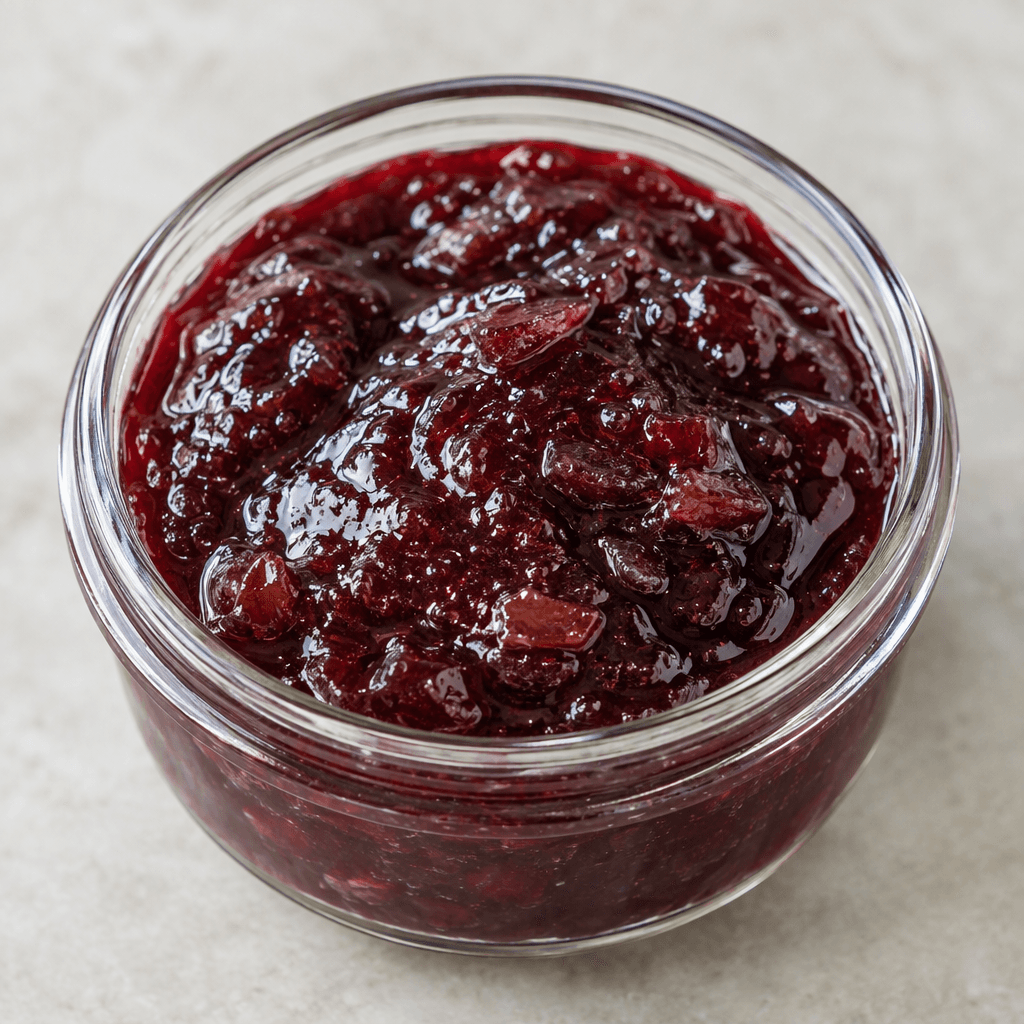
Plum Jam Calories
Sweet, fruity, breakfast, spread
In season: Summer · Autumn
CALORIES
GI
POTASSIUM
FIBER
Quick answer
1 tablespoon (medium) of Plum Jam (20 g) has 48 calories. That works out to 240 calories per 100 g. It contains 12.4 g of carbs, 0.1 g of protein, 0 g of fat and 0.3 g of fiber. Its glycemic index is 65 (high), so it raises blood sugar quickly.
What is Plum Jam?
Plum Jam is a fruit preserve made by cooking plums with sugar until they soften and thicken into a spoonable spread. Depending on the fruit and the recipe, it can be smooth or retain small pieces, with a deep colour and a balance of sweetness and tartness. Plum preserves are made in many places, including home kitchens where seasonal fruit is cooked down for later use.
It is commonly spread on toast, bread or scones at breakfast, and can also accompany porridge or a simple yogurt bowl. Its nutrition is mostly carbohydrates from the fruit and added sugar, with very little fat. A thin layer gives plenty of fruity flavour; try it with plain yogurt or alongside a mild cheese if you want to balance its sweetness.
Plum Jam Nutrition Facts
Selected: 100 g
240
KCAL / 100G
Carbs
62g
· 23% DV
Protein
0.4g
· 1% DV
Fat
0.1g
· 0% DV
Fiber
1.5g
· 5% DV
DV is the share of the daily value covered, on a 2,000 kcal reference diet.
Calories come from: Carbs 99% · Protein 1% · Fat 0%
Plum Jam Vitamins & Minerals
Vitamins
Vitamin C
3mg · 3% DV
B2
0.02mg · 2% DV
B5
0.08mg · 2% DV
B6
0.03mg · 2% DV
Minerals
Magnesium
7mg · 2% DV
Potassium ⭐
60mg · 2% DV
Calcium
13mg · 1% DV
Iodine
1µg · 1% DV
How Nutritious Is Plum Jam?
Nutrient density
Low
How many vitamins, minerals and how much fiber this food carries per calorie. A high score means a lot of nutrition for few calories.
Satiety score
Low
An EatBetter score computed from fiber, protein and calorie density. A high score means staying full longer on the same calories.
Both scores are calculated per 100 g and do not change with the selected portion. The satiety score is EatBetter's own calculation, not a clinical measure.
Plum Jam Glycemic Index
GLYCEMIC INDEX
GLYCEMIC LOAD
Accounts for portion size — a more realistic measure than GI alone.
How to Burn Off Plum Jam
To burn the 240 calories in 100 g:
🚶
Walking (5 km/h)
🏃
Running (8 km/h)
🚴
Cycling
🏊
Swimming
Times are calculated with the MET equation for a 70 kg adult. Actual burn varies with your weight, age and pace.
Is Plum Jam Processed?
NOVA 3
Processed
1. Unprocessed
2. Minimally Processed
3. Processed
4. Ultra-Processed
NOVA classifies foods into 4 groups by industrial processing. NOVA 1 (unprocessed) is the healthiest.
Does Plum Jam Contain Allergens?
No known major allergens
Which Diets Is Plum Jam Good For?
Vegan
✓ Suitable
Vegetarian
✓ Suitable
Gluten-Free
— Not suitable
Dairy-Free
— Not suitable
Mediterranean
✓ Suitable
Paleo
— Not suitable
Whole30
— Not suitable
DASH
— Not suitable
Keto
— Not suitable
Low FODMAP
— Not suitable
Plum Jam Fat Profile
SATURATED
0.01g
MONOUNSATURATED
0.01g
POLYUNSATURATED
0.01g
Compare Plum Jam
Foods Similar to Plum Jam
Frequently Asked Questions About Plum Jam
How do you make plum jam?
Plum jam is made by simmering pitted plums with sugar until the fruit breaks down and the mixture thickens. Mash the fruit for a smoother spread or leave small pieces for texture. A wide pan helps water evaporate more evenly.
What is the difference between plum jam, plum jelly, and plum preserves?
Plum jam contains crushed or chopped fruit, while plum jelly is made from strained fruit juice and has a smooth, clear texture. Plum preserves usually keep larger pieces of fruit intact, so they are chunkier than plum jam.
Why is my plum jam runny?
Plum jam is often runny because it has not cooked long enough for excess water to evaporate, or because the plums were especially juicy. Simmer it uncovered to thicken, then let it cool before judging the final consistency.
How long does plum jam last after opening?
Opened plum jam keeps best in the refrigerator with the lid tightly closed. Always use a clean, dry spoon, and follow the storage instructions on a commercial jar; homemade jam may have a shorter safe storage life, especially if it was not properly sealed.
Can you freeze plum jam?
Yes, plum jam can be frozen in a freezer-safe container. Leave room for expansion, then thaw it in the refrigerator and use it soon after thawing. Freezing may slightly change the texture, but it remains suitable for toast, yogurt, or baking.
What plums are best for plum jam?
Ripe plums with plenty of flavor make the best plum jam, and you can use red, purple, or yellow varieties. Tart plums give a sharper sweet-tart spread, while sweeter varieties make a milder jam. Avoid fruit that is moldy or badly bruised.
Why did my plum jam not set?
Plum jam may not set if it contains too much liquid or has not been cooked enough. Plums vary in natural pectin, the substance that helps jam gel; let the jam cool before checking, since it thickens further as it cools.
What can you eat plum jam with besides toast?
Plum jam pairs well with oatmeal, yogurt, pancakes, and baked goods, and it can be served with cheese for a sweet-savory contrast. Use it as a filling for pastries or as a glaze for roasted meat, brushing it on near the end of cooking.
Can you eat plum jam if you have diabetes?
Plum jam can raise blood sugar because it is concentrated fruit and often contains added sugar. A small portion alongside a meal with protein or fiber may be easier to fit into a blood-sugar plan than eating it on its own; follow your clinician’s advice.
Can moldy plum jam be saved by removing the mold?
No, discard the entire jar of moldy plum jam rather than scooping off the visible spot. Mold can spread below the surface, even when the rest looks normal. Refrigerating opened jam and using a clean spoon helps reduce contamination.
Have another question about Plum Jam?
Ask the AI nutrition coach — calories, portions, alternatives and more, answered in seconds in the app.

Scan calories with your camera
Instant AI nutrition analysis

Nutrition data compiled from USDA FoodData Central and scientific sources.