

Ready & Packaged Foods
All →Vegetables & Legumes
All →Desserts & Confectionery
All →Meat & Protein
All →Grains & Bakery
All →Beverages
All →Milk & Dairy
All →

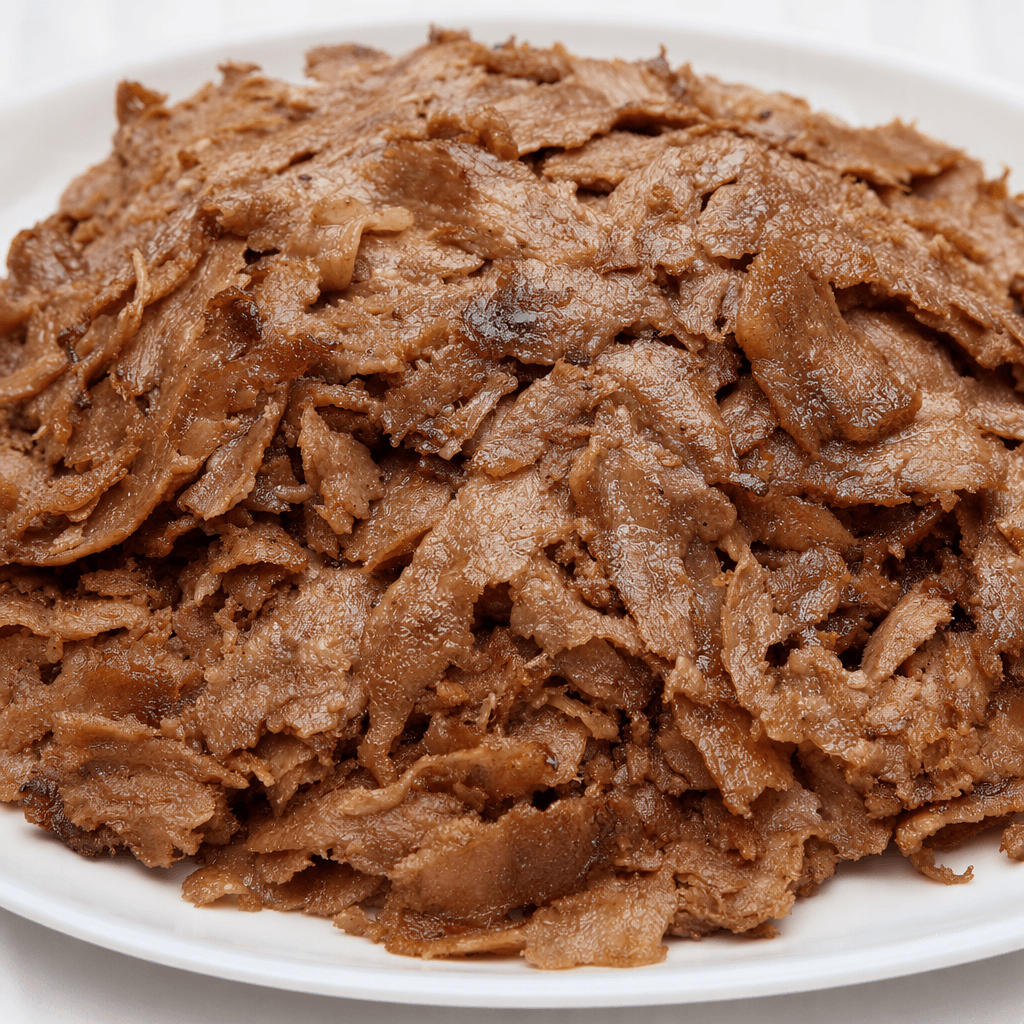
Plain Beef Döner Calories
Plain Beef Döner
CALORIES
GI
POTASSIUM
FIBER
Quick answer
1 serving (medium) of Plain Beef Döner (120 g) has 246 calories. That works out to 205 calories per 100 g. It contains 1.8 g of carbs, 22.2 g of protein, 16.2 g of fat and 0 g of fiber. Its 2.5 µg of B12 covers 105% of the Daily Value. Its glycemic index is 0 (low), so it raises blood sugar slowly.
What is Plain Beef Döner?
Plain Beef Döner is thinly sliced beef, layered on a vertical spit, seasoned and roasted until browned on the outside. The cooked meat is shaved off in strips. “Plain” usually means it is served without added sauce, rather than without seasoning. Döner originated in Turkey and is now a familiar takeaway in many places.
The meat is often tender inside with browned edges, and its flavour varies with the seasoning and fat. In Turkey it may come wrapped in flatbread or on a plate with rice and salad; elsewhere, wraps and sandwiches are common too. It is a protein-rich meat dish with very little carbohydrate: a 100 g portion provides 18.5 g of protein. For a lighter meal, pair it with salad or grilled vegetables and keep rich sauces on the side.
Plain Beef Döner Nutrition Facts
Selected: 100 g
205
KCAL / 100G
Carbs
1.5g
· 1% DV
Protein
18.5g
· 37% DV
Fat
13.5g
· 17% DV
Fiber
0g
· 0% DV
DV is the share of the daily value covered, on a 2,000 kcal reference diet.
Calories come from: Carbs 3% · Protein 37% · Fat 60%
Plain Beef Döner Vitamins & Minerals
Vitamins
B12
2.1µg · 88% DV
B3
4.5mg · 28% DV
B6
0.3mg · 18% DV
B5
0.6mg · 12% DV
Minerals
Zinc
5mg · 45% DV
Selenium
13µg · 24% DV
Phosphorus
170mg · 24% DV
Sodium
420mg · 18% DV
How Nutritious Is Plain Beef Döner?
Nutrient density
High
How many vitamins, minerals and how much fiber this food carries per calorie. A high score means a lot of nutrition for few calories.
Satiety score
Medium
An EatBetter score computed from fiber, protein and calorie density. A high score means staying full longer on the same calories.
Both scores are calculated per 100 g and do not change with the selected portion. The satiety score is EatBetter's own calculation, not a clinical measure.
Plain Beef Döner Glycemic Index
GLYCEMIC INDEX
GLYCEMIC LOAD
Accounts for portion size — a more realistic measure than GI alone.
How to Burn Off Plain Beef Döner
To burn the 205 calories in 100 g:
🚶
Walking (5 km/h)
🏃
Running (8 km/h)
🚴
Cycling
🏊
Swimming
Times are calculated with the MET equation for a 70 kg adult. Actual burn varies with your weight, age and pace.
Is Plain Beef Döner Processed?
NOVA 2
Minimally Processed
1. Unprocessed
2. Minimally Processed
3. Processed
4. Ultra-Processed
NOVA classifies foods into 4 groups by industrial processing. NOVA 1 (unprocessed) is the healthiest.
Does Plain Beef Döner Contain Allergens?
No known major allergens
Which Diets Is Plain Beef Döner Good For?
Vegan
— Not suitable
Vegetarian
— Not suitable
Gluten-Free
✓ Suitable
Dairy-Free
— Not suitable
Mediterranean
✓ Suitable
Paleo
✓ Suitable
Whole30
— Not suitable
DASH
— Not suitable
Keto
✓ Suitable
Low FODMAP
— Not suitable
Plain Beef Döner Fat Profile
SATURATED
5.7g
MONOUNSATURATED
6.2g
POLYUNSATURATED
0.3g
Omega 6:3 ratio 2.6:1
Below the ideal 4:1 — a good omega balance.
Compare Plain Beef Döner
Foods Similar to Plain Beef Döner
Frequently Asked Questions About Plain Beef Döner
What is plain beef döner made of?
Plain beef döner is beef cooked on a vertical rotisserie and served without sauce. Depending on the shop, the stack may use thin beef slices, minced beef, or a combination, so its texture and seasoning can vary.
How is beef döner cooked?
Beef döner is cooked on a rotating vertical spit, with the outer layer browning near a heat source. The browned meat is shaved off in thin slices as it cooks, rather than being cooked as a single steak.
Is plain beef döner healthy?
Plain beef döner provides protein, but its fat and salt content can vary with the meat and preparation. Pairing it with vegetables or salad makes a more balanced meal; bread, rice, and sauces change the overall meal.
How do you reheat plain beef döner?
Reheat plain beef döner in a pan with a little water or oil until it is hot throughout, stirring or turning the slices. A microwave also works; spread the meat evenly and pause to stir so it heats consistently.
What do you serve with plain beef döner?
Plain beef döner goes well with salad, grilled vegetables, rice, or bread. It can also be served in a wrap or sandwich; “plain” usually means the döner is served without sauce, not that it cannot have sides.
How long does plain beef döner last in the fridge?
Cooked plain beef döner generally keeps for 3–4 days in the refrigerator when chilled promptly and stored in a covered container. Do not refrigerate meat that has been left at room temperature for an extended period.
Can you freeze plain beef döner?
Yes, plain beef döner can be frozen. Let it cool, divide it into meal-size portions, and seal them in freezer-safe packaging. Thaw a portion safely and reheat it thoroughly; avoid freezing the same portion again.
Can you eat plain beef döner cold?
You can eat plain beef döner cold if it was fully cooked, chilled promptly, and kept refrigerated safely. If it has been left out for a long time or its storage is uncertain, discard it rather than tasting it.
Is plain beef döner the same as shawarma?
No, plain beef döner and shawarma are related spit-roasted meat dishes, but they come from different culinary traditions and often use different seasonings and serving styles. Döner is associated with Turkish cuisine; shawarma is associated with Middle Eastern cuisines.
Can people with diabetes eat plain beef döner?
Yes, people with diabetes can eat plain beef döner; the meat itself contains little carbohydrate, while wraps, bread, rice, and sauces can add considerably more. Consider those accompaniments when planning the meal and follow your individual care plan.
Have another question about Plain Beef Döner?
Ask the AI nutrition coach — calories, portions, alternatives and more, answered in seconds in the app.

Scan calories with your camera
Instant AI nutrition analysis

Nutrition data compiled from USDA FoodData Central and scientific sources.