

Ready & Packaged Foods
All →Vegetables & Legumes
All →Desserts & Confectionery
All →Meat & Protein
All →Grains & Bakery
All →Beverages
All →Milk & Dairy
All →

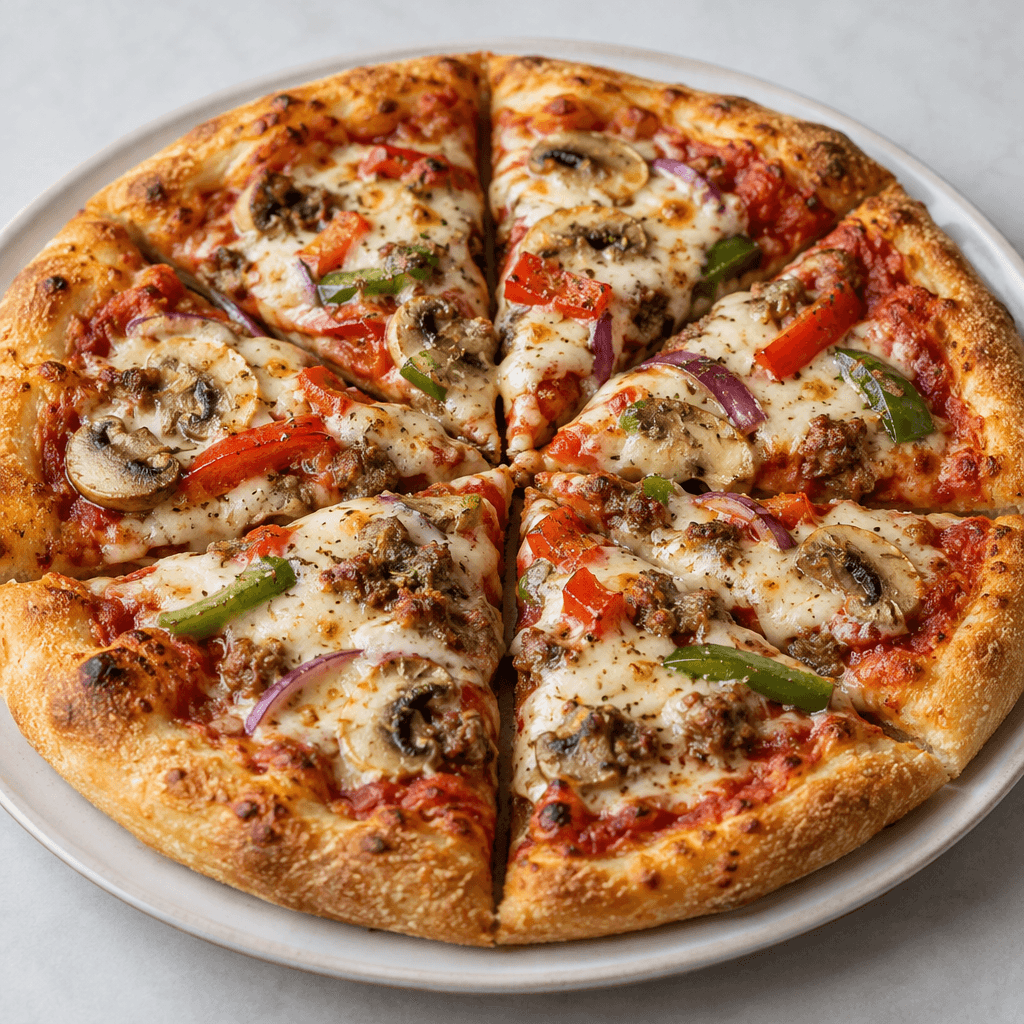
Pizza Calories
Popular Italian dish, various toppings
In season: Spring · Summer · Autumn · Winter
CALORIES
GI
POTASSIUM
FIBER
Quick answer
1 slice (medium) of Pizza (80 g) has 213 calories. That works out to 266 calories per 100 g. It contains 26.4 g of carbs, 8.8 g of protein, 8 g of fat and 1.8 g of fiber. Its 478.4 mg of Sodium covers 21% of the Daily Value. Its glycemic index is 80 (high), so it raises blood sugar quickly.
What is Pizza?
Pizza comes from Italy: a round dough base is topped with tomato sauce, cheese and, depending on the style, vegetables or meat, then baked. The crust may be thin and crisp or thicker and softer, while the toppings bring a savoury, often tangy flavour.
In Italy it is commonly enjoyed by the slice or as a whole personal meal; around the world, it is also a familiar choice for sharing at casual gatherings or ordering in. Its dough makes it mainly a source of carbohydrates, while cheese and meat toppings add protein; the balance varies with the toppings. For a lighter meal, choose plenty of vegetables, go easy on extra cheese, and pair it with a green salad.
Pizza Nutrition Facts
Selected: 100 g
266
KCAL / 100G
Carbs
33g
· 12% DV
Protein
11g
· 22% DV
Fat
10g
· 13% DV
Fiber
2.3g
· 8% DV
DV is the share of the daily value covered, on a 2,000 kcal reference diet.
Calories come from: Carbs 50% · Protein 17% · Fat 33%
Pizza Vitamins & Minerals
Vitamins
B12
0.5µg · 21% DV
B1
0.18mg · 15% DV
B3
2.4mg · 15% DV
B2
0.16mg · 12% DV
Minerals
Sodium
598mg · 26% DV
Phosphorus
180mg · 26% DV
Selenium
14µg · 25% DV
Calcium
188mg · 19% DV
How Nutritious Is Pizza?
Nutrient density
Medium
How many vitamins, minerals and how much fiber this food carries per calorie. A high score means a lot of nutrition for few calories.
Satiety score
Medium
An EatBetter score computed from fiber, protein and calorie density. A high score means staying full longer on the same calories.
Both scores are calculated per 100 g and do not change with the selected portion. The satiety score is EatBetter's own calculation, not a clinical measure.
Pizza Glycemic Index
GLYCEMIC INDEX
GLYCEMIC LOAD
Accounts for portion size — a more realistic measure than GI alone.
How to Burn Off Pizza
To burn the 266 calories in 100 g:
🚶
Walking (5 km/h)
🏃
Running (8 km/h)
🚴
Cycling
🏊
Swimming
Times are calculated with the MET equation for a 70 kg adult. Actual burn varies with your weight, age and pace.
Is Pizza Processed?
NOVA 3
Processed
1. Unprocessed
2. Minimally Processed
3. Processed
4. Ultra-Processed
NOVA classifies foods into 4 groups by industrial processing. NOVA 1 (unprocessed) is the healthiest.
Does Pizza Contain Allergens?
Contains these allergens:
Which Diets Is Pizza Good For?
Vegan
— Not suitable
Vegetarian
✓ Suitable
Gluten-Free
— Not suitable
Dairy-Free
— Not suitable
Mediterranean
✓ Suitable
Paleo
— Not suitable
Whole30
— Not suitable
DASH
— Not suitable
Keto
— Not suitable
Low FODMAP
— Not suitable
Pizza Fat Profile
SATURATED
4.2g
MONOUNSATURATED
3.2g
POLYUNSATURATED
1.1g
Omega 6:3 ratio 12.9:1
Above the ideal 4:1 (12.9:1).
Compare Pizza
Foods Similar to Pizza
Frequently Asked Questions About Pizza
What toppings are traditionally used on pizza?
Classic Italian pizza often pairs tomato with mozzarella, while Margherita adds basil. Toppings vary widely by style and region, but a lighter hand helps the crust bake evenly and keeps the center from becoming soggy.
Where did pizza originate?
Modern pizza originated in Naples, Italy. Flatbreads with toppings existed earlier, but Naples developed the tomato-topped form that became widely known as pizza and later spread around the world.
How do you make pizza dough from scratch?
Pizza dough is made by mixing flour, water, yeast, and salt, then kneading and letting the dough rise. Stretch it gently rather than rolling it very thin if you want a puffy rim.
Why does pizza get soggy in the middle?
Pizza often turns soggy in the middle when it has too much sauce or wet toppings, or when the oven is not hot enough. Use a thin layer of sauce, drain watery vegetables, and preheat the oven thoroughly.
What is the difference between Neapolitan and New York pizza?
Neapolitan pizza usually has a soft, airy rim and a tender center, while New York pizza is larger, thinner, and sturdy enough to fold. Their dough, baking methods, and typical serving styles differ.
What is the best way to reheat pizza?
A hot skillet is one of the best ways to reheat pizza: warm the slice until the base crisps, then cover briefly so the cheese heats through. An oven also works well for reheating several slices.
How long does leftover pizza last in the fridge?
Leftover pizza generally keeps in the refrigerator for three to four days when stored promptly in a covered container. Refrigerate it within two hours of serving, and reheat slices until hot throughout.
Can you freeze leftover pizza?
Yes, cooked pizza freezes well. Wrap individual slices airtight, freeze them, and reheat from thawed or frozen in an oven until hot. Separating slices before freezing makes it easier to take out only what you need.
How can you make pizza healthier at home?
You can make homemade pizza more balanced by using a moderate amount of cheese, adding vegetables, and serving it with a salad. Keep toppings evenly spread so the crust cooks properly rather than becoming weighed down.
Should pizza dough be baked before adding toppings?
Pizza dough usually does not need to be baked first; add the sauce and toppings before baking. Pre-baking can help with an unusually thick or heavily topped base, but watch it closely so the crust does not dry out.
Have another question about Pizza?
Ask the AI nutrition coach — calories, portions, alternatives and more, answered in seconds in the app.

Scan calories with your camera
Instant AI nutrition analysis

Nutrition data compiled from USDA FoodData Central and scientific sources.