

Ready & Packaged Foods
All →Vegetables & Legumes
All →Desserts & Confectionery
All →Meat & Protein
All →Grains & Bakery
All →Beverages
All →Milk & Dairy
All →

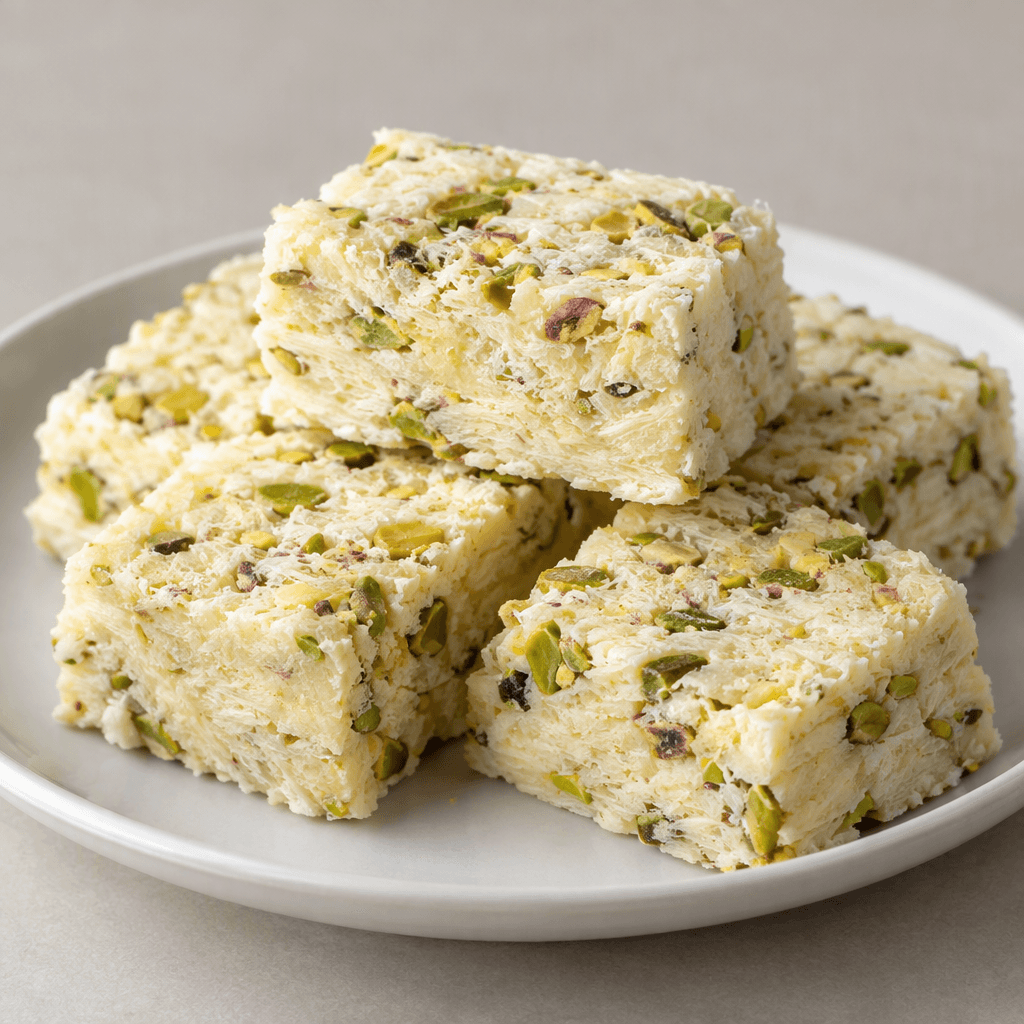
Pistachio Helva Calories
Traditional sweet, pistachio flavor, high energy
In season: Spring · Summer · Autumn · Winter
CALORIES
GI
POTASSIUM
FIBER
Quick answer
1 piece (medium) of Pistachio Helva (40 g) has 196 calories. That works out to 490 calories per 100 g. It contains 21.6 g of carbs, 3.4 g of protein, 10.4 g of fat and 1.4 g of fiber. Its 0.1 mg of Copper covers 16% of the Daily Value. Its glycemic index is 62 (medium), so it raises blood sugar at a moderate pace.
What is Pistachio Helva?
Pistachio helva is a Turkish-style sesame halva made with tahini and sugar, with pieces of pistachio mixed through it. The tahini gives it a rich, nutty flavour and its characteristic pale, fibrous texture; pistachios add a little crunch and a roasted note.
In Turkey, it is commonly served in small slices with tea or offered after a meal. Its sweetness and crumbly, almost flaky texture make it easy to enjoy a little at a time. It is an energy-dense sweet, with substantial carbohydrate and fat, so a modest slice alongside unsweetened tea is a simple way to serve it.
Pistachio Helva Nutrition Facts
Selected: 100 g
490
KCAL / 100G
Carbs
54g
· 20% DV
Protein
8.5g
· 17% DV
Fat
26g
· 33% DV
Fiber
3.5g
· 13% DV
DV is the share of the daily value covered, on a 2,000 kcal reference diet.
Calories come from: Carbs 45% · Protein 7% · Fat 48%
Pistachio Helva Vitamins & Minerals
Vitamins
Vitamin E
2.5mg · 17% DV
B1
0.13mg · 11% DV
Biotin
3µg · 10% DV
B6
0.13mg · 8% DV
Minerals
Phosphorus
120mg · 17% DV
Magnesium
55mg · 13% DV
Iron
2mg · 11% DV
Zinc
1mg · 9% DV
How Nutritious Is Pistachio Helva?
Nutrient density
Medium
How many vitamins, minerals and how much fiber this food carries per calorie. A high score means a lot of nutrition for few calories.
Satiety score
Low
An EatBetter score computed from fiber, protein and calorie density. A high score means staying full longer on the same calories.
Both scores are calculated per 100 g and do not change with the selected portion. The satiety score is EatBetter's own calculation, not a clinical measure.
Pistachio Helva Glycemic Index
GLYCEMIC INDEX
GLYCEMIC LOAD
Accounts for portion size — a more realistic measure than GI alone.
How to Burn Off Pistachio Helva
To burn the 490 calories in 100 g:
🚶
Walking (5 km/h)
🏃
Running (8 km/h)
🚴
Cycling
🏊
Swimming
Times are calculated with the MET equation for a 70 kg adult. Actual burn varies with your weight, age and pace.
Is Pistachio Helva Processed?
NOVA 3
Processed
1. Unprocessed
2. Minimally Processed
3. Processed
4. Ultra-Processed
NOVA classifies foods into 4 groups by industrial processing. NOVA 1 (unprocessed) is the healthiest.
Does Pistachio Helva Contain Allergens?
Contains these allergens:
Which Diets Is Pistachio Helva Good For?
Vegan
— Not suitable
Vegetarian
✓ Suitable
Gluten-Free
— Not suitable
Dairy-Free
— Not suitable
Mediterranean
✓ Suitable
Paleo
— Not suitable
Whole30
— Not suitable
DASH
— Not suitable
Keto
— Not suitable
Low FODMAP
— Not suitable
Pistachio Helva Fat Profile
SATURATED
3.2g
MONOUNSATURATED
14.5g
POLYUNSATURATED
7.2g
Omega 6:3 ratio 38.9:1
Above the ideal 4:1 (38.9:1).
Compare Pistachio Helva
Foods Similar to Pistachio Helva
Frequently Asked Questions About Pistachio Helva
What is Pistachio Helva made of?
Pistachio Helva is usually made from tahini, sugar syrup and chopped pistachios. Traditional recipes may also use soapwort-root extract, which helps create its characteristic fibrous, crumbly texture. Ingredients and methods can vary by producer.
How do you eat Pistachio Helva?
Pistachio Helva is usually sliced and eaten on its own or served with tea or coffee. You can also crumble it over yogurt or desserts; in Turkish-style baked halva, it is warmed in the oven and served as a soft, hot sweet.
How should you store Pistachio Helva after opening?
Store Pistachio Helva in a tightly closed container in a cool, dry place. Keeping air and moisture out helps preserve its texture and prevents it from absorbing other food odors. Avoid leaving it in direct sunlight or a hot kitchen.
Does Pistachio Helva go bad?
Yes, Pistachio Helva can spoil or lose quality over time, especially if exposed to moisture or heat. Discard it if you notice mold, an unusual sour or rancid smell, a marked color change, or an unexpectedly sticky texture.
How is Pistachio Helva made?
Pistachio Helva is made by combining tahini with cooked sugar syrup and working the mixture as it cools; chopped pistachios are added before it sets. Getting its traditional fibrous texture requires careful control of the syrup and mixing, so homemade results can vary.
What makes Pistachio Helva crumbly and fibrous?
Pistachio Helva gets its crumbly, string-like texture from the way tahini is combined with cooked sugar syrup and worked as it cools. Traditional soapwort-root extract can help develop that texture; the pistachios add crunch but are not what makes the strands.
Can you bake Pistachio Helva?
Yes, Pistachio Helva can be baked and served warm. Break it into pieces in an oven-safe dish and add a little milk to keep it soft; heat until the top is lightly browned, then serve promptly before it dries out.
Can you freeze Pistachio Helva?
Yes, you can freeze Pistachio Helva in an airtight container, although thawing may make it drier or more crumbly. Let it thaw slowly in the refrigerator before serving. For everyday storage, a cool, dry cupboard is usually sufficient.
Is Pistachio Helva a healthy dessert?
Pistachio Helva provides nutrients from tahini and pistachios, but it is also a sugary, energy-dense sweet. It can fit as an occasional dessert in a balanced eating pattern, rather than being treated as a health food.
Can people with diabetes eat Pistachio Helva?
People with diabetes can eat Pistachio Helva, but its sugar and carbohydrates may raise blood glucose. Portion size and when it is eaten matter; follow your glucose response and ask your doctor or dietitian how it fits your individual meal plan.
Have another question about Pistachio Helva?
Ask the AI nutrition coach — calories, portions, alternatives and more, answered in seconds in the app.

Scan calories with your camera
Instant AI nutrition analysis

Nutrition data compiled from USDA FoodData Central and scientific sources.