

Ready & Packaged Foods
All →Vegetables & Legumes
All →Desserts & Confectionery
All →Meat & Protein
All →Grains & Bakery
All →Beverages
All →Milk & Dairy
All →

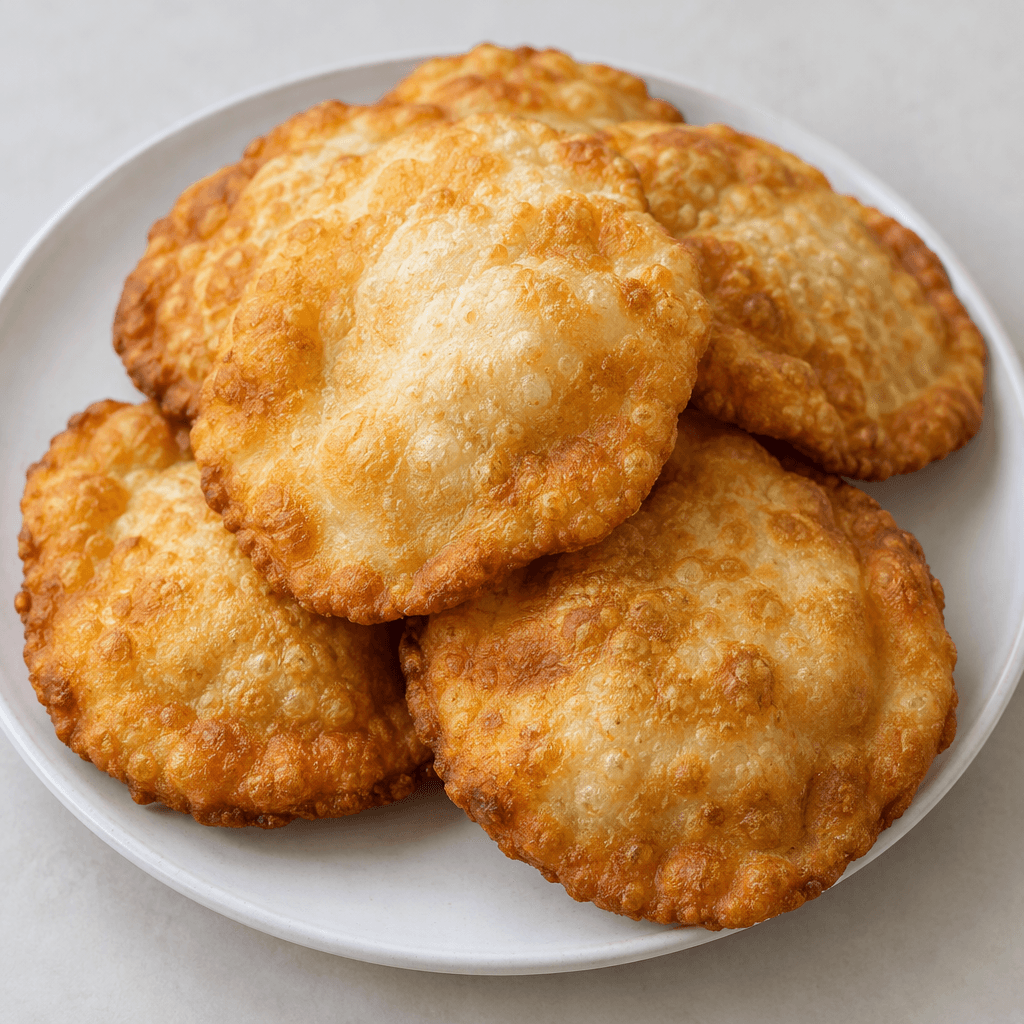
Pişi (Turkish fried bread) Calories
Traditional Turkish fried dough, popular for breakfast
In season: Spring · Summer · Autumn · Winter
CALORIES
GI
POTASSIUM
FIBER
Quick answer
1 piece (medium) of Pişi (Turkish fried bread) (40 g) has 132 calories. That works out to 330 calories per 100 g. It contains 18 g of carbs, 3 g of protein, 5.2 g of fat and 0.9 g of fiber. Its 0.1 mg of B1 covers 7% of the Daily Value. Its glycemic index is 75 (high), so it raises blood sugar quickly.
What is Pişi (Turkish fried bread)?
Pişi is a traditional Turkish fried bread made by cooking rounds or irregular pieces of dough in hot oil. The dough is commonly prepared with flour, yeast, water or milk, and salt, though recipes vary from one household to another.
Fresh from the pan, it is golden and lightly crisp outside, with a soft, airy centre. In Turkey, pişi is a familiar breakfast food, often served warm with cheese, olives, tomatoes, honey or jam and tea; elsewhere, it also makes a satisfying brunch dish or snack. Made mainly from dough and frying oil, it is energy-dense and provides plenty of carbohydrate, with some protein. For a lighter plate, drain it well and pair a smaller portion with vegetables and eggs.
Pişi (Turkish fried bread) Nutrition Facts
Selected: 100 g
330
KCAL / 100G
Carbs
45g
· 16% DV
Protein
7.5g
· 15% DV
Fat
13g
· 17% DV
Fiber
2.2g
· 8% DV
DV is the share of the daily value covered, on a 2,000 kcal reference diet.
Calories come from: Carbs 55% · Protein 9% · Fat 36%
Pişi (Turkish fried bread) Vitamins & Minerals
Vitamins
B1
0.22mg · 18% DV
B3
2.1mg · 13% DV
B2
0.12mg · 9% DV
Biotin
2.5µg · 8% DV
Minerals
Sodium
340mg · 15% DV
Selenium
7µg · 13% DV
Iron
2mg · 11% DV
Phosphorus
70mg · 10% DV
How Nutritious Is Pişi (Turkish fried bread)?
Nutrient density
Low
How many vitamins, minerals and how much fiber this food carries per calorie. A high score means a lot of nutrition for few calories.
Satiety score
Low
An EatBetter score computed from fiber, protein and calorie density. A high score means staying full longer on the same calories.
Both scores are calculated per 100 g and do not change with the selected portion. The satiety score is EatBetter's own calculation, not a clinical measure.
Pişi (Turkish fried bread) Glycemic Index
GLYCEMIC INDEX
GLYCEMIC LOAD
Accounts for portion size — a more realistic measure than GI alone.
How to Burn Off Pişi (Turkish fried bread)
To burn the 330 calories in 100 g:
🚶
Walking (5 km/h)
🏃
Running (8 km/h)
🚴
Cycling
🏊
Swimming
Times are calculated with the MET equation for a 70 kg adult. Actual burn varies with your weight, age and pace.
Is Pişi (Turkish fried bread) Processed?
NOVA 3
Processed
1. Unprocessed
2. Minimally Processed
3. Processed
4. Ultra-Processed
NOVA classifies foods into 4 groups by industrial processing. NOVA 1 (unprocessed) is the healthiest.
Does Pişi (Turkish fried bread) Contain Allergens?
Contains these allergens:
Which Diets Is Pişi (Turkish fried bread) Good For?
Vegan
— Not suitable
Vegetarian
✓ Suitable
Gluten-Free
— Not suitable
Dairy-Free
— Not suitable
Mediterranean
— Not suitable
Paleo
— Not suitable
Whole30
— Not suitable
DASH
— Not suitable
Keto
— Not suitable
Low FODMAP
— Not suitable
Pişi (Turkish fried bread) Fat Profile
SATURATED
2.8g
MONOUNSATURATED
6.1g
POLYUNSATURATED
3.2g
Omega 6:3 ratio 105:1
Above the ideal 4:1 (105:1).
Compare Pişi (Turkish fried bread)
Foods Similar to Pişi (Turkish fried bread)
Frequently Asked Questions About Pişi (Turkish fried bread)
What is Pişi (Turkish fried bread)?
Pişi is a Turkish fried dough bread, often served warm at breakfast. It is made from a simple dough that may be yeast-raised or unleavened, shaped into pieces, and fried until golden.
How do you make Pişi at home?
To make Pişi, mix flour with water or milk, yeast, and salt into a soft dough. Let yeast dough rise, shape it into rounds or irregular pieces, then fry until golden and cooked through.
Why does Pişi turn out oily?
Pişi turns oily when the frying oil is not hot enough, so the dough absorbs more before its surface sets. Fry in properly heated oil and avoid crowding the pan, which can lower the oil temperature.
Why is my Pişi not puffing up?
Pişi may stay flat if the yeast is inactive, the dough has not risen enough, or the pieces are rolled too thin. Give the dough time to rise and fry pieces that are evenly shaped rather than paper-thin.
Should Pişi dough be made with yeast or baking powder?
Pişi can be made with either yeast or baking powder. Yeast gives it a lighter, more airy texture but needs rising time; baking powder makes a quicker dough with a denser bite.
What is Pişi usually served with?
Pişi is commonly served warm with cheese, olives, tomatoes, honey, or jam. In a Turkish breakfast spread, it is often eaten alongside tea; drain the fried pieces briefly before serving.
Can you prepare Pişi dough the night before?
Yes, you can prepare Pişi dough the night before and let it rise slowly in the refrigerator. Cover the bowl, then let the chilled dough lose some of its chill before shaping and frying.
How do you keep leftover Pişi from going stale?
Store leftover Pişi in a sealed container once it has cooled. Reheat it in an oven or dry skillet to improve its texture; a microwave warms it quickly but tends to make the bread soft and chewy.
Can you freeze Pişi after frying?
Yes, fried Pişi can be frozen after it has cooled completely. Separate the pieces in a freezer-safe container so they do not stick together, then reheat them in the oven for a crisper finish.
What is the difference between Pişi and lokma?
Pişi is usually shaped as a larger piece of fried dough and served plain or with savory breakfast foods. Lokma is made in smaller pieces and is commonly finished with syrup, making it a sweet treat.
Have another question about Pişi (Turkish fried bread)?
Ask the AI nutrition coach — calories, portions, alternatives and more, answered in seconds in the app.

Scan calories with your camera
Instant AI nutrition analysis

Nutrition data compiled from USDA FoodData Central and scientific sources.