

Ready & Packaged Foods
All →Vegetables & Legumes
All →Desserts & Confectionery
All →Meat & Protein
All →Grains & Bakery
All →Beverages
All →Milk & Dairy
All →

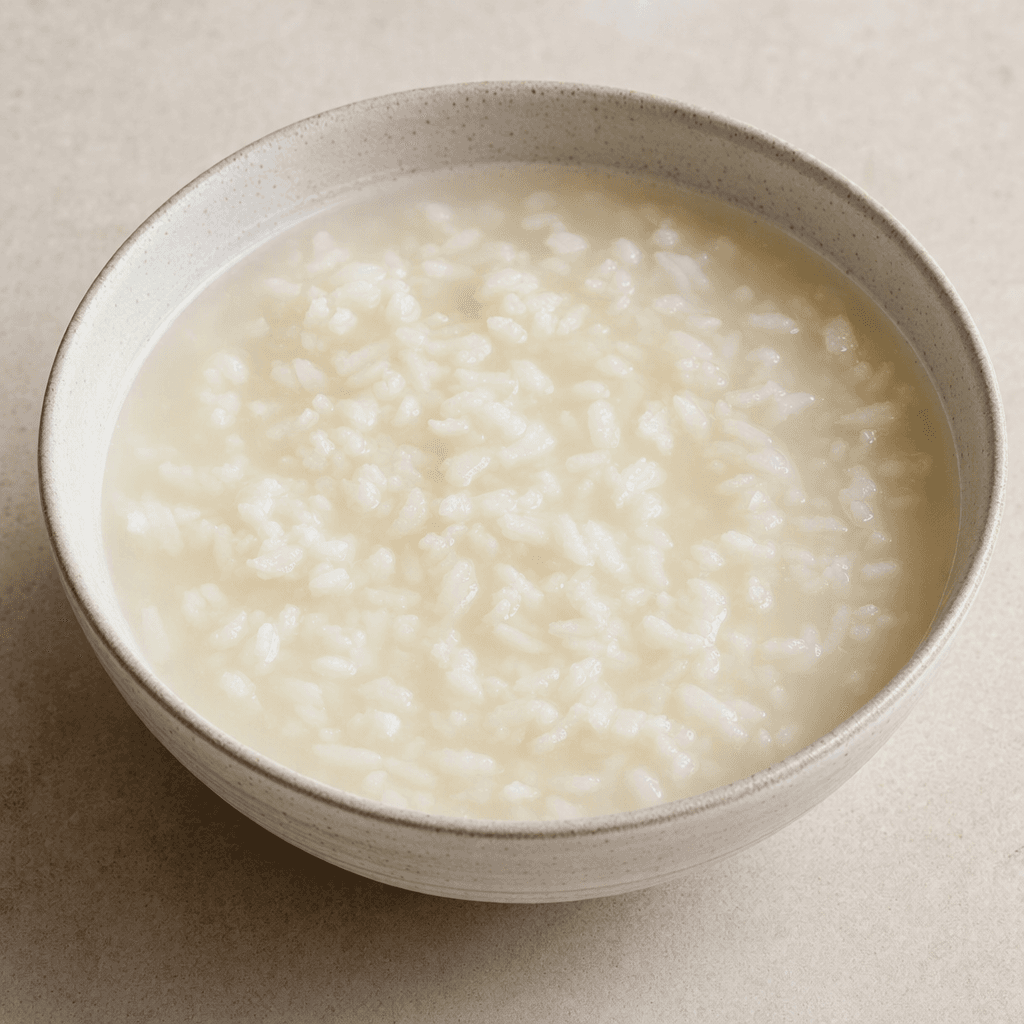
Rice soup Calories
Light, easy-to-digest, low-fat soup
In season: Winter · Autumn
CALORIES
GI
POTASSIUM
FIBER
Quick answer
1 cup (medium) of Rice soup (240 g) has 91 calories. That works out to 38 calories per 100 g. It contains 18.5 g of carbs, 2.2 g of protein, 0.5 g of fat and 0.5 g of fiber. Its 432 mg of Sodium covers 19% of the Daily Value. Its glycemic index is 65 (medium), so it raises blood sugar at a moderate pace.
What is Rice soup?
Rice soup is a simple home-style dish made by simmering rice in water or stock until the grains soften and release some starch. This version is associated with Turkish cooking, though rice soups appear in many cuisines and recipes vary: some are kept plain, while others are finished with lemon, herbs or a creamy dressing.
The broth is gently cloudy and the rice gives it a soft, comforting texture rather than a strongly seasoned taste. In Turkey it may be served hot as a light first course or an easy meal; elsewhere, it fits naturally into the same role, especially when you want something mild. It is low in fat as prepared simply. Add lemon or fresh herbs at the table, or stir in cooked chicken for a heartier bowl.
Rice soup Nutrition Facts
Selected: 100 g
38
KCAL / 100G
Carbs
7.7g
· 3% DV
Protein
0.9g
· 2% DV
Fat
0.2g
· 0% DV
Fiber
0.2g
· 1% DV
DV is the share of the daily value covered, on a 2,000 kcal reference diet.
Calories come from: Carbs 85% · Protein 10% · Fat 5%
Rice soup Vitamins & Minerals
Vitamins
B1
0.02mg · 2% DV
Biotin
0.5µg · 2% DV
B2
0.01mg · 1% DV
B3
0.2mg · 1% DV
Minerals
Sodium
180mg · 8% DV
Calcium
5mg · 1% DV
Magnesium
3mg · 1% DV
Iodine
1µg · 1% DV
How Nutritious Is Rice soup?
Nutrient density
Low
How many vitamins, minerals and how much fiber this food carries per calorie. A high score means a lot of nutrition for few calories.
Satiety score
Medium
An EatBetter score computed from fiber, protein and calorie density. A high score means staying full longer on the same calories.
Both scores are calculated per 100 g and do not change with the selected portion. The satiety score is EatBetter's own calculation, not a clinical measure.
Rice soup Glycemic Index
GLYCEMIC INDEX
GLYCEMIC LOAD
Accounts for portion size — a more realistic measure than GI alone.
How to Burn Off Rice soup
To burn the 38 calories in 100 g:
🚶
Walking (5 km/h)
🏃
Running (8 km/h)
🚴
Cycling
🏊
Swimming
Times are calculated with the MET equation for a 70 kg adult. Actual burn varies with your weight, age and pace.
Is Rice soup Processed?
NOVA 2
Minimally Processed
1. Unprocessed
2. Minimally Processed
3. Processed
4. Ultra-Processed
NOVA classifies foods into 4 groups by industrial processing. NOVA 1 (unprocessed) is the healthiest.
Does Rice soup Contain Allergens?
No known major allergens
Which Diets Is Rice soup Good For?
Vegan
✓ Suitable
Vegetarian
✓ Suitable
Gluten-Free
✓ Suitable
Dairy-Free
— Not suitable
Mediterranean
✓ Suitable
Paleo
— Not suitable
Whole30
— Not suitable
DASH
— Not suitable
Keto
— Not suitable
Low FODMAP
— Not suitable
Rice soup Fat Profile
SATURATED
0.04g
MONOUNSATURATED
0.06g
POLYUNSATURATED
0.05g
Omega 6:3 ratio 4:1
Below the ideal 4:1 — a good omega balance.
Compare Rice soup
Foods Similar to Rice soup
Frequently Asked Questions About Rice soup
How do you make rice soup?
Rice soup is made by simmering rice in water or broth until tender. Start with rinsed rice, stir occasionally as it cooks, and season with salt, pepper, herbs, or a squeeze of lemon to suit the style you want.
What kind of rice is best for rice soup?
Long-grain rice tends to keep its shape in rice soup, while short- or medium-grain rice releases more starch and makes the broth thicker. Choose based on whether you prefer distinct grains or a softer, creamier texture.
Can you make rice soup with leftover cooked rice?
Yes, leftover cooked rice works well in rice soup. Add it near the end of cooking, once the broth and other ingredients are hot, and simmer just long enough to warm it through so the grains do not turn mushy.
Why does rice soup get so thick?
Rice soup thickens because rice releases starch and continues absorbing broth as it cooks and sits. Stir in hot water or broth until it reaches the consistency you like, especially when reheating leftovers.
What can you add to rice soup for more flavor?
Garlic, onion, ginger, herbs, lemon, or a well-seasoned broth can add flavor to rice soup. Add aromatics while the broth heats, then finish with fresh herbs or citrus so the soup tastes bright rather than flat.
How long does rice soup keep in the fridge?
Rice soup is best eaten by the day after cooking. Cool and refrigerate it promptly in a covered container, then reheat only the portion you need until steaming hot; do not leave it sitting at room temperature for an extended period.
Can you freeze rice soup?
Yes, rice soup can be frozen, although the rice may become softer after thawing. Freeze it in individual portions, thaw it in the refrigerator, and add a little hot broth or water while reheating if the texture is too thick.
Is rice soup good to eat when you’re sick?
Rice soup can be a soothing, easy-to-eat source of fluid when you feel unwell, particularly if you keep it mild. It does not treat an illness, and a very plain soup may not replace the fluids and salts lost through vomiting or diarrhea.
What do you serve with rice soup?
Rice soup pairs well with crusty bread, a simple salad, or cooked vegetables. If you want a more filling meal, serve it alongside eggs, chicken, beans, or another protein rather than relying on the soup alone.
Is rice soup good for weight loss?
Rice soup can fit into a weight-loss meal because a broth-based version is often filling for its size, but it is not a weight-loss food by itself. Cream, generous oil, and large amounts of toppings make it more substantial.
Have another question about Rice soup?
Ask the AI nutrition coach — calories, portions, alternatives and more, answered in seconds in the app.

Scan calories with your camera
Instant AI nutrition analysis

Nutrition data compiled from USDA FoodData Central and scientific sources.