

Ready & Packaged Foods
All →Vegetables & Legumes
All →Desserts & Confectionery
All →Meat & Protein
All →Grains & Bakery
All →Beverages
All →Milk & Dairy
All →

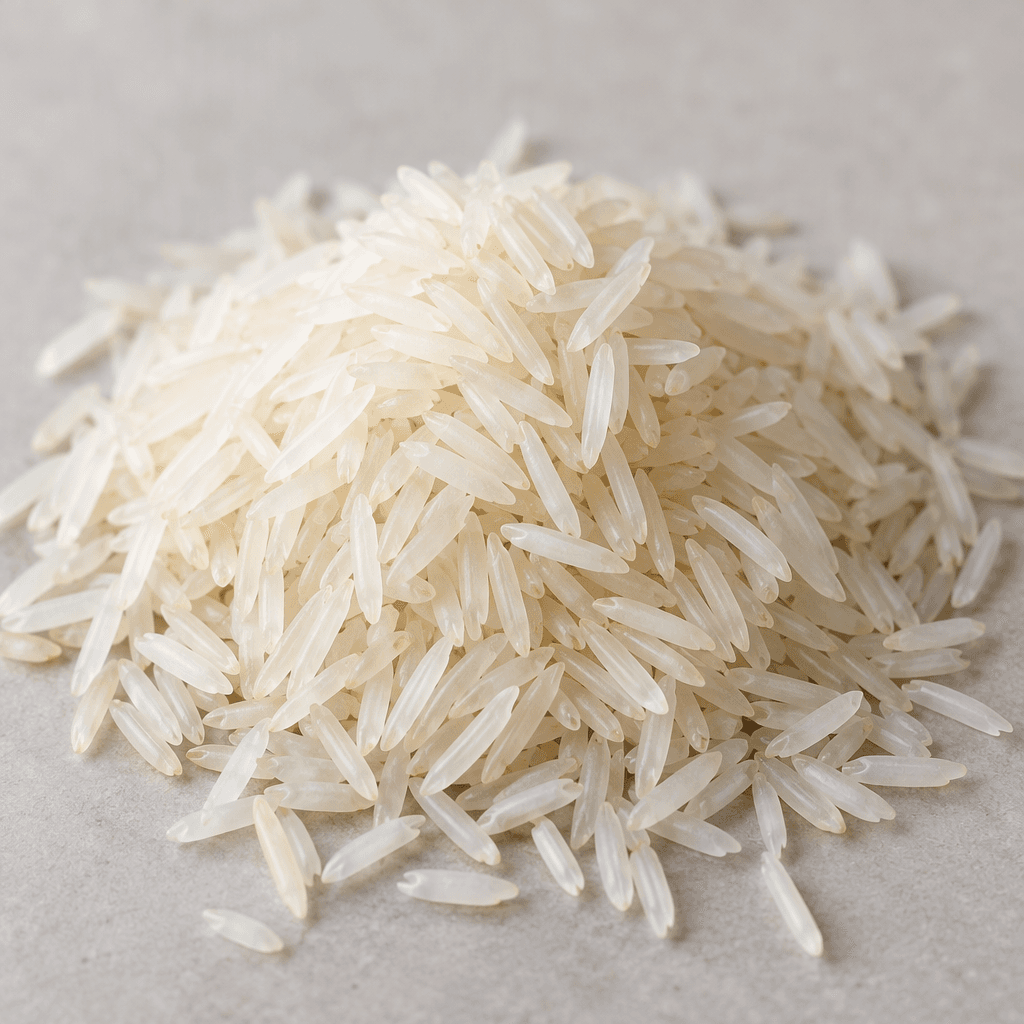
Rice, raw Calories
High carbohydrate, low fat, staple energy source
In season: Spring · Summer · Autumn · Winter
CALORIES
GI
POTASSIUM
FIBER
Quick answer
1 cup (medium) of Rice, raw (185 g) has 675 calories. That works out to 365 calories per 100 g. It contains 148 g of carbs, 13.1 g of protein, 1.3 g of fat and 2.4 g of fiber. Its 2 mg of Manganese covers 88% of the Daily Value. Its glycemic index is 73 (high), so it raises blood sugar quickly.
What is Rice, raw?
Raw rice is the dried grain of the rice plant, sold uncooked and ready to prepare. It is a staple in cuisines around the world, from South and East Asia to Africa, the Middle East and the Americas; the grains may be milled white or sold with more of their outer layers intact.
Dry and firm before cooking, rice softens as it absorbs water, with the final texture ranging from fluffy and separate to tender and sticky. It is commonly served alongside vegetables, beans, meat or fish, or used in dishes such as porridge and rice pudding. Raw rice is chiefly a carbohydrate source, with little fat. Pair it with vegetables and a protein-rich food for a more balanced meal.
Rice, raw Nutrition Facts
Selected: 100 g
365
KCAL / 100G
Carbs
80g
· 29% DV
Protein
7.1g
· 14% DV
Fat
0.7g
· 1% DV
Fiber
1.3g
· 5% DV
DV is the share of the daily value covered, on a 2,000 kcal reference diet.
Calories come from: Carbs 90% · Protein 8% · Fat 2%
Rice, raw Vitamins & Minerals
Vitamins
B5
1mg · 20% DV
B3
1.6mg · 10% DV
B6
0.16mg · 9% DV
B1
0.07mg · 6% DV
Minerals
Manganese
1mg · 43% DV
Selenium
15µg · 27% DV
Phosphorus
115mg · 16% DV
Zinc
1mg · 9% DV
How Nutritious Is Rice, raw?
Nutrient density
Low
How many vitamins, minerals and how much fiber this food carries per calorie. A high score means a lot of nutrition for few calories.
Satiety score
Low
An EatBetter score computed from fiber, protein and calorie density. A high score means staying full longer on the same calories.
Both scores are calculated per 100 g and do not change with the selected portion. The satiety score is EatBetter's own calculation, not a clinical measure.
Rice, raw Glycemic Index
GLYCEMIC INDEX
GLYCEMIC LOAD
Accounts for portion size — a more realistic measure than GI alone.
How to Burn Off Rice, raw
To burn the 365 calories in 100 g:
🚶
Walking (5 km/h)
🏃
Running (8 km/h)
🚴
Cycling
🏊
Swimming
Times are calculated with the MET equation for a 70 kg adult. Actual burn varies with your weight, age and pace.
Is Rice, raw Processed?
NOVA 2
Minimally Processed
1. Unprocessed
2. Minimally Processed
3. Processed
4. Ultra-Processed
NOVA classifies foods into 4 groups by industrial processing. NOVA 1 (unprocessed) is the healthiest.
Does Rice, raw Contain Allergens?
No known major allergens
Which Diets Is Rice, raw Good For?
Vegan
✓ Suitable
Vegetarian
✓ Suitable
Gluten-Free
✓ Suitable
Dairy-Free
— Not suitable
Mediterranean
✓ Suitable
Paleo
✓ Suitable
Whole30
— Not suitable
DASH
— Not suitable
Keto
— Not suitable
Low FODMAP
— Not suitable
Rice, raw Fat Profile
SATURATED
0.18g
MONOUNSATURATED
0.21g
POLYUNSATURATED
0.18g
Omega 6:3 ratio 9:1
Above the ideal 4:1 (9:1).
Compare Rice, raw
Foods Similar to Rice, raw
Frequently Asked Questions About Rice, raw
How do you cook raw rice on the stove?
Rinse the raw rice, add it to a saucepan with water, bring it to a boil, then cover and simmer until tender. Keep the lid on while it cooks, and let the rice rest off the heat before fluffing it with a fork.
What is the water-to-rice ratio for raw rice?
The right amount of water for raw rice varies by variety and cooking method. Long-grain white rice typically needs less water than brown rice, while basmati often cooks with a modest amount. Follow the package directions and adjust for your pan and preference.
Should you rinse raw rice before cooking it?
Usually, yes. Rinsing raw rice under cool water removes loose surface starch, which can help keep cooked grains from sticking together. Rinse gently until the water is less cloudy; some recipes skip rinsing when a creamier texture is wanted.
How long does raw rice last in the pantry?
Store raw rice in an airtight container in a cool, dry, dark cupboard to protect it from moisture and pantry pests. White rice generally keeps much longer than brown rice, whose natural oils can turn rancid; use the package date as a guide.
Can you eat raw rice?
It is not a good idea to eat raw rice. The hard grains are difficult to digest, and uncooked rice may carry germs or contaminants. Cook rice thoroughly before eating it, and avoid tasting uncooked grains from the bag.
Why does raw rice turn mushy when cooked?
Raw rice often turns mushy because it was cooked with too much water, simmered too long, or stirred repeatedly. Rinsing away excess surface starch can help, too. Measure the water, keep the lid on, and let the rice rest before fluffing.
Does raw rice contain arsenic, and can cooking reduce it?
Yes, rice can absorb inorganic arsenic from soil and water, and levels vary by growing region. Cooking rice in plenty of water and draining the excess can reduce arsenic, though it does not remove all of it.
Should you soak raw rice before cooking?
Soaking raw rice is optional, but it can help some varieties cook more evenly and reduce cooking time. Drain it well before cooking and use less cooking time than usual; basmati and other long-grain varieties are commonly soaked for a fluffier result.
What is the difference between basmati and jasmine raw rice?
Basmati raw rice has long, slender grains and a relatively dry, separate texture when cooked; jasmine rice is fragrant and tends to be softer and slightly stickier. Choose basmati for biryani or pilaf-style dishes and jasmine for many Southeast Asian meals.
Can you freeze raw rice?
Yes, raw rice can be frozen in a tightly sealed, moisture-proof container, although a cool, dry pantry is usually enough. If you take it from the freezer, let it come to room temperature while still sealed so condensation does not dampen the grains.
Have another question about Rice, raw?
Ask the AI nutrition coach — calories, portions, alternatives and more, answered in seconds in the app.

Scan calories with your camera
Instant AI nutrition analysis

Nutrition data compiled from USDA FoodData Central and scientific sources.