

Ready & Packaged Foods
All →Vegetables & Legumes
All →Desserts & Confectionery
All →Meat & Protein
All →Grains & Bakery
All →Beverages
All →Milk & Dairy
All →

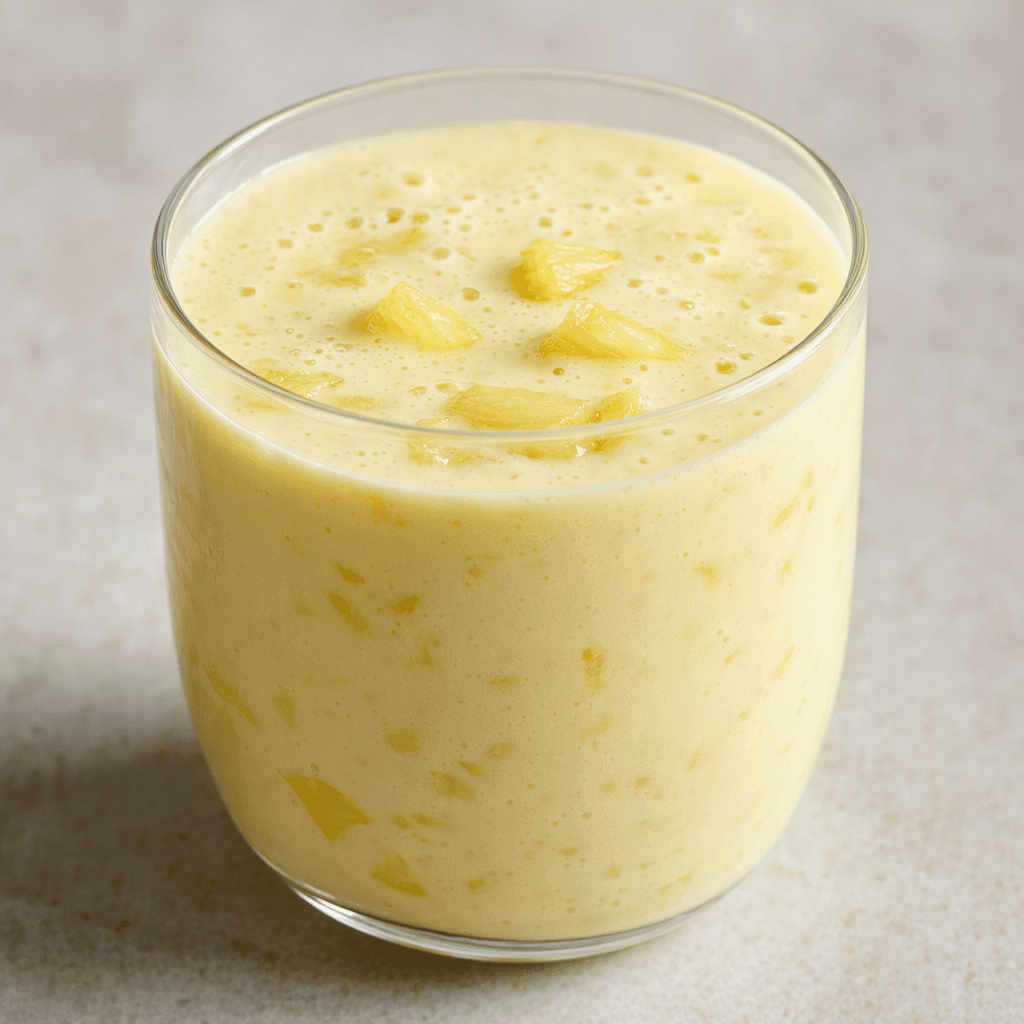
Pineapple Probiotic Kefir Calories
Fermented dairy, probiotic, pineapple flavored, digestive support
In season: Spring · Summer · Autumn · Winter
CALORIES
GI
POTASSIUM
FIBER
Quick answer
1 cup (medium) of Pineapple Probiotic Kefir (200 g) has 120 calories. That works out to 60 calories per 100 g. It contains 17 g of carbs, 5.6 g of protein, 3 g of fat and 0.4 g of fiber. Its 0.4 mg of B2 covers 28% of the Daily Value. Its glycemic index is 35 (low), so it raises blood sugar slowly.
What is Pineapple Probiotic Kefir?
Pineapple Probiotic Kefir is a pourable fermented milk drink made with kefir cultures and pineapple flavour or pieces. Kefir is traditionally associated with the Caucasus and is now sold in many countries in plain and fruit-flavoured forms. The pineapple gives this version a fruity note that softens kefir’s familiar tang, while the texture is usually thinner than yoghurt.
Serve it chilled at breakfast or as a snack, drink it on its own, or pour it over oats and fruit. It offers a modest amount of protein—2.8 g per 100 g—alongside carbohydrates, so it is more of a light dairy drink than a filling protein-rich meal. If you prefer a less sweet taste, check the label for added sugar and pair a small glass with unsweetened oats or fresh fruit.
Pineapple Probiotic Kefir Nutrition Facts
Selected: 100 g
60
KCAL / 100G
Carbs
8.5g
· 3% DV
Protein
2.8g
· 6% DV
Fat
1.5g
· 2% DV
Fiber
0.2g
· 1% DV
DV is the share of the daily value covered, on a 2,000 kcal reference diet.
Calories come from: Carbs 58% · Protein 19% · Fat 23%
Pineapple Probiotic Kefir Vitamins & Minerals
Vitamins
B2
0.18mg · 14% DV
B12
0.18µg · 8% DV
B5
0.35mg · 7% DV
Biotin
2.2µg · 7% DV
Minerals
Phosphorus
90mg · 13% DV
Calcium
110mg · 11% DV
Zinc
1mg · 9% DV
Iodine
8µg · 5% DV
How Nutritious Is Pineapple Probiotic Kefir?
Nutrient density
Medium
How many vitamins, minerals and how much fiber this food carries per calorie. A high score means a lot of nutrition for few calories.
Satiety score
Medium
An EatBetter score computed from fiber, protein and calorie density. A high score means staying full longer on the same calories.
Both scores are calculated per 100 g and do not change with the selected portion. The satiety score is EatBetter's own calculation, not a clinical measure.
Pineapple Probiotic Kefir Glycemic Index
GLYCEMIC INDEX
GLYCEMIC LOAD
Accounts for portion size — a more realistic measure than GI alone.
How to Burn Off Pineapple Probiotic Kefir
To burn the 60 calories in 100 g:
🚶
Walking (5 km/h)
🏃
Running (8 km/h)
🚴
Cycling
🏊
Swimming
Times are calculated with the MET equation for a 70 kg adult. Actual burn varies with your weight, age and pace.
Is Pineapple Probiotic Kefir Processed?
NOVA 2
Minimally Processed
1. Unprocessed
2. Minimally Processed
3. Processed
4. Ultra-Processed
NOVA classifies foods into 4 groups by industrial processing. NOVA 1 (unprocessed) is the healthiest.
Does Pineapple Probiotic Kefir Contain Allergens?
Contains these allergens:
Which Diets Is Pineapple Probiotic Kefir Good For?
Vegan
— Not suitable
Vegetarian
✓ Suitable
Gluten-Free
— Not suitable
Dairy-Free
— Not suitable
Mediterranean
✓ Suitable
Paleo
— Not suitable
Whole30
— Not suitable
DASH
— Not suitable
Keto
— Not suitable
Low FODMAP
— Not suitable
Pineapple Probiotic Kefir Fat Profile
SATURATED
1g
MONOUNSATURATED
0.3g
POLYUNSATURATED
0.05g
Omega 6:3 ratio 4:1
Below the ideal 4:1 — a good omega balance.
Compare Pineapple Probiotic Kefir
Foods Similar to Pineapple Probiotic Kefir
Frequently Asked Questions About Pineapple Probiotic Kefir
What does Pineapple Probiotic Kefir taste like?
Pineapple Probiotic Kefir tastes tangy and creamy, with a sweet, fruity pineapple note. The exact sweetness and texture vary by product; pineapple pieces can make it thicker or more textured than plain kefir.
Can you make Pineapple Probiotic Kefir at home?
Yes. Ferment milk with kefir grains first, then blend or stir in pineapple. Adding fresh pineapple before fermentation can affect the milk proteins and cultures because the fruit is acidic and contains enzymes.
Does Pineapple Probiotic Kefir contain live cultures?
It can, if the kefir has not been heat-treated after fermentation. Heating can reduce or eliminate live cultures, so pineapple flavor alone does not tell you whether a particular product still contains them.
Can Pineapple Probiotic Kefir help with digestion?
Pineapple Probiotic Kefir may support the gut microbiome if it contains live cultures, but it is not a treatment for digestive conditions. The effect varies with the cultures used and how well you tolerate fermented dairy.
How long does Pineapple Probiotic Kefir last after opening?
Keep Pineapple Probiotic Kefir refrigerated after opening and use it within the period stated on its package. Pour it with clean utensils, and discard it if you notice mold, an unusual odor, or a swollen container.
Why has my Pineapple Probiotic Kefir separated?
Separation is common in Pineapple Probiotic Kefir as fermented milk settles and fruit affects its texture. Stir or shake it before drinking; discard it if separation comes with mold, a foul smell, or a swollen package.
Is Pineapple Probiotic Kefir suitable for people with lactose intolerance?
Not necessarily. Fermentation reduces some of the lactose in milk, but Pineapple Probiotic Kefir is not automatically lactose-free. People with lactose intolerance may tolerate it differently from regular milk, so start with a small amount if they choose to try it.
Can Pineapple Probiotic Kefir be used in smoothies?
Yes. Pineapple Probiotic Kefir works as a creamy, tangy smoothie base and pairs well with banana or berries. Blend it briefly with the other ingredients; adding extra sweetener may be unnecessary because the pineapple already contributes sweetness.
Does Pineapple Probiotic Kefir have added sugar?
Some Pineapple Probiotic Kefir products contain added sugar, while others rely on the sweetness of pineapple. The fruit flavor does not tell you which recipe was used, so the ingredient list is the useful way to distinguish them.
Is Pineapple Probiotic Kefir a good post-workout drink?
Pineapple Probiotic Kefir can be a convenient post-workout snack because it provides fluid and dairy protein along with carbohydrates. It is not a complete recovery meal on its own after demanding exercise; pair it with other food if you need a more substantial meal.
Have another question about Pineapple Probiotic Kefir?
Ask the AI nutrition coach — calories, portions, alternatives and more, answered in seconds in the app.

Scan calories with your camera
Instant AI nutrition analysis

Nutrition data compiled from USDA FoodData Central and scientific sources.