

Ready & Packaged Foods
All →Vegetables & Legumes
All →Desserts & Confectionery
All →Meat & Protein
All →Grains & Bakery
All →Beverages
All →Milk & Dairy
All →

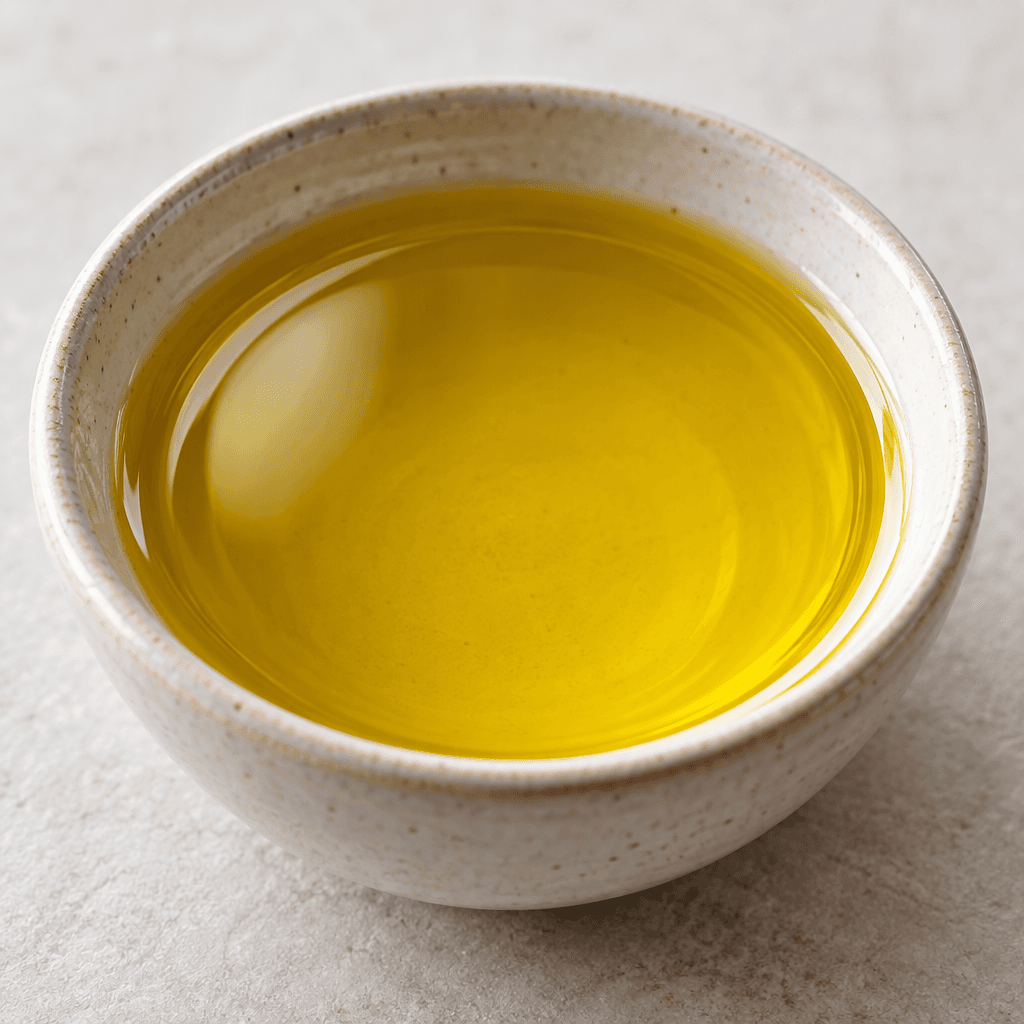
Pilaf oil Calories
Cooking fat used for pilaf, energy-dense
CALORIES
GI
POTASSIUM
FIBER
Quick answer
1 tablespoon (medium) of Pilaf oil (14 g) has 124 calories. That works out to 884 calories per 100 g. It contains 0 g of carbs, 0 g of protein, 14 g of fat and 0 g of fiber. Its 2 mg of Vitamin E covers 13% of the Daily Value. Its glycemic index is 0 (low), so it raises blood sugar slowly.
What is Pilaf oil?
Pilaf oil is the cooking fat used to coat and sauté rice before it is cooked into pilaf; it does not refer to one specific oil. Depending on the recipe, it may be vegetable oil, butter, or a combination. Pilaf is made in many regions, so the fat and seasoning vary with local traditions.
The fat helps give the grains a savoury flavour and a tender, separate texture. Pilaf is commonly served alongside stews, grilled meat, or vegetables, or as part of a larger meal. Pilaf oil is energy-dense: it is entirely fat and provides 884 calories per 100 g. For a lighter dish, measure the fat rather than pouring it freely, and build flavour with herbs or spices.
Pilaf oil Nutrition Facts
Selected: 100 g
884
KCAL / 100G
Carbs
0g
· 0% DV
Protein
0g
· 0% DV
Fat
100g
· 128% DV
Fiber
0g
· 0% DV
DV is the share of the daily value covered, on a 2,000 kcal reference diet.
Calories come from: Carbs 0% · Protein 0% · Fat 100%
Pilaf oil Vitamins & Minerals
Vitamins
Vitamin E
14mg · 93% DV
Vitamin K
24µg · 20% DV
Vitamin A
0µg · 0% DV
B1
0mg · 0% DV
Minerals
Calcium
0mg · 0% DV
Iron
0mg · 0% DV
Magnesium
0mg · 0% DV
Zinc
0mg · 0% DV
How Nutritious Is Pilaf oil?
Nutrient density
Low
How many vitamins, minerals and how much fiber this food carries per calorie. A high score means a lot of nutrition for few calories.
Satiety score
Low
An EatBetter score computed from fiber, protein and calorie density. A high score means staying full longer on the same calories.
Both scores are calculated per 100 g and do not change with the selected portion. The satiety score is EatBetter's own calculation, not a clinical measure.
Pilaf oil Glycemic Index
GLYCEMIC INDEX
GLYCEMIC LOAD
Accounts for portion size — a more realistic measure than GI alone.
How to Burn Off Pilaf oil
To burn the 884 calories in 100 g:
🚶
Walking (5 km/h)
🏃
Running (8 km/h)
🚴
Cycling
🏊
Swimming
Times are calculated with the MET equation for a 70 kg adult. Actual burn varies with your weight, age and pace.
Is Pilaf oil Processed?
NOVA 3
Processed
1. Unprocessed
2. Minimally Processed
3. Processed
4. Ultra-Processed
NOVA classifies foods into 4 groups by industrial processing. NOVA 1 (unprocessed) is the healthiest.
Does Pilaf oil Contain Allergens?
No known major allergens
Which Diets Is Pilaf oil Good For?
Vegan
✓ Suitable
Vegetarian
✓ Suitable
Gluten-Free
✓ Suitable
Dairy-Free
— Not suitable
Mediterranean
✓ Suitable
Paleo
✓ Suitable
Whole30
— Not suitable
DASH
— Not suitable
Keto
✓ Suitable
Low FODMAP
— Not suitable
Pilaf oil Fat Profile
SATURATED
14g
MONOUNSATURATED
23g
POLYUNSATURATED
58g
Omega 6:3 ratio 510:1
Above the ideal 4:1 (510:1).
Compare Pilaf oil
Foods Similar to Pilaf oil
Frequently Asked Questions About Pilaf oil
What is pilaf oil?
Pilaf oil is the cooking fat used to toast rice or enrich a pilaf. It is not one fixed ingredient: recipes may use a neutral vegetable oil, olive oil, butter, or a blend, depending on the desired flavour.
What is the best oil for pilaf?
A neutral oil is a good choice when you want the rice and seasonings to stand out. Olive oil adds its own flavour, while butter gives pilaf a richer, buttery taste; choose pilaf oil to suit the dish you are making.
Should you use butter or oil in pilaf?
Either works for pilaf. Butter brings a rich flavour but can brown or burn if overheated, while many neutral oils tolerate higher cooking temperatures. Some cooks combine them for buttery flavour without relying on butter alone.
When do you add pilaf oil to rice?
Add pilaf oil while toasting the rice, before pouring in the cooking liquid. Stir so the grains are coated evenly, and keep the heat moderate if using butter. You can also finish the cooked pilaf with a little butter for aroma.
How much pilaf oil should you use?
Use enough pilaf oil to lightly coat the rice rather than leave it swimming in fat. Too much can make the finished dish greasy and heavy; measure it for your recipe and adjust gradually the next time you cook.
Does pilaf oil keep rice from sticking together?
Pilaf oil can help coat the grains during toasting, but it cannot guarantee fluffy, separate rice on its own. Rinsing excess starch, using the right amount of liquid, and letting the cooked pilaf rest also help prevent clumping.
Can you use pilaf oil for bulgur pilaf?
Yes, pilaf oil works in bulgur pilaf as well as rice pilaf. Toast the bulgur briefly in the oil before adding liquid, and choose a flavour that complements additions such as tomatoes, onions, or spices.
Can you make pilaf with olive oil instead of pilaf oil?
Yes, olive oil can serve as the pilaf oil. Its flavour may be noticeable, especially with extra-virgin olive oil, so use a milder variety if you want the rice, stock, and seasonings to remain the main flavours.
Why does my pilaf turn out greasy?
Pilaf often turns greasy when too much oil is used or it is not distributed evenly through the rice. Measure the pilaf oil and stir while toasting; if oil pools on the cooked dish, reduce the amount next time.
Can pilaf oil be used for frying?
It can be used for frying if the particular oil is suitable for high-heat cooking. Butter can burn more readily than many refined oils, so avoid overheating it and use an oil suited to the temperature and food you are frying.
Have another question about Pilaf oil?
Ask the AI nutrition coach — calories, portions, alternatives and more, answered in seconds in the app.

Scan calories with your camera
Instant AI nutrition analysis

Nutrition data compiled from USDA FoodData Central and scientific sources.