

Ready & Packaged Foods
All →Vegetables & Legumes
All →Desserts & Confectionery
All →Meat & Protein
All →Grains & Bakery
All →Beverages
All →Milk & Dairy
All →

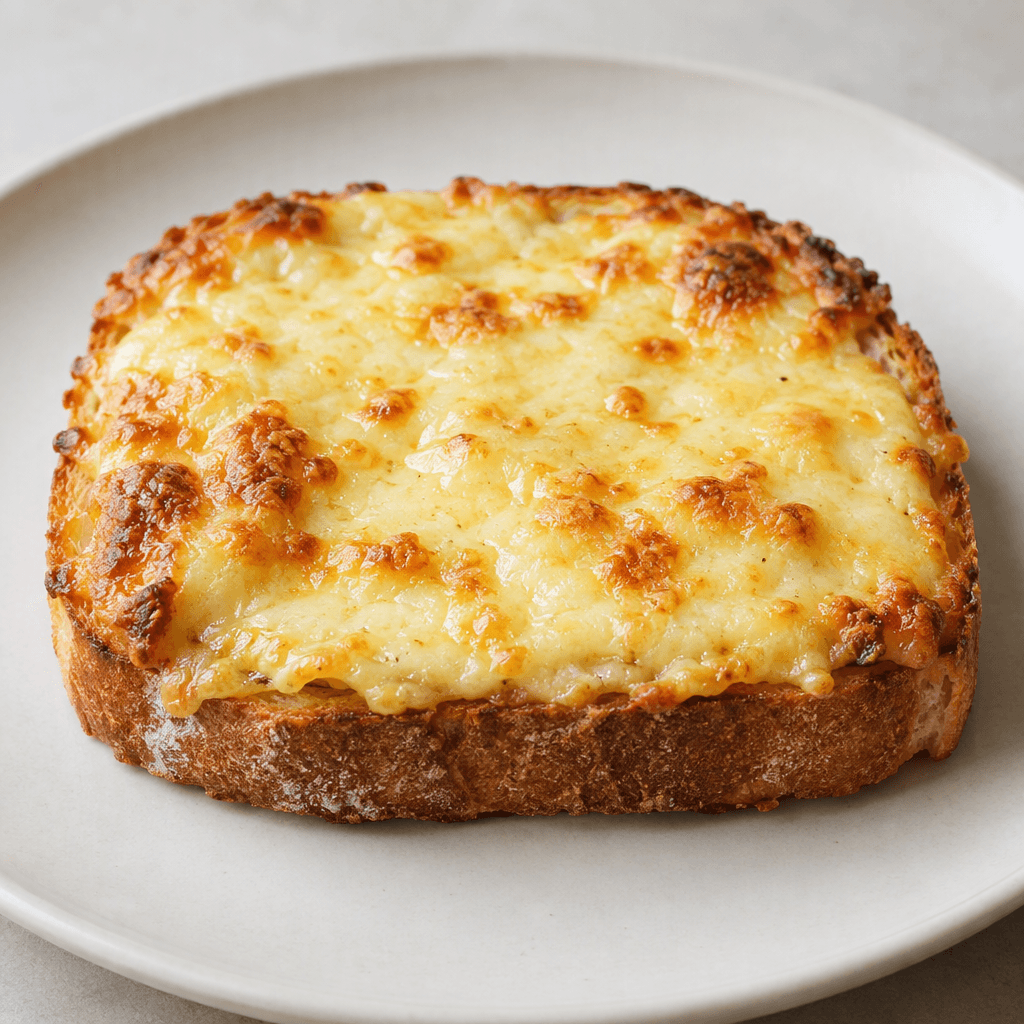
Cheese Toast Calories
Classic cheese toast: bread and melted cheese
In season: Spring · Summer · Autumn · Winter
CALORIES
GI
POTASSIUM
FIBER
Quick answer
1 piece (medium) of Cheese Toast (90 g) has 261 calories. That works out to 290 calories per 100 g. It contains 26.1 g of carbs, 10.4 g of protein, 11.7 g of fat and 1.5 g of fiber. Its 288 mg of Calcium covers 29% of the Daily Value. Its glycemic index is 65 (medium), so it raises blood sugar at a moderate pace.
What is Cheese Toast?
Cheese Toast is bread topped with cheese, or filled with cheese between two slices, then toasted until the bread is crisp and the cheese melts. The exact style varies: it may be made in a sandwich press or under a grill, with a single open-faced slice like the one pictured. It has a savoury, creamy centre and browned, crunchy edges.
It is an easy breakfast, snack or light meal in many places, often served hot with tea, coffee or a simple salad. Bread supplies most of its carbohydrates, while the cheese adds protein and fat. For a lighter version, use a thinner layer of cheese and serve it with fresh vegetables; wholegrain bread adds a more substantial, hearty base.
Cheese Toast Nutrition Facts
Selected: 100 g
290
KCAL / 100G
Carbs
29g
· 11% DV
Protein
11.5g
· 23% DV
Fat
13g
· 17% DV
Fiber
1.7g
· 6% DV
DV is the share of the daily value covered, on a 2,000 kcal reference diet.
Calories come from: Carbs 42% · Protein 16% · Fat 42%
Cheese Toast Vitamins & Minerals
Vitamins
B12
0.7µg · 29% DV
Biotin
7µg · 23% DV
B2
0.28mg · 22% DV
Vitamin A
180µg · 20% DV
Minerals
Calcium
320mg · 32% DV
Phosphorus
180mg · 26% DV
Sodium
520mg · 23% DV
Selenium
8µg · 15% DV
How Nutritious Is Cheese Toast?
Nutrient density
Medium
How many vitamins, minerals and how much fiber this food carries per calorie. A high score means a lot of nutrition for few calories.
Satiety score
Medium
An EatBetter score computed from fiber, protein and calorie density. A high score means staying full longer on the same calories.
Both scores are calculated per 100 g and do not change with the selected portion. The satiety score is EatBetter's own calculation, not a clinical measure.
Cheese Toast Glycemic Index
GLYCEMIC INDEX
GLYCEMIC LOAD
Accounts for portion size — a more realistic measure than GI alone.
How to Burn Off Cheese Toast
To burn the 290 calories in 100 g:
🚶
Walking (5 km/h)
🏃
Running (8 km/h)
🚴
Cycling
🏊
Swimming
Times are calculated with the MET equation for a 70 kg adult. Actual burn varies with your weight, age and pace.
Is Cheese Toast Processed?
NOVA 3
Processed
1. Unprocessed
2. Minimally Processed
3. Processed
4. Ultra-Processed
NOVA classifies foods into 4 groups by industrial processing. NOVA 1 (unprocessed) is the healthiest.
Does Cheese Toast Contain Allergens?
Contains these allergens:
Which Diets Is Cheese Toast Good For?
Vegan
— Not suitable
Vegetarian
✓ Suitable
Gluten-Free
— Not suitable
Dairy-Free
— Not suitable
Mediterranean
— Not suitable
Paleo
— Not suitable
Whole30
— Not suitable
DASH
— Not suitable
Keto
— Not suitable
Low FODMAP
— Not suitable
Cheese Toast Fat Profile
SATURATED
6.2g
MONOUNSATURATED
3.8g
POLYUNSATURATED
1.1g
Omega 6:3 ratio 5.7:1
Above the ideal 4:1 (5.7:1).
Compare Cheese Toast
Foods Similar to Cheese Toast
Frequently Asked Questions About Cheese Toast
How do you make cheese toast?
Make cheese toast by placing cheese on bread and heating it until the cheese melts and the bread turns golden. A toaster oven, grill, or skillet works; watch closely near the end, since cheese can brown quickly under direct heat.
What is the best cheese for cheese toast?
Cheddar is a popular choice for cheese toast because it melts well and has a pronounced flavor. Monterey Jack, mozzarella, or a mix can also work; very fresh mozzarella may release moisture and soften the bread.
How do you make cheese toast in the oven?
To make cheese toast in the oven, place cheese-topped bread on a baking tray and broil or bake it until the cheese bubbles. Keep the tray near the top only if you can watch it closely, because the surface can burn fast.
Why is the cheese on my cheese toast not melting?
Cheese on cheese toast may stay firm if the slices are thick, the cheese is cold, or the heat is too high for the bread to warm through. Use thinner slices and moderate heat so the cheese melts before the toast gets too dark.
How do you keep cheese toast from getting soggy?
Keep cheese toast from getting soggy by using bread with a sturdy crumb and avoiding wet toppings. If adding tomatoes or mushrooms, remove excess moisture first; place the cheese between the bread and juicy ingredients to create a partial barrier.
What toppings go well on cheese toast?
Tomato, sautéed mushrooms, caramelized onion, and sliced jalapeño all pair well with cheese toast. Cook watery vegetables first and add delicate herbs after heating, so the bread stays crisp and the herbs keep their fresh flavor.
What is the difference between cheese toast and grilled cheese?
Cheese toast usually means bread with cheese melted on top, while a grilled cheese sandwich encloses cheese between two slices of bread and browns both sides. Usage varies by country, so some menus use the names for similar dishes.
Can you make cheese toast in an air fryer?
Yes, you can make cheese toast in an air fryer by placing cheese-topped bread in the basket and heating it until the cheese bubbles. Use a small piece of bread or secure a very light topping, since strong airflow can shift it.
How should you reheat leftover cheese toast?
Reheat leftover cheese toast in a skillet, toaster oven, or air fryer to bring back some crispness while melting the cheese. Refrigerate leftovers in a covered container and reheat only the portion you plan to eat.
What can you serve with cheese toast?
Serve cheese toast with tomato soup, a green salad, or sliced fresh vegetables. Soup makes it a more filling lunch, while a crisp salad balances the rich, melted cheese without adding another heavy component.
Have another question about Cheese Toast?
Ask the AI nutrition coach — calories, portions, alternatives and more, answered in seconds in the app.

Scan calories with your camera
Instant AI nutrition analysis

Nutrition data compiled from USDA FoodData Central and scientific sources.