

Ready & Packaged Foods
All →Vegetables & Legumes
All →Desserts & Confectionery
All →Meat & Protein
All →Grains & Bakery
All →Beverages
All →Milk & Dairy
All →

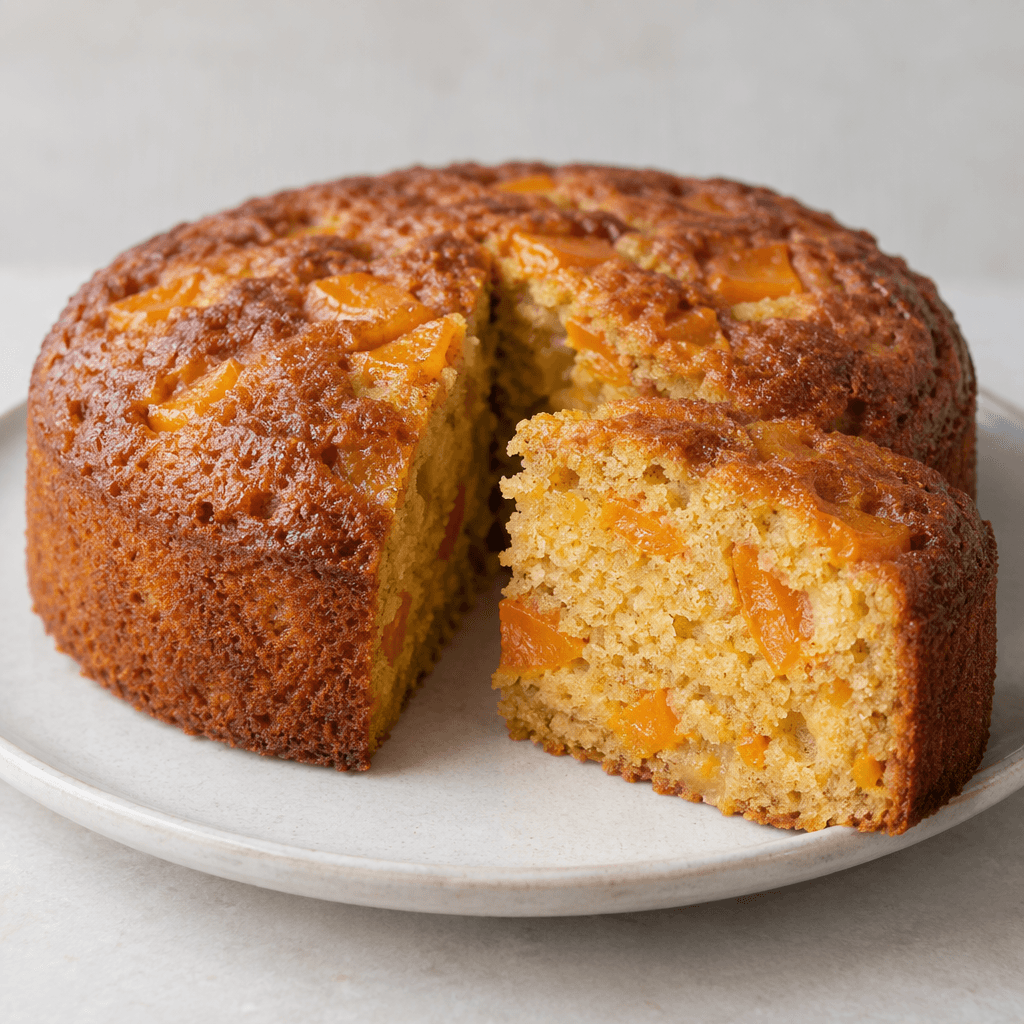
Persimmon cake Calories
Persimmon cake is a sweet, moist cake made primarily with ripe persimmons, often featuring walnuts, cinnamon, and sometimes raisins.
In season: Autumn · Winter
CALORIES
GI
POTASSIUM
FIBER
Quick answer
1 slice (medium) of Persimmon cake (80 g) has 216 calories. That works out to 270 calories per 100 g. It contains 36 g of carbs, 2.6 g of protein, 6.8 g of fat and 1.7 g of fiber. Its 88 µg of Vitamin A covers 10% of the Daily Value. Its glycemic index is 55 (medium), so it raises blood sugar at a moderate pace.
What is Persimmon cake?
Persimmon cake is a home-style bake made by folding ripe persimmon pulp into cake batter. It is not tied to one single culinary tradition; recipes vary, and may include walnuts, cinnamon or raisins. The fruit lends the crumb moisture and a mellow sweetness.
Soft and often gently spiced, it makes a fitting snack with tea or coffee, especially during persimmon season. It is a sweet, carbohydrate-forward treat rather than a substantial source of protein. For a less rich serving, enjoy a modest slice with plain yogurt or fresh fruit, or choose a recipe with less added sugar.
Persimmon cake Nutrition Facts
Selected: 100 g
270
KCAL / 100G
Carbs
45g
· 16% DV
Protein
3.2g
· 6% DV
Fat
8.5g
· 11% DV
Fiber
2.1g
· 8% DV
DV is the share of the daily value covered, on a 2,000 kcal reference diet.
Calories come from: Carbs 67% · Protein 5% · Fat 28%
Persimmon cake Vitamins & Minerals
Vitamins
Vitamin A
110µg · 12% DV
B1
0.07mg · 6% DV
B2
0.06mg · 5% DV
B6
0.08mg · 5% DV
Minerals
Sodium
180mg · 8% DV
Iron
1mg · 6% DV
Phosphorus
45mg · 6% DV
Selenium
3µg · 5% DV
How Nutritious Is Persimmon cake?
Nutrient density
Low
How many vitamins, minerals and how much fiber this food carries per calorie. A high score means a lot of nutrition for few calories.
Satiety score
Low
An EatBetter score computed from fiber, protein and calorie density. A high score means staying full longer on the same calories.
Both scores are calculated per 100 g and do not change with the selected portion. The satiety score is EatBetter's own calculation, not a clinical measure.
Persimmon cake Glycemic Index
GLYCEMIC INDEX
GLYCEMIC LOAD
Accounts for portion size — a more realistic measure than GI alone.
How to Burn Off Persimmon cake
To burn the 270 calories in 100 g:
🚶
Walking (5 km/h)
🏃
Running (8 km/h)
🚴
Cycling
🏊
Swimming
Times are calculated with the MET equation for a 70 kg adult. Actual burn varies with your weight, age and pace.
Is Persimmon cake Processed?
NOVA 3
Processed
1. Unprocessed
2. Minimally Processed
3. Processed
4. Ultra-Processed
NOVA classifies foods into 4 groups by industrial processing. NOVA 1 (unprocessed) is the healthiest.
Does Persimmon cake Contain Allergens?
Contains these allergens:
Which Diets Is Persimmon cake Good For?
Vegan
— Not suitable
Vegetarian
✓ Suitable
Gluten-Free
— Not suitable
Dairy-Free
— Not suitable
Mediterranean
✓ Suitable
Paleo
— Not suitable
Whole30
— Not suitable
DASH
— Not suitable
Keto
— Not suitable
Low FODMAP
— Not suitable
Persimmon cake Fat Profile
SATURATED
1.7g
MONOUNSATURATED
2.5g
POLYUNSATURATED
2.3g
Omega 6:3 ratio 26.3:1
Above the ideal 4:1 (26.3:1).
Compare Persimmon cake
Foods Similar to Persimmon cake
Frequently Asked Questions About Persimmon cake
What is persimmon cake made of?
Persimmon cake is usually made with ripe persimmon pulp, flour, eggs, sugar, and a raising agent. Walnuts, cinnamon, and raisins are common additions, while recipes vary in sweetness and spice. The fruit gives the crumb its characteristic moisture.
Can you make persimmon cake with Fuyu persimmons?
Yes, you can make persimmon cake with Fuyu persimmons, but let them become very soft first. Although Fuyus can be eaten while firm, soft, fully ripe fruit is easier to purée and gives the cake a sweeter, less astringent flavor.
Why does persimmon cake taste astringent?
Persimmon cake can taste astringent if the fruit was an unripe, tannin-rich variety. Use fully ripe persimmons that feel soft and sweet, and remove any seeds. If the fruit tastes puckery before baking, wait for it to ripen rather than masking the flavor with extra sugar.
Can you use Hachiya persimmons in persimmon cake?
Yes, Hachiya persimmons work well in persimmon cake once they are completely soft and ripe. Firm Hachiyas are strongly astringent, so do not use them before ripening; scoop out the flesh and discard the skin and seeds before making the purée.
How do you keep persimmon cake from turning gummy?
To keep persimmon cake from turning gummy, measure the purée and avoid adding watery fruit pulp beyond what the recipe calls for. Mix the batter only until combined, and bake until the center is set; cutting it while warm can also make the crumb seem sticky.
Can you make persimmon cake with dried persimmons?
Yes, dried persimmons can be added to persimmon cake, but they do not replace fresh persimmon purée one-for-one. Chop them and soak briefly in warm water to soften, then drain well; the cake will have chewy fruit pieces rather than the same moist texture.
Do you have to peel persimmons for persimmon cake?
Peeling persimmons for persimmon cake is recommended because the skin can leave small, tough flecks in the purée. Scoop out the flesh of very ripe fruit or peel it before blending, and remove any seeds so the batter stays smooth.
Can you make persimmon cake without walnuts?
Yes, persimmon cake works without walnuts. Leave them out for a softer crumb, or replace their crunch with another suitable chopped nut or seeds; if you add raisins instead, expect a sweeter cake with chewy fruit throughout.
Can you freeze persimmon cake?
Yes, persimmon cake freezes well. Let it cool completely, wrap individual slices tightly, and place them in a freezer-safe container. Thaw a slice at room temperature or warm it gently; freezing can slightly soften the crumb, especially in a very moist cake.
Can people with diabetes eat persimmon cake?
People with diabetes can include persimmon cake, but its flour and added sugar can raise blood glucose. A small slice eaten with a meal may be easier to fit into a plan; ask your diabetes care professional how it fits your individual needs.
Have another question about Persimmon cake?
Ask the AI nutrition coach — calories, portions, alternatives and more, answered in seconds in the app.

Scan calories with your camera
Instant AI nutrition analysis

Nutrition data compiled from USDA FoodData Central and scientific sources.