

Ready & Packaged Foods
All →Vegetables & Legumes
All →Desserts & Confectionery
All →Meat & Protein
All →Grains & Bakery
All →Beverages
All →Milk & Dairy
All →

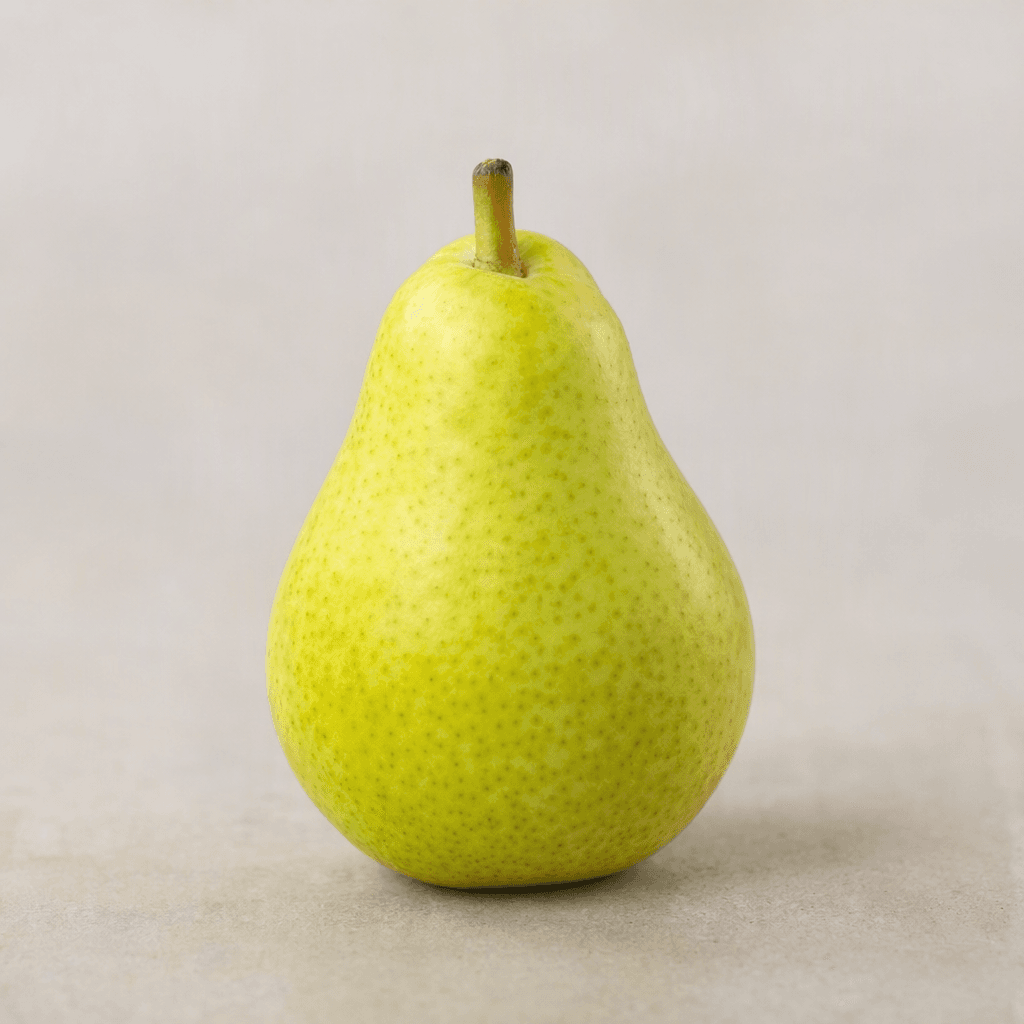
Pear (small) Calories
Source of fiber, low calorie, contains vitamin C
In season: Summer · Autumn
CALORIES · 100 G
GI
POTASSIUM · 100 G
FIBER · 100 G
Quick answer
100 g of Pear (small) has 57 calories. It contains 15.2 g of carbs, 0.4 g of protein, 0.1 g of fat and 3.1 g of fiber. Its 0.1 mg of Copper covers 9% of the Daily Value. Its glycemic index is 38 (low), so it raises blood sugar slowly.
Pear (small) Nutrition Facts
Selected: 100 g
57
KCAL / 100G
Carbs
15.2g
· 6% DV
Protein
0.4g
· 1% DV
Fat
0.1g
· 0% DV
Fiber
3.1g
· 11% DV
DV is the share of the daily value covered, on a 2,000 kcal reference diet.
Calories come from: Carbs 96% · Protein 3% · Fat 1%
Pear (small) nutrition facts table · 100 g
| Nutrient | Amount | % DV |
|---|---|---|
| Calories | 57 kcal | |
| Total fat | 0.1 g | 0% |
| Saturated fat | 0.02 g | 0% |
| Trans fat | 0 g | |
| Sodium | 1 mg | 0% |
| Total carbohydrate | 15.2 g | 6% |
| Fiber | 3.1 g | 11% |
| Protein | 0.4 g | 1% |
Calories: Calories measure energy. Average daily need is 2,000 kcal. Excess calories are stored as fat, too few cause weight loss.
Carbs: Your body's primary energy source. The brain runs exclusively on carbs. Daily need: 275g.
Protein: Essential for muscle repair and cell growth. Daily need: 50g. Keeps you full and boosts metabolism.
Fat: Needed for hormone production and vitamin absorption. Daily need: 78g. Limit saturated fats, choose unsaturated.
Fiber: Critical for digestive health and satiety. Daily need: 28g. Stabilizes blood sugar, lowers cholesterol.

Log this food in EatBetter
100,000+ people use it
- Get your daily calorie target
- Snap your meal, log it in seconds
- See every vitamin and mineral

📸 Scan the code to get the app free.

How Many Calories in 1 Medium Pear (small)?
| Serving | Amount | Calories |
|---|---|---|
| 1 piece (medium) | 160 g | 91 kcal |
| 1 slice (thin) | 30 g | 17 kcal |
| 1 slice (thick) | 50 g | 29 kcal |
| 100 g | 100 g | 57 kcal |
| 1 piece (small) | 100 g | 57 kcal |
| 1 serving (small) | 100 g | 57 kcal |
| 1 cup (chopped) | 140 g | 80 kcal |
| 1 serving (medium) | 160 g | 91 kcal |
| 2 piece (small) | 200 g | 114 kcal |
| 1 piece (large) | 220 g | 125 kcal |
Calculated from 57 calories per 100 g.
Frequently Asked Questions About Pear (small)
How can you tell when a small pear is ripe?
A small pear is ripe when the neck near the stem gives slightly to gentle pressure and the fruit smells fragrant. If it is still firm, leave it at room temperature to ripen. Avoid fruit with bruised or mushy spots.
How do you ripen a small pear quickly?
To ripen a small pear, leave it at room temperature. To speed things up, put it in a paper bag with a banana or apple; these fruits release ethylene, which helps pears ripen. Refrigerate the pear once it softens.
How should you store small pears?
Keep unripe small pears at room temperature and move them to the refrigerator once ripe to slow further softening. Store cut pear in an airtight container in the fridge and eat it soon, since exposed flesh can brown.
Can you eat the skin of a small pear?
Yes, small pear skin is edible, so peeling is optional. The skin contributes fiber and gives the fruit more texture. Rinse the pear well under running water before eating it, especially if you plan to keep the skin on.
Can you freeze a small pear?
Yes, you can freeze a small pear. Wash it, remove the core, and slice it; a little lemon juice can help limit browning. Freeze the slices in a single layer before transferring them to a sealed container. Thawed pear is soft, so it works best in cooked dishes.
Why does a small pear turn brown after you cut it?
A small pear turns brown because enzymes in its flesh react with oxygen after cutting. This discoloration does not by itself mean the pear has spoiled. Tossing the slices with lemon juice and keeping them covered can slow the browning.
Can you eat the seeds in a small pear?
Accidentally swallowing a few small pear seeds is generally not a concern, but there is no reason to eat them deliberately. Pear seeds contain amygdalin, so discard the tough central core and seeds when preparing the fruit.
Does a small pear help with constipation?
A small pear may support regular bowel movements because it provides fiber and water, particularly when eaten with the skin. Drinking enough fluids also matters. Persistent constipation may need more than a change in fruit intake.
Can you eat a small pear every day?
Yes, a small pear can be part of your daily fruit intake. One small pear makes a convenient snack or addition to a meal; choose the amount that fits your overall eating pattern and appetite.
Are small pears suitable for people with diabetes?
Yes, many people with diabetes can include a small pear in a balanced meal or snack. Eating it whole preserves its fiber, unlike drinking pear juice. The right portion and meal plan vary, so follow the guidance of your healthcare professional.
Pear (small) Vitamins & Minerals
Vitamins
Vitamin C
4.3mg · 5% DV
Vitamin K
4.5µg · 4% DV
B2
0.03mg · 2% DV
Folate
7µg · 2% DV
Minerals
Copper
0.08mg · 9% DV
Potassium ⭐
116mg · 3% DV
Manganese
0.05mg · 2% DV
Phosphorus
12mg · 2% DV
Sodium
1mg · 0% DV
Pear (small) Glycemic Index
GLYCEMIC INDEX
GLYCEMIC LOAD
Accounts for portion size — a more realistic measure than GI alone.
How to Burn Off Pear (small)
To burn the 57 calories in 100 g:
🚶
Walking (5 km/h)
🏃
Running (8 km/h)
🚴
Cycling
🏊
Swimming
Times are calculated with the MET equation for a 70 kg adult. Actual burn varies with your weight, age and pace.
What is Pear (small)?
A small pear is the fruit of a pear tree, grown in many parts of the world. Its skin is usually thin and its flesh can range from crisp to soft and juicy; the flavour gets sweeter as it ripens. Pears are eaten fresh, but they also work well cooked in desserts, compotes and savoury dishes.
Enjoy one as a portable snack, slice it into porridge or yoghurt, or pair it with cheese in a salad or on a snack plate. The skin is edible, so there is no need to peel it. Pears provide fibre; a 100 g serving has 57 calories. For a more substantial snack, combine a small pear with yoghurt or nuts.
How Nutritious Is Pear (small)?
Nutrient density
High
How many vitamins, minerals and how much fiber this food carries per calorie. A high score means a lot of nutrition for few calories.
Satiety score
Medium
An EatBetter score computed from fiber, protein and calorie density. A high score means staying full longer on the same calories.
Both scores are calculated per 100 g and do not change with the selected portion. The satiety score is EatBetter's own calculation, not a clinical measure.
Is Pear (small) Processed?
NOVA 1
Unprocessed
1. Unprocessed
2. Minimally Processed
3. Processed
4. Ultra-Processed
NOVA classifies foods into 4 groups by industrial processing. NOVA 1 (unprocessed) is the healthiest.
Does Pear (small) Contain Allergens?
No known major allergens
Which Diets Is Pear (small) Good For?
Vegan
✓ Suitable
Vegetarian
✓ Suitable
Gluten-Free
✓ Suitable
Dairy-Free
— Not suitable
Mediterranean
✓ Suitable
Paleo
✓ Suitable
Whole30
— Not suitable
DASH
— Not suitable
Keto
— Not suitable
Low FODMAP
— Not suitable
Pear (small) Fat Profile
SATURATED
0.02g
MONOUNSATURATED
0.01g
POLYUNSATURATED
0.03g
Omega 6:3 ratio 2:1
Below the ideal 4:1 — a good omega balance.
Compare Pear (small)
Foods Similar to Pear (small)
Have another question about Pear (small)?
Ask the AI nutrition coach — calories, portions, alternatives and more, answered in seconds in the app.

Scan calories with your camera
Instant AI nutrition analysis

Nutrition data compiled from USDA FoodData Central and scientific sources.