

Ready & Packaged Foods
All →Vegetables & Legumes
All →Desserts & Confectionery
All →Meat & Protein
All →Grains & Bakery
All →Beverages
All →Milk & Dairy
All →

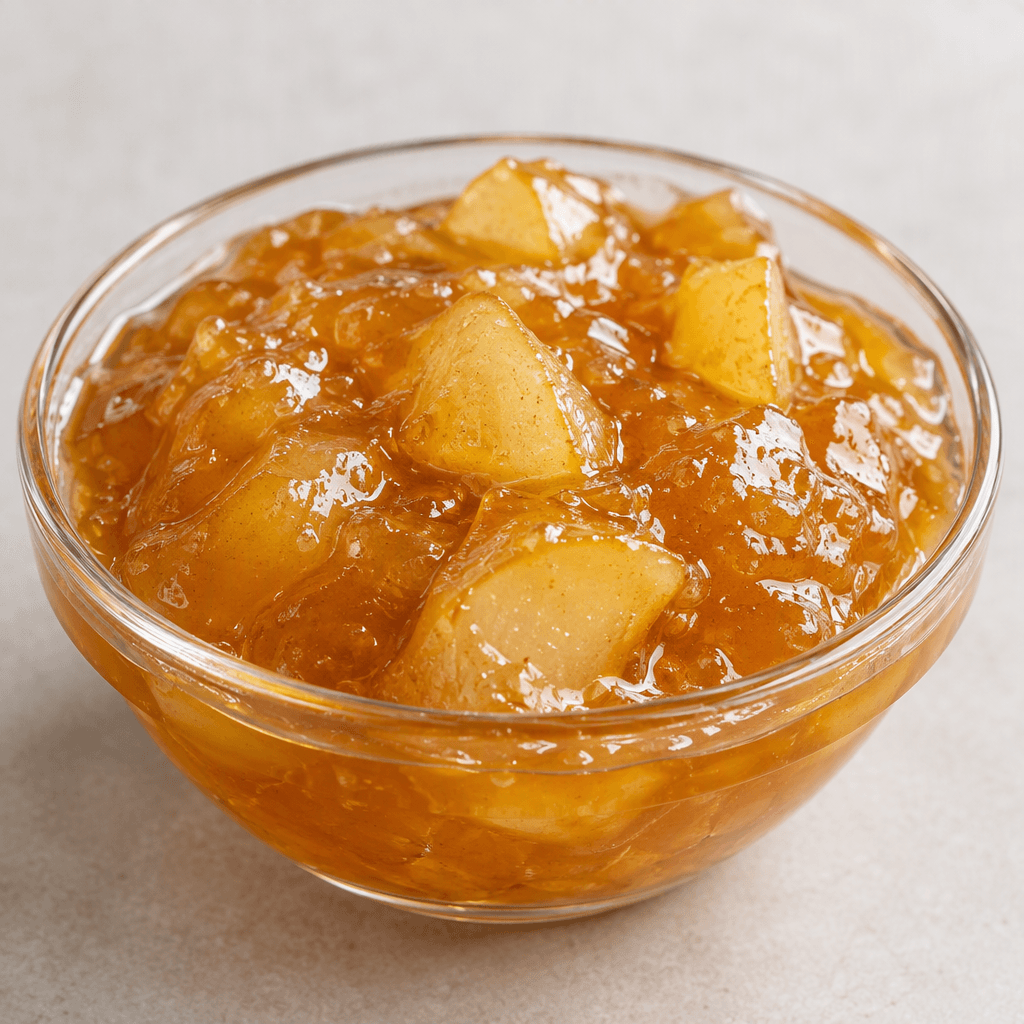
Pear jam Calories
Sweet fruit spread made from pears
CALORIES · 100 G
GI
POTASSIUM · 100 G
FIBER · 100 G
Quick answer
1 tablespoon (medium) of Pear jam (20 g) has 50 calories. That works out to 250 calories per 100 g. It contains 13 g of carbs, 0 g of protein, 0 g of fat and 0.2 g of fiber. Its glycemic index is 65 (medium), so it raises blood sugar at a moderate pace.
Pear jam Nutrition Facts
Selected: 1 tablespoon (medium) · 20 g
50
KCAL / 20G
Carbs
13g
· 5% DV
Protein
0g
· 0% DV
Fat
0g
· 0% DV
Fiber
0.2g
· 1% DV
DV is the share of the daily value covered, on a 2,000 kcal reference diet.
Calories come from: Carbs 100% · Protein 0% · Fat 0%
Pear jam nutrition facts table · 1 tablespoon (medium) (20 g)
| Nutrient | Amount | % DV |
|---|---|---|
| Calories | 50 kcal | |
| Total fat | 0 g | 0% |
| Saturated fat | 0 g | 0% |
| Trans fat | 0 g | |
| Sodium | 2.4 mg | 0% |
| Total carbohydrate | 13 g | 5% |
| Fiber | 0.2 g | 1% |
| Protein | 0 g | 0% |
Calories: Calories measure energy. Average daily need is 2,000 kcal. Excess calories are stored as fat, too few cause weight loss.
Carbs: Your body's primary energy source. The brain runs exclusively on carbs. Daily need: 275g.
Protein: Essential for muscle repair and cell growth. Daily need: 50g. Keeps you full and boosts metabolism.
Fat: Needed for hormone production and vitamin absorption. Daily need: 78g. Limit saturated fats, choose unsaturated.
Fiber: Critical for digestive health and satiety. Daily need: 28g. Stabilizes blood sugar, lowers cholesterol.

Log this food in EatBetter
100,000+ people use it
- Get your daily calorie target
- Snap your meal, log it in seconds
- See every vitamin and mineral

📸 Scan the code to get the app free.

How Many Calories in 1 Tablespoon of Pear jam?
| Serving | Amount | Calories |
|---|---|---|
| 1 tablespoon (medium) | 20 g | 50 kcal |
| 1 teaspoon (small) | 7 g | 18 kcal |
| 1 slice (thin) | 15 g | 38 kcal |
| 1 slice (thick) | 25 g | 63 kcal |
| 1 serving (small) | 30 g | 75 kcal |
| 2 tablespoon (double) | 40 g | 100 kcal |
| 1 serving (medium) | 50 g | 125 kcal |
| 100 g | 100 g | 250 kcal |
| 1 cup (whole) | 320 g | 800 kcal |
Calculated from 250 calories per 100 g.
Frequently Asked Questions About Pear jam
How do you make pear jam?
Pear jam is made by simmering chopped pears with sugar and lemon juice until the fruit softens and the syrup thickens. Letting the pears sit with the sugar first draws out their juice and helps them cook evenly.
Does pear jam need pectin to set?
No, pear jam does not always need added pectin. Lemon juice and the natural pectin in the fruit can help it thicken, though pears generally contain less pectin than some jam fruits, so the cooking time and recipe proportions matter.
Which pears are best for pear jam?
Firm, ripe pears are best for pear jam because they hold their shape during cooking. Very soft pears tend to break down into a purée; using a mix of pear varieties can give the jam a balance of sweetness and texture.
Why is my pear jam runny?
Pear jam is often runny because it has not cooked long enough for excess liquid to evaporate and the syrup to thicken. Let it cool before judging the set, since hot jam looks thinner; avoid prolonged boiling that can turn the fruit mushy.
Can you make pear jam without refined sugar?
Yes, pear jam can be made with alternatives such as honey or a suitable sugar substitute, but the result and storage life may differ. Sugar contributes to preservation as well as sweetness, so keep low-sugar versions refrigerated and follow a tested recipe.
How do you keep pear jam from turning brown?
To reduce browning, toss cut pears with lemon juice and cook them soon after cutting. Pear flesh darkens when exposed to air, so prepare the fruit in batches rather than leaving peeled or chopped pieces sitting out.
How do you safely can pear jam?
Use a tested canning recipe and process filled jars using the method and timing it specifies; do not improvise processing times. Properly prepared jars should seal, while any jar that fails to seal should be refrigerated and used promptly.
How long does pear jam last after opening?
Opened pear jam should be kept tightly covered in the refrigerator and used within several weeks. Always use a clean spoon, and discard the jam if you see mold, notice fermentation, or detect an unusual smell.
Can you freeze pear jam?
Yes, pear jam can be frozen in a freezer-safe container, leaving room at the top for expansion. Thaw it in the refrigerator and stir it before serving; the fruit texture may be softer after freezing.
What spices go well in pear jam?
Cinnamon, ginger, cardamom, and vanilla all pair well with pear jam. Add a small amount while the fruit cooks so the spice complements the pears rather than overpowering their mild, sweet flavor.
Pear jam Vitamins & Minerals
Vitamins
Vitamin C
0.3mg · 0% DV
Vitamin K
0.3µg · 0% DV
B6
0mg · 0% DV
B1
0mg · 0% DV
Minerals
Copper
0.01mg · 1% DV
Manganese
0.01mg · 0% DV
Potassium ⭐
11mg · 0% DV
Iron
0.04mg · 0% DV
Sodium
2.4mg · 0% DV
Pear jam Glycemic Index
GLYCEMIC INDEX
GLYCEMIC LOAD
Accounts for portion size — a more realistic measure than GI alone.
How to Burn Off Pear jam
To burn the 50 calories in 1 tablespoon (medium) (20 g):
🚶
Walking (5 km/h)
🏃
Running (8 km/h)
🚴
Cycling
🏊
Swimming
Times are calculated with the MET equation for a 70 kg adult. Actual burn varies with your weight, age and pace.
What is Pear jam?
Pear jam is a fruit preserve made by cooking pears with sugar until they soften and the mixture thickens. Depending on the recipe, the fruit may be left in small pieces or cooked down smoothly, with a little lemon sometimes added to balance the sweetness. It is made in many regions where pears grow, often as a way to preserve seasonal fruit.
Its gentle, floral fruit flavour works on toast, scones or porridge, and it can also be spooned over yoghurt or served with cheese. Pear jam is mostly carbohydrate from its sugars, with very little protein or fat. For a less-sweet serving, spread a thin layer and pair it with plain yoghurt or an unsweetened breakfast.
How Nutritious Is Pear jam?
Nutrient density
Low
How many vitamins, minerals and how much fiber this food carries per calorie. A high score means a lot of nutrition for few calories.
Satiety score
Low
An EatBetter score computed from fiber, protein and calorie density. A high score means staying full longer on the same calories.
Both scores are calculated per 100 g and do not change with the selected portion. The satiety score is EatBetter's own calculation, not a clinical measure.
Is Pear jam Processed?
NOVA 3
Processed
1. Unprocessed
2. Minimally Processed
3. Processed
4. Ultra-Processed
NOVA classifies foods into 4 groups by industrial processing. NOVA 1 (unprocessed) is the healthiest.
Does Pear jam Contain Allergens?
No known major allergens
Which Diets Is Pear jam Good For?
Vegan
✓ Suitable
Vegetarian
✓ Suitable
Gluten-Free
✓ Suitable
Dairy-Free
— Not suitable
Mediterranean
✓ Suitable
Paleo
— Not suitable
Whole30
— Not suitable
DASH
— Not suitable
Keto
— Not suitable
Low FODMAP
— Not suitable
Pear jam Fat Profile
SATURATED
0g
MONOUNSATURATED
0g
POLYUNSATURATED
0.01g
Compare Pear jam
Foods Similar to Pear jam
Have another question about Pear jam?
Ask the AI nutrition coach — calories, portions, alternatives and more, answered in seconds in the app.

Scan calories with your camera
Instant AI nutrition analysis

Nutrition data compiled from USDA FoodData Central and scientific sources.