

Ready & Packaged Foods
All →Vegetables & Legumes
All →Desserts & Confectionery
All →Meat & Protein
All →Grains & Bakery
All →Beverages
All →Milk & Dairy
All →

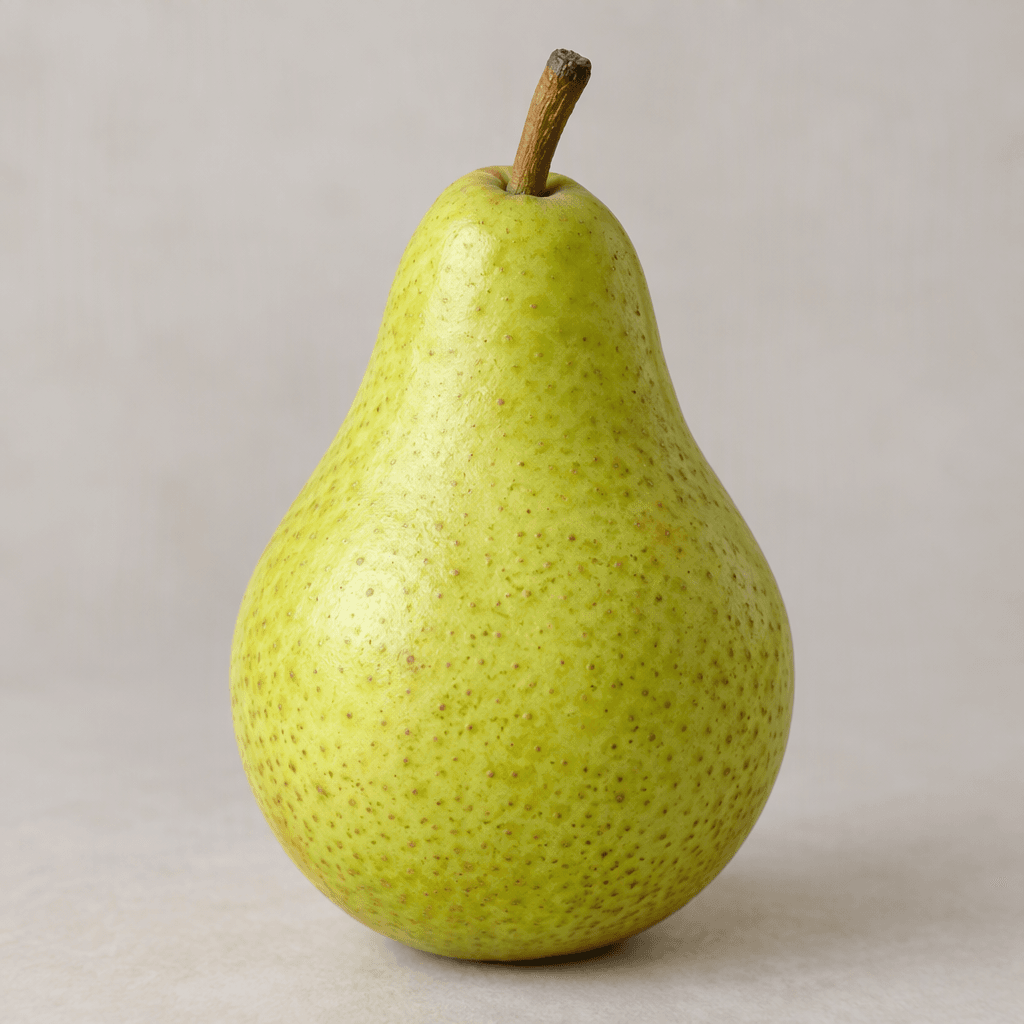
Pear Calories
Sweet, high fiber, vitamin C source
In season: Summer · Autumn
CALORIES
GI
POTASSIUM
FIBER
Quick answer
1 piece (medium) of Pear (170 g) has 97 calories. That works out to 57 calories per 100 g. It contains 25.8 g of carbs, 0.7 g of protein, 0.2 g of fat and 5.3 g of fiber. Its 0.1 mg of Copper covers 15% of the Daily Value. Its glycemic index is 38 (low), so it raises blood sugar slowly.
What is Pear?
Pears are pome fruits grown in many regions, with varieties that range from crisp and firm to soft and very juicy. Their skin may be green, yellow, russeted or red, and the flesh has a mild sweetness with a lightly grainy texture.
Enjoy a ripe pear fresh, sliced into breakfast or packed as an easy snack; firmer varieties also hold their shape well when baked or poached. Pears are a useful source of fibre, with about 3.1 g per 100 g, and their gentle flavour works in both sweet and savoury dishes. Pair one with yoghurt, cheese or nuts for a more satisfying snack, or add slices to a salad.
Pear Nutrition Facts
Selected: 100 g
57
KCAL / 100G
Carbs
15.2g
· 6% DV
Protein
0.4g
· 1% DV
Fat
0.1g
· 0% DV
Fiber
3.1g
· 11% DV
DV is the share of the daily value covered, on a 2,000 kcal reference diet.
Calories come from: Carbs 96% · Protein 3% · Fat 1%
Pear Vitamins & Minerals
Vitamins
Vitamin C
4.3mg · 5% DV
Vitamin K
4.4µg · 4% DV
B2
0.03mg · 2% DV
B6
0.03mg · 2% DV
Minerals
Potassium ⭐
116mg · 3% DV
Magnesium
7mg · 2% DV
Phosphorus
12mg · 2% DV
Calcium
9mg · 1% DV
How Nutritious Is Pear?
Nutrient density
High
How many vitamins, minerals and how much fiber this food carries per calorie. A high score means a lot of nutrition for few calories.
Satiety score
Medium
An EatBetter score computed from fiber, protein and calorie density. A high score means staying full longer on the same calories.
Both scores are calculated per 100 g and do not change with the selected portion. The satiety score is EatBetter's own calculation, not a clinical measure.
Pear Glycemic Index
GLYCEMIC INDEX
GLYCEMIC LOAD
Accounts for portion size — a more realistic measure than GI alone.
How to Burn Off Pear
To burn the 57 calories in 100 g:
🚶
Walking (5 km/h)
🏃
Running (8 km/h)
🚴
Cycling
🏊
Swimming
Times are calculated with the MET equation for a 70 kg adult. Actual burn varies with your weight, age and pace.
Is Pear Processed?
NOVA 1
Unprocessed
1. Unprocessed
2. Minimally Processed
3. Processed
4. Ultra-Processed
NOVA classifies foods into 4 groups by industrial processing. NOVA 1 (unprocessed) is the healthiest.
Does Pear Contain Allergens?
No known major allergens
Which Diets Is Pear Good For?
Vegan
✓ Suitable
Vegetarian
✓ Suitable
Gluten-Free
✓ Suitable
Dairy-Free
— Not suitable
Mediterranean
✓ Suitable
Paleo
✓ Suitable
Whole30
— Not suitable
DASH
— Not suitable
Keto
— Not suitable
Low FODMAP
— Not suitable
Pear Fat Profile
SATURATED
0.02g
MONOUNSATURATED
0.01g
POLYUNSATURATED
0.03g
Omega 6:3 ratio 2:1
Below the ideal 4:1 — a good omega balance.
Compare Pear
Foods Similar to Pear
Frequently Asked Questions About Pear
How can you tell when a pear is ripe?
A ripe pear usually yields slightly when you press its neck gently near the stem. Check this area rather than squeezing the middle, which can bruise the fruit. A strong sweet smell and softening flesh are further signs it is ready to eat.
How do you ripen pears quickly?
Leave pears at room temperature to ripen, or put them in a paper bag with a ripe banana or apple to speed the process. Check the neck daily; once it gives slightly to gentle pressure, move the pear to the fridge or eat it.
Should pears be refrigerated?
Refrigerate pears once they are ripe to slow further softening. Keep unripe pears at room temperature so they can finish ripening. Store cut pear in a covered container in the fridge and use it promptly.
Can you eat pear skin?
Yes, pear skin is edible and contributes fibre. Rinse the pear under running water and rub its surface before eating. If you prefer to peel it, wash it first so dirt on the skin does not transfer to the flesh.
Why do pears have a gritty texture?
The gritty or sandy texture comes from stone cells naturally found in pear flesh. It is more noticeable in some varieties and in fruit that is not fully ripe. Letting the pear soften can make its texture more tender.
Can you freeze pears?
Yes, pears freeze well for cooked dishes, though thawed fruit is softer than fresh pear. Wash, peel, core, and slice them first; a little lemon juice helps limit browning. Use thawed pears in baking, smoothies, or sauces.
Why do pears turn brown after you cut them?
Cut pears brown when their exposed flesh reacts with oxygen. Toss the slices with lemon juice, which slows this reaction, and keep them covered in the refrigerator. The browning is usually a quality change, not a sign the pear has spoiled.
Which pears are best for baking?
Bosc and Anjou pears are good choices for baking because their firm flesh tends to hold its shape when heated. Choose fruit that is ripe but still firm, and cut it into evenly sized pieces for more consistent cooking.
Are pears good for constipation?
Pears can help support regular bowel movements because they contain fibre, especially when eaten with the skin. Drink enough water as you increase fibre. Persistent constipation or severe discomfort needs advice from a healthcare professional.
Can people with diabetes eat pears?
Yes, people with diabetes can often include whole pears in a balanced eating plan. Whole fruit provides fibre and is generally a better choice than pear juice; portion size and meal planning should match individual blood-glucose needs.
Have another question about Pear?
Ask the AI nutrition coach — calories, portions, alternatives and more, answered in seconds in the app.

Scan calories with your camera
Instant AI nutrition analysis

Nutrition data compiled from USDA FoodData Central and scientific sources.