

Ready & Packaged Foods
All →Vegetables & Legumes
All →Desserts & Confectionery
All →Meat & Protein
All →Grains & Bakery
All →Beverages
All →Milk & Dairy
All →

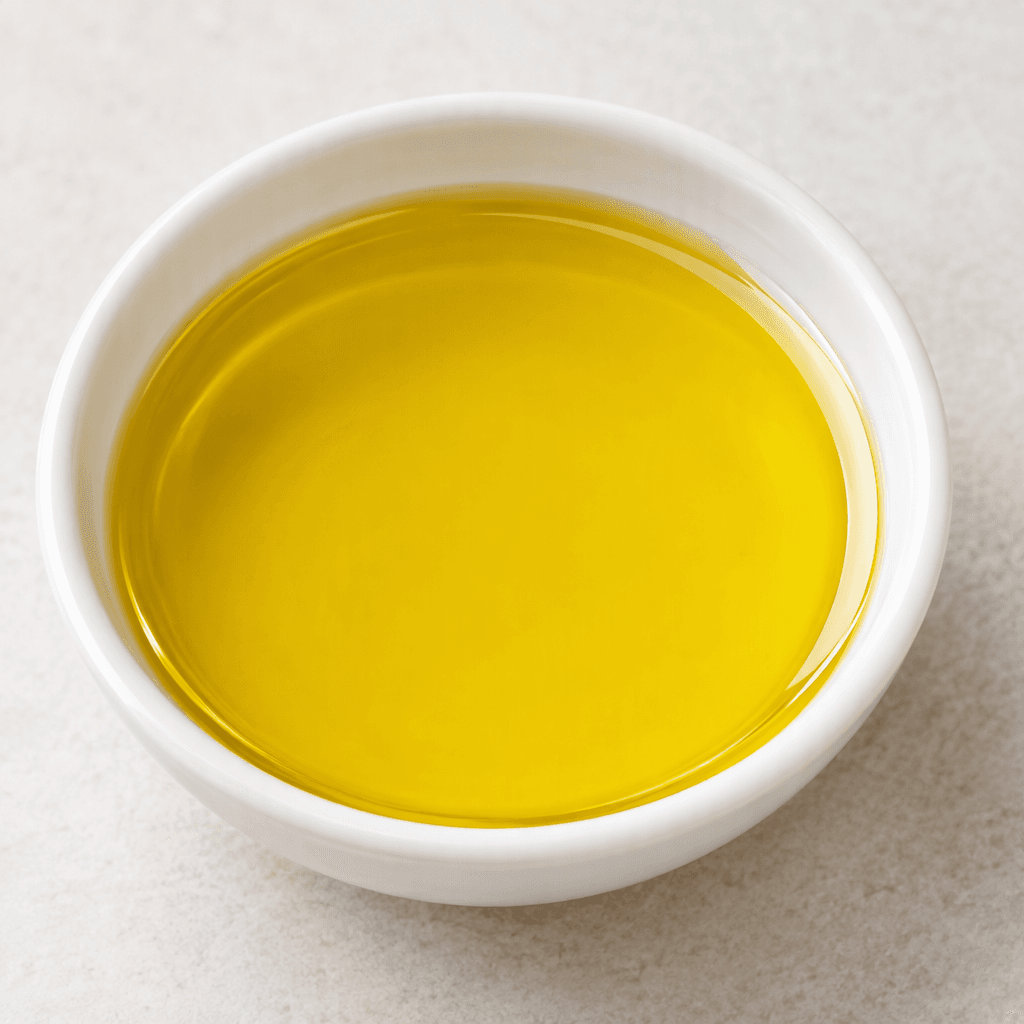
Peanut oil Calories
Detailed nutrition analysis with calories, glycemic index, vitamins and minerals.
CALORIES
POTASSIUM
FIBER
Quick answer
1 tablespoon (medium) of Peanut oil (14 g) has 124 calories. That works out to 884 calories per 100 g. It contains 0 g of carbs, 0 g of protein, 14 g of fat and 0 g of fiber. Its 2.2 mg of Vitamin E covers 15% of the Daily Value. Under the NOVA system it is classified as "Processed".
What is Peanut oil?
Peanut oil is a cooking oil extracted from peanuts. Refined versions are usually pale and mild, while less-refined or cold-pressed oil has a more noticeable nutty flavour. It is used in a range of cuisines, particularly for frying and stir-frying, and can also be added to sauces or dressings when its flavour is welcome.
The taste may be nearly neutral or distinctly roasted, depending on how the oil is made. Refined peanut oil suits high-heat cooking; more aromatic versions are better used in dishes where their flavour can come through. Nutritionally, it is almost entirely fat, with no protein or carbohydrates. Choose a mild version when you do not want the oil to dominate, or use a small drizzle of the more fragrant kind to finish vegetables, noodles or a salad.
Peanut oil Nutrition Facts
Selected: 100 g
884
KCAL / 100G
Carbs
0g
· 0% DV
Protein
0g
· 0% DV
Fat
100g
· 128% DV
Fiber
0g
· 0% DV
DV is the share of the daily value covered, on a 2,000 kcal reference diet.
Calories come from: Carbs 0% · Protein 0% · Fat 100%
Peanut oil Vitamins & Minerals
Vitamins
Vitamin E
15.7mg · 105% DV
Vitamin K
0.7µg · 1% DV
Vitamin A
0µg · 0% DV
B1
0mg · 0% DV
Minerals
Calcium
0mg · 0% DV
Iron
0mg · 0% DV
Magnesium
0mg · 0% DV
Zinc
0mg · 0% DV
How Nutritious Is Peanut oil?
Nutrient density
Low
How many vitamins, minerals and how much fiber this food carries per calorie. A high score means a lot of nutrition for few calories.
Satiety score
Low
An EatBetter score computed from fiber, protein and calorie density. A high score means staying full longer on the same calories.
Both scores are calculated per 100 g and do not change with the selected portion. The satiety score is EatBetter's own calculation, not a clinical measure.
How to Burn Off Peanut oil
To burn the 884 calories in 100 g:
🚶
Walking (5 km/h)
🏃
Running (8 km/h)
🚴
Cycling
🏊
Swimming
Times are calculated with the MET equation for a 70 kg adult. Actual burn varies with your weight, age and pace.
Is Peanut oil Processed?
NOVA 3
Processed
1. Unprocessed
2. Minimally Processed
3. Processed
4. Ultra-Processed
NOVA classifies foods into 4 groups by industrial processing. NOVA 1 (unprocessed) is the healthiest.
Does Peanut oil Contain Allergens?
Contains these allergens:
Which Diets Is Peanut oil Good For?
Vegan
✓ Suitable
Vegetarian
✓ Suitable
Gluten-Free
✓ Suitable
Dairy-Free
— Not suitable
Mediterranean
✓ Suitable
Paleo
✓ Suitable
Whole30
— Not suitable
DASH
— Not suitable
Keto
✓ Suitable
Low FODMAP
— Not suitable
Peanut oil Fat Profile
SATURATED
17g
MONOUNSATURATED
46g
POLYUNSATURATED
32g
Compare Peanut oil
Foods Similar to Peanut oil
Frequently Asked Questions About Peanut oil
Is peanut oil good for frying?
Yes, refined peanut oil is well suited to frying because it tolerates high cooking temperatures and has a fairly neutral flavor. Unrefined peanut oil is less suited to very hot cooking, so check which type you have before using it in a fryer.
Is peanut oil healthy?
Peanut oil can fit into a balanced diet because it contains mostly unsaturated fats. It is still a concentrated cooking fat, so use a measured amount and vary it with other oils rather than relying on it as your only source of fat.
What is the difference between refined and unrefined peanut oil?
Refined peanut oil has a mild, neutral taste and is better suited to high-heat cooking. Unrefined peanut oil retains more of the peanut’s flavor and is usually best for dressings, dips, or adding to a dish after cooking.
Is peanut oil safe for people with a peanut allergy?
Highly refined peanut oil is often tolerated by people with peanut allergy because refining removes most peanut proteins, but cold-pressed or unrefined oil may contain them. Do not assume any peanut oil is safe; ask an allergist before using it.
Can I substitute peanut oil for vegetable oil?
Yes, peanut oil can replace vegetable oil in many recipes, especially frying and stir-frying. Refined peanut oil has a mild flavor, while unrefined oil can noticeably change the taste, so choose the type to suit the dish.
Does peanut oil go bad, and how should I store it?
Yes, peanut oil can turn rancid when exposed to heat, light, or air. Keep it tightly sealed in a cool, dark cupboard and discard it if it develops an unpleasant smell or taste; follow the package directions once opened.
Can you reuse peanut oil after frying?
Yes, you can reuse peanut oil if you strain out food particles and store it in a clean, sealed container. Discard it if it becomes dark, foamy, smoky, or unpleasant-smelling, since those signs mean the oil has deteriorated.
Does peanut oil taste like peanuts?
Refined peanut oil usually has a mild, neutral taste rather than a strong peanut flavor. Unrefined or cold-pressed peanut oil tastes more distinctly nutty, making it a better choice when you want that flavor to come through.
Can you bake with peanut oil?
Yes, refined peanut oil can be used in many baked goods in place of another neutral liquid oil. Its mild flavor generally does not dominate a recipe, while unrefined peanut oil may add a noticeable nutty taste.
Is peanut oil better than olive oil for cooking?
Neither oil is best for every dish: refined peanut oil is a useful choice for high-heat frying because of its mild taste, while olive oil brings its own flavor to cooking and dressings. Choose based on the recipe and the flavor you want.
Have another question about Peanut oil?
Ask the AI nutrition coach — calories, portions, alternatives and more, answered in seconds in the app.

Scan calories with your camera
Instant AI nutrition analysis

Nutrition data compiled from USDA FoodData Central and scientific sources.