

Ready & Packaged Foods
All →Vegetables & Legumes
All →Desserts & Confectionery
All →Meat & Protein
All →Grains & Bakery
All →Beverages
All →Milk & Dairy
All →

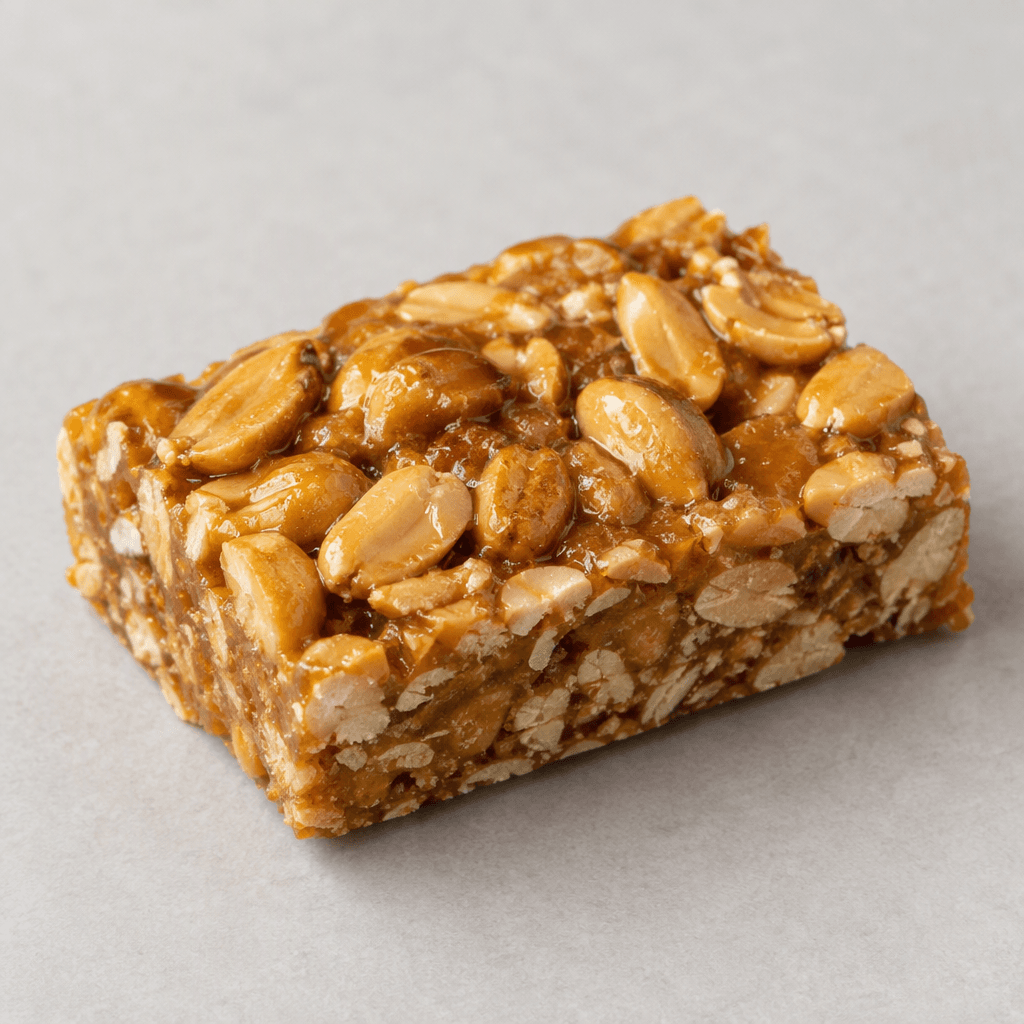
Peanut bar Calories
Energy snack, source of protein and healthy fats
In season: Spring · Summer · Autumn · Winter
CALORIES
GI
POTASSIUM
FIBER
Quick answer
1 piece (medium) of Peanut bar (40 g) has 192 calories. That works out to 480 calories per 100 g. It contains 16 g of carbs, 6.4 g of protein, 11.2 g of fat and 2.2 g of fiber. Its 0.4 mg of Copper covers 40% of the Daily Value. Its glycemic index is 55 (medium), so it raises blood sugar at a moderate pace.
What is Peanut bar?
A peanut bar is a crunchy confection made by binding roasted peanuts with cooked sugar syrup, which sets into a glossy, firm coating. The peanuts may be whole or broken, giving each bite a chunky texture. Similar bars are enjoyed in many places, so this style does not have one clear regional origin.
Its toasted, nutty flavour and sweet, caramel-like crunch make it an easy snack between meals, on a journey or alongside tea or coffee. It supplies substantial energy from both fat and carbohydrates, as well as 16 grams of protein per 100 grams. Because it is energy-dense, a small piece can be satisfying; pair it with fresh fruit if you want a more rounded snack, or enjoy it on its own when you need something portable.
Peanut bar Nutrition Facts
Selected: 100 g
480
KCAL / 100G
Carbs
40g
· 15% DV
Protein
16g
· 32% DV
Fat
28g
· 36% DV
Fiber
5.5g
· 20% DV
DV is the share of the daily value covered, on a 2,000 kcal reference diet.
Calories come from: Carbs 34% · Protein 13% · Fat 53%
Peanut bar Vitamins & Minerals
Vitamins
B3
11.2mg · 70% DV
Biotin
18µg · 60% DV
Vitamin E
6.5mg · 43% DV
B1
0.35mg · 29% DV
Minerals
Copper
1mg · 111% DV
Phosphorus
320mg · 46% DV
Manganese
1mg · 43% DV
Magnesium
140mg · 33% DV
How Nutritious Is Peanut bar?
Nutrient density
Medium
How many vitamins, minerals and how much fiber this food carries per calorie. A high score means a lot of nutrition for few calories.
Satiety score
Medium
An EatBetter score computed from fiber, protein and calorie density. A high score means staying full longer on the same calories.
Both scores are calculated per 100 g and do not change with the selected portion. The satiety score is EatBetter's own calculation, not a clinical measure.
Peanut bar Glycemic Index
GLYCEMIC INDEX
GLYCEMIC LOAD
Accounts for portion size — a more realistic measure than GI alone.
How to Burn Off Peanut bar
To burn the 480 calories in 100 g:
🚶
Walking (5 km/h)
🏃
Running (8 km/h)
🚴
Cycling
🏊
Swimming
Times are calculated with the MET equation for a 70 kg adult. Actual burn varies with your weight, age and pace.
Is Peanut bar Processed?
NOVA 3
Processed
1. Unprocessed
2. Minimally Processed
3. Processed
4. Ultra-Processed
NOVA classifies foods into 4 groups by industrial processing. NOVA 1 (unprocessed) is the healthiest.
Does Peanut bar Contain Allergens?
Contains these allergens:
Which Diets Is Peanut bar Good For?
Vegan
— Not suitable
Vegetarian
✓ Suitable
Gluten-Free
— Not suitable
Dairy-Free
— Not suitable
Mediterranean
✓ Suitable
Paleo
— Not suitable
Whole30
— Not suitable
DASH
— Not suitable
Keto
— Not suitable
Low FODMAP
— Not suitable
Peanut bar Fat Profile
SATURATED
5.2g
MONOUNSATURATED
16.5g
POLYUNSATURATED
8.7g
Omega 6:3 ratio 850:1
Above the ideal 4:1 (850:1).
Compare Peanut bar
Foods Similar to Peanut bar
Frequently Asked Questions About Peanut bar
Are peanut bars good for you?
Peanut bars provide protein and unsaturated fats from peanuts, but the syrup that holds them together makes them a sweet treat. They can fit as an occasional snack; choose a less sugary option for everyday eating.
What are peanut bars made of?
Peanut bars are mainly made from roasted peanuts bound together with a hardened sweet syrup, often made with sugar. Some versions also include honey, salt, chocolate, or other ingredients, so recipes and packaged products can differ.
Are peanut bars the same as peanut brittle?
Peanut bars and peanut brittle are closely related: both combine peanuts with a hard sugar coating. Peanut brittle is usually broken into thin, irregular shards, while a peanut bar is typically molded or cut into a thicker, rectangular portion.
How do you make peanut bars at home?
To make peanut bars at home, stir roasted peanuts into hot sugar syrup, press the mixture firmly into a lined pan, and let it cool until hard before cutting. Hot syrup can cause severe burns, so handle it carefully.
Why are peanut bars so hard or sticky?
Peanut bars turn hard as their sweet syrup cools and sets; humidity can make the surface sticky. If a homemade bar stays soft, the syrup may not have cooked long enough, while excess moisture during storage can soften a finished bar.
How should you store peanut bars?
Store peanut bars in an airtight container in a cool, dry place to keep them crisp and prevent them from absorbing moisture. Refrigeration is usually unnecessary and can introduce condensation when the bars are brought back to room temperature.
Can you freeze peanut bars?
Yes, you can freeze peanut bars if you wrap them tightly and place them in an airtight container. Thaw them while still wrapped to limit condensation, which can make the syrup coating tacky and affect the texture.
Are peanut bars good before a workout?
A peanut bar can be a convenient source of energy before exercise because its syrup provides carbohydrates and peanuts add protein and fat. Its richness may feel heavy during activity, so try it well before training rather than just beforehand.
Can people with diabetes eat peanut bars?
People with diabetes can include a peanut bar only if its carbohydrates and sweet syrup fit their meal plan; peanuts do not cancel out the sugar. Portion needs vary, so ask your diabetes care professional for advice tailored to your treatment.
Do peanut bars cause weight gain?
A peanut bar does not cause weight gain by itself, but frequent large portions can add substantial energy to your eating pattern. If you want one as a snack, choose a modest piece rather than eating several bars without noticing.
Have another question about Peanut bar?
Ask the AI nutrition coach — calories, portions, alternatives and more, answered in seconds in the app.

Scan calories with your camera
Instant AI nutrition analysis

Nutrition data compiled from USDA FoodData Central and scientific sources.