

Ready & Packaged Foods
All →Vegetables & Legumes
All →Desserts & Confectionery
All →Meat & Protein
All →Grains & Bakery
All →Beverages
All →Milk & Dairy
All →

Pea Pasta Calories
Plant-based protein and fiber, gluten-free alternative
In season: Spring · Summer · Autumn · Winter
CALORIES
GI
POTASSIUM
FIBER
Quick answer
1 cup (medium) of Pea Pasta (90 g) has 306 calories. That works out to 340 calories per 100 g. It contains 49.5 g of carbs, 18.9 g of protein, 2.3 g of fat and 9 g of fiber. Its 0.4 mg of B1 covers 30% of the Daily Value. Its glycemic index is 35 (low), so it raises blood sugar slowly.
What is Pea Pasta?
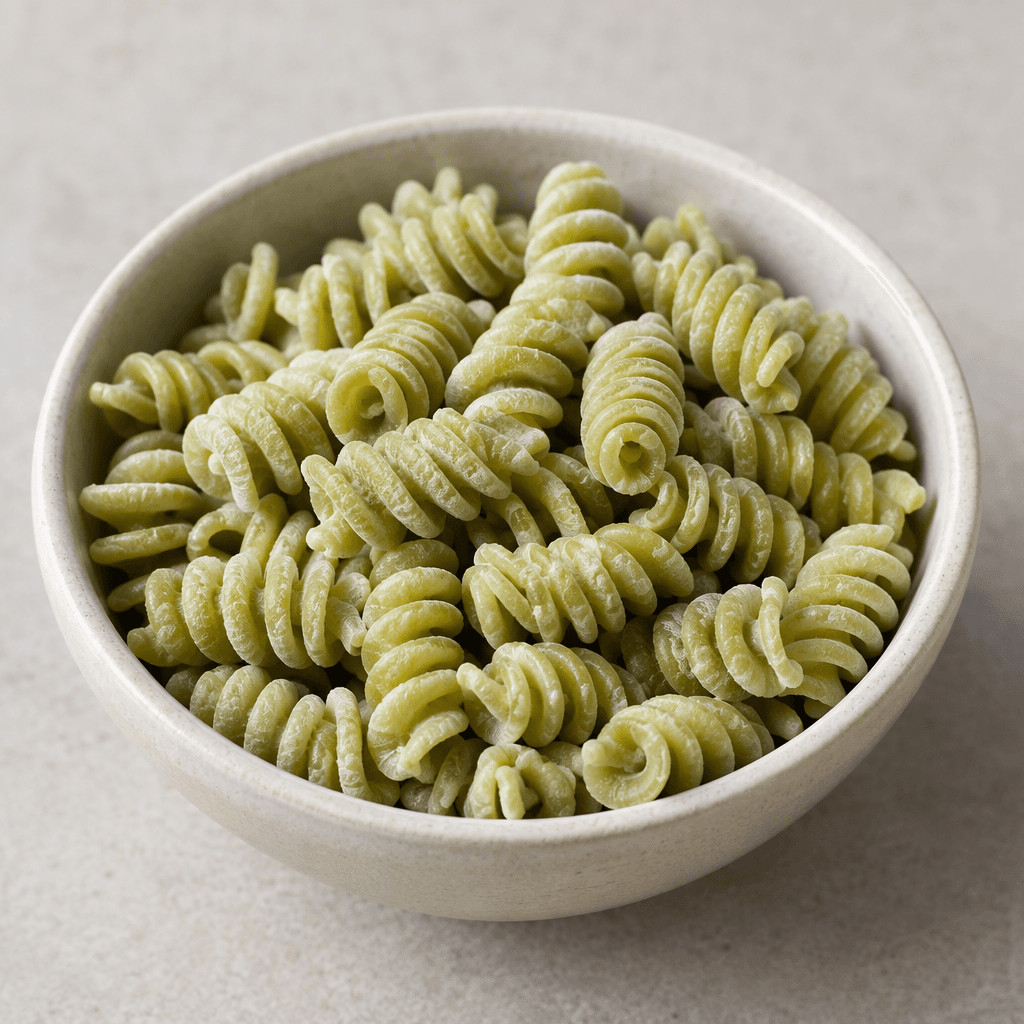
Pea pasta is a dried pasta made primarily from pea flour or ground peas rather than the usual wheat flour. It is often shaped into spirals, which catch sauce well, and its pale green colour comes from the peas. The flavour is gently earthy and pea-like; cooked, it becomes tender, so check it near the end of the recommended cooking time to keep the shape intact.
Serve it much as you would other pasta, with tomato sauce, pesto, roasted vegetables or a simple olive-oil dressing. It brings plant-based protein and fibre to a meal and can be a useful gluten-free alternative, though ingredients vary by product. For a balanced, lighter bowl, pair it with plenty of vegetables and keep rich sauces modest.
Pea Pasta Nutrition Facts
Selected: 100 g
340
KCAL / 100G
Carbs
55g
· 20% DV
Protein
21g
· 42% DV
Fat
2.5g
· 3% DV
Fiber
10g
· 36% DV
DV is the share of the daily value covered, on a 2,000 kcal reference diet.
Calories come from: Carbs 67% · Protein 26% · Fat 7%
Pea Pasta Vitamins & Minerals
Vitamins
B1
0.4mg · 33% DV
Biotin
6µg · 20% DV
B6
0.25mg · 15% DV
Folate
60µg · 15% DV
Minerals
Manganese
1mg · 43% DV
Phosphorus
220mg · 31% DV
Potassium ⭐
600mg · 18% DV
Iron
3mg · 17% DV
How Nutritious Is Pea Pasta?
Nutrient density
High
How many vitamins, minerals and how much fiber this food carries per calorie. A high score means a lot of nutrition for few calories.
Satiety score
High
An EatBetter score computed from fiber, protein and calorie density. A high score means staying full longer on the same calories.
Both scores are calculated per 100 g and do not change with the selected portion. The satiety score is EatBetter's own calculation, not a clinical measure.
Pea Pasta Glycemic Index
GLYCEMIC INDEX
GLYCEMIC LOAD
Accounts for portion size — a more realistic measure than GI alone.
How to Burn Off Pea Pasta
To burn the 340 calories in 100 g:
🚶
Walking (5 km/h)
🏃
Running (8 km/h)
🚴
Cycling
🏊
Swimming
Times are calculated with the MET equation for a 70 kg adult. Actual burn varies with your weight, age and pace.
Is Pea Pasta Processed?
NOVA 3
Processed
1. Unprocessed
2. Minimally Processed
3. Processed
4. Ultra-Processed
NOVA classifies foods into 4 groups by industrial processing. NOVA 1 (unprocessed) is the healthiest.
Does Pea Pasta Contain Allergens?
No known major allergens
Which Diets Is Pea Pasta Good For?
Vegan
✓ Suitable
Vegetarian
✓ Suitable
Gluten-Free
✓ Suitable
Dairy-Free
— Not suitable
Mediterranean
✓ Suitable
Paleo
— Not suitable
Whole30
— Not suitable
DASH
— Not suitable
Keto
— Not suitable
Low FODMAP
— Not suitable
Pea Pasta Fat Profile
SATURATED
0.3g
MONOUNSATURATED
0.5g
POLYUNSATURATED
1.2g
Omega 6:3 ratio 5.6:1
Above the ideal 4:1 (5.6:1).
Compare Pea Pasta
Foods Similar to Pea Pasta
Frequently Asked Questions About Pea Pasta
What is pea pasta made from?
Pea pasta is usually made from flour milled from dried peas, though some varieties include other flours or binding ingredients. The dough is shaped and dried, so it is a processed food rather than simply whole peas in a different form.
How do you cook pea pasta without it falling apart?
Cook pea pasta in plenty of boiling water and stir gently, then start checking it before the package’s suggested cooking time is up. Drain it as soon as it is tender, since overcooking can make pea-based pasta soft and prone to breaking.
What does pea pasta taste like?
Pea pasta has a mild, slightly sweet, earthy flavor that is more noticeable than the taste of ordinary wheat pasta. Its texture can feel denser or a little grainier, so it pairs well with bold tomato, garlic, herb, or lemon sauces.
Does pea pasta taste like peas?
Yes, pea pasta usually has a recognizable but mild pea flavor, although the strength varies by product. A savory sauce with garlic, tomatoes, pesto, or herbs can complement that flavor without masking it completely.
Why does pea pasta get mushy?
Pea pasta can turn mushy when it is cooked too long because its legume-based structure may be less firm than wheat pasta. Follow the package directions, check it early, and avoid vigorous stirring while it cooks.
What sauce goes best with pea pasta?
Tomato sauce, pesto, garlic and olive oil, and lemon-herb sauces all work well with pea pasta. Its earthy flavor also pairs nicely with roasted vegetables; toss the pasta with the sauce soon after draining so it does not clump.
Can you use pea pasta in pasta salad?
Yes, pea pasta works in pasta salad, but cook it just until tender so it holds its shape once chilled. Drain it promptly, let it cool, and dress it before adding delicate vegetables to reduce sticking and breakage.
How should you store cooked pea pasta?
Keep cooked pea pasta in a covered container in the refrigerator and use it within a few days. It may firm up or clump as it cools; loosen it with a little sauce or water while reheating.
Is pea pasta good for blood sugar?
Pea pasta’s fiber and protein may make it a filling choice, but it still contains carbohydrates and can raise blood sugar. Portion size and the rest of the meal matter; people managing diabetes should follow their individualized meal plan.
Is pea pasta good for weight loss?
Pea pasta can help make a filling meal because it provides fiber and plant-based protein, but it does not cause weight loss by itself. Pair a sensible portion with vegetables and a suitable protein source to build a satisfying plate.
Have another question about Pea Pasta?
Ask the AI nutrition coach — calories, portions, alternatives and more, answered in seconds in the app.

Scan calories with your camera
Instant AI nutrition analysis

Nutrition data compiled from USDA FoodData Central and scientific sources.