

Ready & Packaged Foods
All →Vegetables & Legumes
All →Desserts & Confectionery
All →Meat & Protein
All →Grains & Bakery
All →Beverages
All →Milk & Dairy
All →

Pastry Calories
Pastry
In season: Spring · Summer · Autumn · Winter
CALORIES
GI
POTASSIUM
FIBER
Quick answer
1 piece (medium) of Pastry (60 g) has 210 calories. That works out to 350 calories per 100 g. It contains 27 g of carbs, 3.6 g of protein, 9.6 g of fat and 1.2 g of fiber. Its 210 mg of Sodium covers 9% of the Daily Value. Its glycemic index is 65 (high), so it raises blood sugar quickly.
What is Pastry?
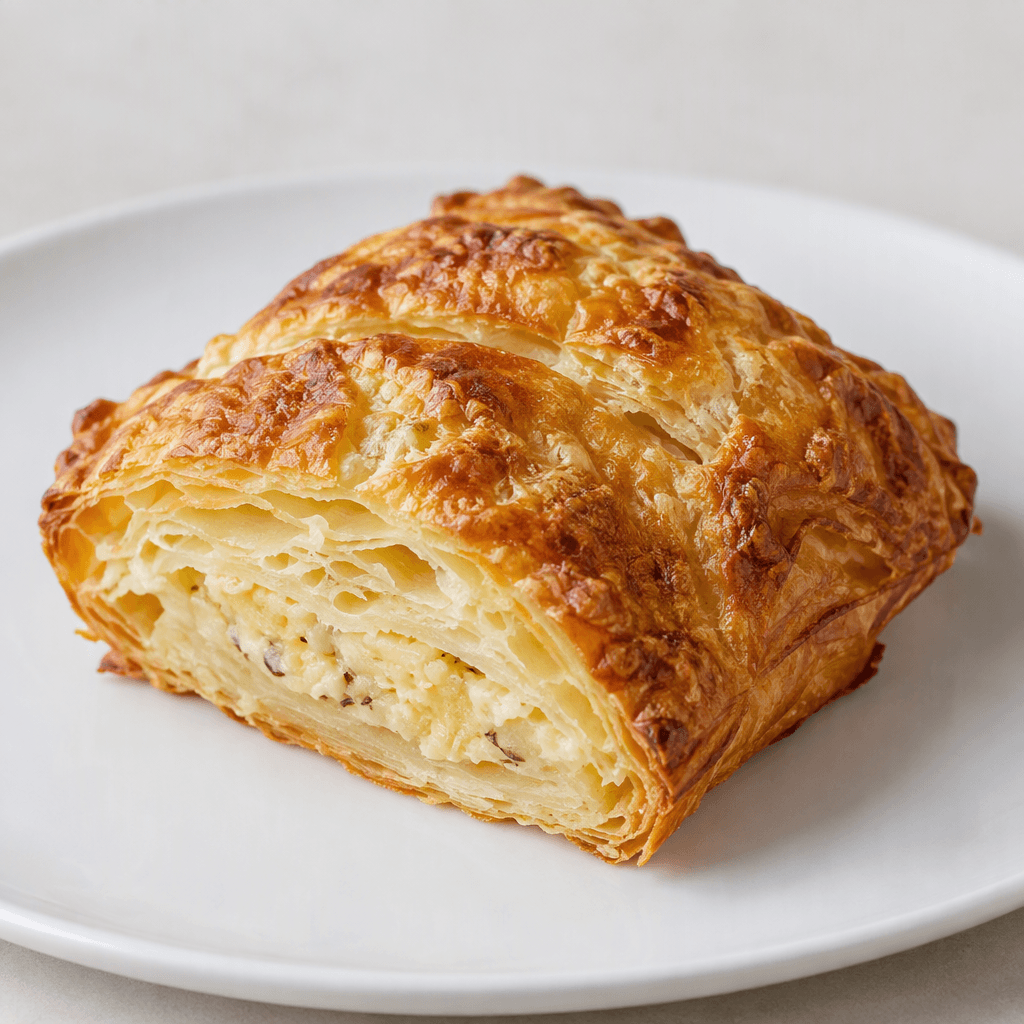
Pastry is a broad family of baked foods made from flour-based dough, often combined with fat; the crisp, layered kind shown here is made by folding or layering the dough before baking. Pastries appear in many culinary traditions, with sweet or savoury fillings and shapes varying by region.
It is enjoyed at breakfast, as a snack with tea or coffee, or as part of a light meal, depending on local customs. The flaky exterior gives way to a softer centre, and the flavour is often buttery and mild. Pastry is relatively high in carbohydrates and fat; a medium piece is about 60 g. Pair it with fruit or a fresh salad, or choose a smaller piece if you want a lighter snack.
Pastry Nutrition Facts
Selected: 100 g
350
KCAL / 100G
Carbs
45g
· 16% DV
Protein
6g
· 12% DV
Fat
16g
· 21% DV
Fiber
2g
· 7% DV
DV is the share of the daily value covered, on a 2,000 kcal reference diet.
Calories come from: Carbs 52% · Protein 7% · Fat 41%
Pastry Vitamins & Minerals
Vitamins
B2
0.18mg · 14% DV
B1
0.15mg · 13% DV
B3
1.5mg · 9% DV
B5
0.4mg · 8% DV
Minerals
Sodium
350mg · 15% DV
Selenium
7µg · 13% DV
Phosphorus
60mg · 9% DV
Iron
1mg · 6% DV
How Nutritious Is Pastry?
Nutrient density
Low
How many vitamins, minerals and how much fiber this food carries per calorie. A high score means a lot of nutrition for few calories.
Satiety score
Low
An EatBetter score computed from fiber, protein and calorie density. A high score means staying full longer on the same calories.
Both scores are calculated per 100 g and do not change with the selected portion. The satiety score is EatBetter's own calculation, not a clinical measure.
Pastry Glycemic Index
GLYCEMIC INDEX
GLYCEMIC LOAD
Accounts for portion size — a more realistic measure than GI alone.
How to Burn Off Pastry
To burn the 350 calories in 100 g:
🚶
Walking (5 km/h)
🏃
Running (8 km/h)
🚴
Cycling
🏊
Swimming
Times are calculated with the MET equation for a 70 kg adult. Actual burn varies with your weight, age and pace.
Is Pastry Processed?
NOVA 3
Processed
1. Unprocessed
2. Minimally Processed
3. Processed
4. Ultra-Processed
NOVA classifies foods into 4 groups by industrial processing. NOVA 1 (unprocessed) is the healthiest.
Does Pastry Contain Allergens?
Contains these allergens:
Which Diets Is Pastry Good For?
Vegan
— Not suitable
Vegetarian
✓ Suitable
Gluten-Free
— Not suitable
Dairy-Free
— Not suitable
Mediterranean
— Not suitable
Paleo
— Not suitable
Whole30
— Not suitable
DASH
— Not suitable
Keto
— Not suitable
Low FODMAP
— Not suitable
Pastry Fat Profile
SATURATED
6g
MONOUNSATURATED
5g
POLYUNSATURATED
2g
Omega 6:3 ratio 24:1
Above the ideal 4:1 (24:1).
Compare Pastry
Foods Similar to Pastry
Frequently Asked Questions About Pastry
What is the difference between pastry and bread?
Pastry is usually made with a higher proportion of fat than bread, giving it a tender, crumbly, or flaky texture. Bread dough is typically kneaded to develop gluten, so it rises into a more elastic, chewy loaf.
What are the main types of pastry?
Common pastry types include puff pastry, shortcrust pastry, choux pastry, and filo. They differ in how they are mixed and shaped: puff pastry forms buttery layers, shortcrust is crumbly, choux puffs from steam, and filo is made of very thin sheets.
Why doesn't pastry rise?
Pastry may fail to rise if its raising agent is old, the oven is not hot enough, or the dough is handled too heavily. For puff pastry, letting the dough warm up too much can also stop the layers from lifting properly.
How should pastry be stored to keep it crisp?
Let pastry cool completely, then store it in an airtight container at room temperature if you will eat it soon. Refrigeration can make flaky pastry damp; reheat it in the oven to restore some crispness.
Can you freeze pastry?
Yes, you can freeze both raw pastry dough and baked pastry. Wrap it well to prevent freezer burn; thaw dough in the refrigerator before shaping, and reheat baked pastry in the oven after thawing for a crisper result.
How do you reheat pastry without making it soggy?
Reheat pastry in a preheated oven or air fryer rather than the microwave. Dry heat helps revive the crust, while microwave steam tends to soften flaky layers. Heat only until warmed through so the pastry does not dry out.
What makes pastry flaky?
Separate layers of dough and fat make pastry flaky. In puff pastry, water in the dough turns to steam in the oven and lifts the layers; keeping the butter cold during preparation helps prevent it from blending into the dough.
Can pastry dough be made ahead?
Yes, most pastry dough can be made ahead and chilled, covered, until you are ready to use it. Chilling also firms the fat, which makes many doughs easier to roll; follow the recipe’s timing for yeasted dough, which continues to rise.
Can you eat raw pastry dough?
No, raw pastry dough is not safe to eat. Uncooked flour can carry harmful bacteria, and dough containing raw eggs can pose an additional food-safety risk. Bake pastry fully before serving.
What should you serve with pastry?
Serve savory pastry with salad, soup, or vegetables, and pair sweet pastry with fruit, tea, or coffee. The best match depends on the filling and whether the pastry is being served as a snack, dessert, or part of a meal.
Have another question about Pastry?
Ask the AI nutrition coach — calories, portions, alternatives and more, answered in seconds in the app.

Scan calories with your camera
Instant AI nutrition analysis

Nutrition data compiled from USDA FoodData Central and scientific sources.