

Ready & Packaged Foods
All →Vegetables & Legumes
All →Desserts & Confectionery
All →Meat & Protein
All →Grains & Bakery
All →Beverages
All →Milk & Dairy
All →

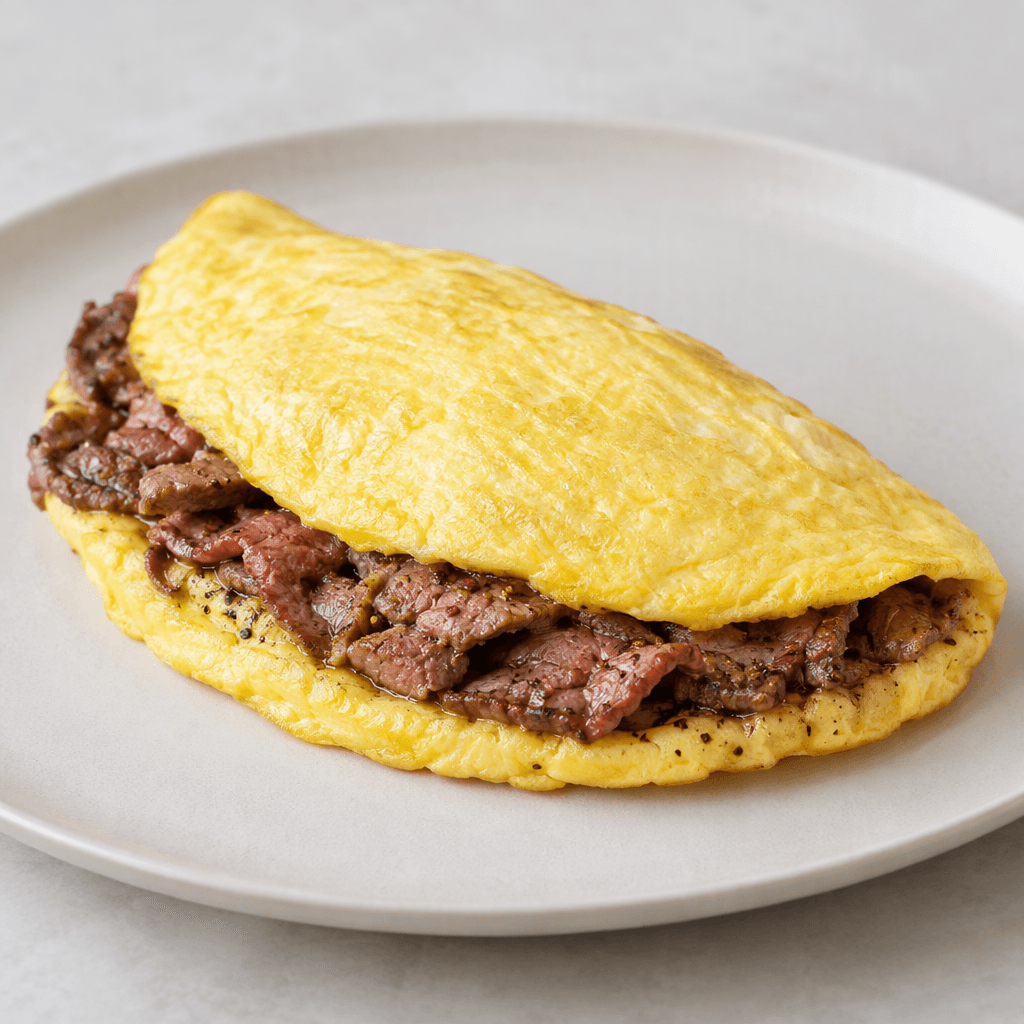
Pastrami omelette Calories
Classic omelette with pastrami, rich in protein and iron
In season: Spring · Summer · Autumn · Winter
CALORIES
GI
POTASSIUM
FIBER
Quick answer
1 piece (medium) of Pastrami omelette (120 g) has 216 calories. That works out to 180 calories per 100 g. It contains 2.6 g of carbs, 16.2 g of protein, 15.8 g of fat and 0 g of fiber. Its 1.3 µg of B12 covers 55% of the Daily Value. Its glycemic index is 20 (low), so it raises blood sugar slowly.
What is Pastrami omelette?
Pastırmalı omlet is an omelette made with eggs and thin slices of Turkish pastırma, air-dried beef coated with a pungent fenugreek-and-spice mixture. It is a familiar home-style breakfast in Turkey, often served hot with bread and tea. The English name on some menus may say “pastrami omelette,” but Turkish pastırma has its own distinctive seasoning and preparation.
The eggs set soft around the savoury, chewy slices, so the dish is flavourful without needing much extra seasoning. It is protein-rich and low in carbohydrates; a 100 g portion provides 13.5 g of protein. Since pastırma is already salty, taste before adding salt. For a lighter meal, cook with little oil and serve with tomatoes, greens or a simple salad.
Pastrami omelette Nutrition Facts
Selected: 100 g
180
KCAL / 100G
Carbs
2.2g
· 1% DV
Protein
13.5g
· 27% DV
Fat
13.2g
· 17% DV
Fiber
0g
· 0% DV
DV is the share of the daily value covered, on a 2,000 kcal reference diet.
Calories come from: Carbs 5% · Protein 30% · Fat 65%
Pastrami omelette Vitamins & Minerals
Vitamins
B12
1.1µg · 46% DV
Biotin
13µg · 43% DV
B2
0.28mg · 22% DV
B5
1.1mg · 22% DV
Minerals
Selenium
18µg · 33% DV
Sodium
650mg · 28% DV
Phosphorus
170mg · 24% DV
Iodine
24µg · 16% DV
How Nutritious Is Pastrami omelette?
Nutrient density
High
How many vitamins, minerals and how much fiber this food carries per calorie. A high score means a lot of nutrition for few calories.
Satiety score
Medium
An EatBetter score computed from fiber, protein and calorie density. A high score means staying full longer on the same calories.
Both scores are calculated per 100 g and do not change with the selected portion. The satiety score is EatBetter's own calculation, not a clinical measure.
Pastrami omelette Glycemic Index
GLYCEMIC INDEX
GLYCEMIC LOAD
Accounts for portion size — a more realistic measure than GI alone.
How to Burn Off Pastrami omelette
To burn the 180 calories in 100 g:
🚶
Walking (5 km/h)
🏃
Running (8 km/h)
🚴
Cycling
🏊
Swimming
Times are calculated with the MET equation for a 70 kg adult. Actual burn varies with your weight, age and pace.
Is Pastrami omelette Processed?
NOVA 2
Minimally Processed
1. Unprocessed
2. Minimally Processed
3. Processed
4. Ultra-Processed
NOVA classifies foods into 4 groups by industrial processing. NOVA 1 (unprocessed) is the healthiest.
Does Pastrami omelette Contain Allergens?
Contains these allergens:
Which Diets Is Pastrami omelette Good For?
Vegan
— Not suitable
Vegetarian
— Not suitable
Gluten-Free
✓ Suitable
Dairy-Free
— Not suitable
Mediterranean
✓ Suitable
Paleo
✓ Suitable
Whole30
— Not suitable
DASH
— Not suitable
Keto
✓ Suitable
Low FODMAP
— Not suitable
Pastrami omelette Fat Profile
SATURATED
4.2g
MONOUNSATURATED
5.5g
POLYUNSATURATED
1.2g
Omega 6:3 ratio 7.7:1
Above the ideal 4:1 (7.7:1).
Compare Pastrami omelette
Foods Similar to Pastrami omelette
Frequently Asked Questions About Pastrami omelette
How do you make a pastrami omelette?
A pastrami omelette is made by briefly warming chopped pastrami in a skillet, then adding beaten eggs and cooking until just set. Keep the heat moderate so the eggs stay tender and the pastrami does not dry out.
What goes in a pastrami omelette?
A pastrami omelette needs eggs and pastrami; black pepper, herbs, or cheese are optional. Pastrami is already seasoned and often salty, so taste the filling before adding salt.
Should you cook pastrami before adding it to a pastrami omelette?
Yes, warm the pastrami briefly in the pan before adding the eggs. It is already cured, so it does not need prolonged cooking; a short turn in the skillet brings out its flavor without making it tough.
What cheese goes best in a pastrami omelette?
Swiss cheese is a classic match for a pastrami omelette, while cheddar or provolone also works well. Add grated or thinly sliced cheese while the eggs are still soft so it melts before the omelette finishes cooking.
Can you put onions in a pastrami omelette?
Yes, onions work well in a pastrami omelette. Cook thinly sliced onion until softened first, then briefly warm the pastrami and add the eggs; this prevents the onion from staying raw while the omelette cooks.
Do you remove the seasoning crust from pastrami for a pastrami omelette?
No, you do not have to remove the seasoning crust from pastrami for an omelette. Keep it for a stronger peppery, spiced flavor, or scrape off some of the coating if you prefer a milder filling.
How do you keep a pastrami omelette from turning rubbery?
Cook a pastrami omelette over moderate heat and take it off the stove as soon as the eggs are set. High heat and prolonged cooking make the eggs tough and can leave the pastrami dry.
What should you serve with a pastrami omelette?
Serve a pastrami omelette with toast, sliced tomatoes, or a simple green salad. Fresh, lightly seasoned sides balance the cured meat’s strong flavor without competing with the filling.
Can you make a pastrami omelette ahead of time?
A pastrami omelette is best cooked just before serving, but leftovers can be refrigerated in a covered container after cooling. Reheat them thoroughly and avoid leaving the egg dish at room temperature for an extended time.
Is a pastrami omelette too salty?
A pastrami omelette can be salty because pastrami is cured and seasoned. Skip added salt, use a moderate amount of pastrami, and be mindful of portions if you have been advised to limit sodium.
Have another question about Pastrami omelette?
Ask the AI nutrition coach — calories, portions, alternatives and more, answered in seconds in the app.

Scan calories with your camera
Instant AI nutrition analysis

Nutrition data compiled from USDA FoodData Central and scientific sources.