

Ready & Packaged Foods
All →Vegetables & Legumes
All →Desserts & Confectionery
All →Meat & Protein
All →Grains & Bakery
All →Beverages
All →Milk & Dairy
All →

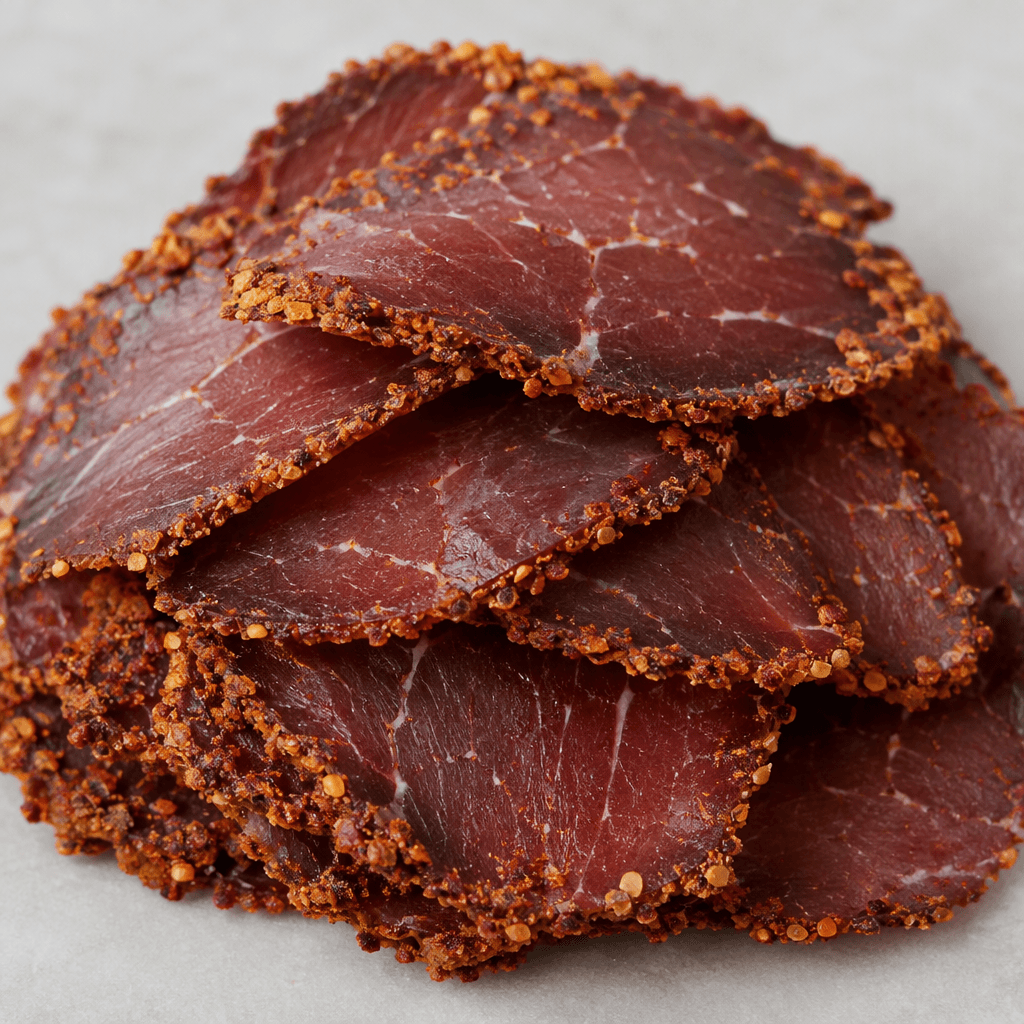
Pastirma Calories
Traditional Turkish cured beef, high protein, heavily spiced
In season: Spring · Summer · Autumn · Winter
CALORIES
GI
POTASSIUM
FIBER
Quick answer
4 slice (medium) of Pastirma (40 g) has 100 calories. That works out to 250 calories per 100 g. It contains 0.6 g of carbs, 12.8 g of protein, 4.8 g of fat and 0 g of fiber. Its 0.9 µg of B12 covers 37% of the Daily Value. Its glycemic index is 0 (low), so it raises blood sugar slowly.
What is Pastirma?
Pastirma is a Turkish cured beef, made by salting and drying the meat before coating it with a strongly flavoured paste called çemen. Fenugreek, garlic and red pepper give the deep reddish coating its distinctive aroma. It is usually sliced very thinly.
Its flavour is savoury, salty and warmly spiced, with a firm texture. In Turkey, it is often served at breakfast with eggs, tucked into pastries or cooked with beans; elsewhere, try it in a sandwich or as part of a small sharing plate. Pastirma is protein-rich, and a few slices can bring plenty of flavour to a meal. Pair it with fresh vegetables or use a modest amount alongside eggs.
Pastirma Nutrition Facts
Selected: 100 g
250
KCAL / 100G
Carbs
1.5g
· 1% DV
Protein
32g
· 64% DV
Fat
12g
· 15% DV
Fiber
0g
· 0% DV
DV is the share of the daily value covered, on a 2,000 kcal reference diet.
Calories come from: Carbs 2% · Protein 53% · Fat 45%

Log this food in EatBetter
100,000+ people use it
- Get your daily calorie target
- Snap your meal, log it in seconds
- See every vitamin and mineral

📸 Scan the code to get the app free.

Pastirma Vitamins & Minerals
Vitamins
B12
2.2µg · 92% DV
B3
4.5mg · 28% DV
B6
0.45mg · 26% DV
B5
0.7mg · 14% DV
Minerals
Sodium
1700mg · 74% DV
Zinc
5mg · 45% DV
Phosphorus
260mg · 37% DV
Selenium
18µg · 33% DV
Potassium ⭐
340mg · 10% DV
How Nutritious Is Pastirma?
Nutrient density
High
How many vitamins, minerals and how much fiber this food carries per calorie. A high score means a lot of nutrition for few calories.
Satiety score
Medium
An EatBetter score computed from fiber, protein and calorie density. A high score means staying full longer on the same calories.
Both scores are calculated per 100 g and do not change with the selected portion. The satiety score is EatBetter's own calculation, not a clinical measure.
Pastirma Glycemic Index
GLYCEMIC INDEX
GLYCEMIC LOAD
Accounts for portion size — a more realistic measure than GI alone.
How to Burn Off Pastirma
To burn the 250 calories in 100 g:
🚶
Walking (5 km/h)
🏃
Running (8 km/h)
🚴
Cycling
🏊
Swimming
Times are calculated with the MET equation for a 70 kg adult. Actual burn varies with your weight, age and pace.
Is Pastirma Processed?
NOVA 3
Processed
1. Unprocessed
2. Minimally Processed
3. Processed
4. Ultra-Processed
NOVA classifies foods into 4 groups by industrial processing. NOVA 1 (unprocessed) is the healthiest.
Does Pastirma Contain Allergens?
No known major allergens
Which Diets Is Pastirma Good For?
Vegan
— Not suitable
Vegetarian
— Not suitable
Gluten-Free
✓ Suitable
Dairy-Free
— Not suitable
Mediterranean
✓ Suitable
Paleo
✓ Suitable
Whole30
— Not suitable
DASH
— Not suitable
Keto
✓ Suitable
Low FODMAP
— Not suitable
Pastirma Fat Profile
SATURATED
5.1g
MONOUNSATURATED
4.8g
POLYUNSATURATED
1.2g
Omega 6:3 ratio 2.8:1
Below the ideal 4:1 — a good omega balance.
Compare Pastirma
Foods Similar to Pastirma
Frequently Asked Questions About Pastirma
What is Pastirma, and how is it different from pastrami?
Pastirma is Turkish cured, air-dried beef coated with a strongly spiced fenugreek paste. It is usually eaten in thin slices, while pastrami is commonly smoked and steamed or cooked; the two are related cured meats, but they are not the same preparation.
How is Pastirma made?
Pastirma is made by salting whole cuts of beef, pressing and drying them, then coating them with çemen, a pungent paste made with fenugreek and other seasonings. The curing and drying give it its dense texture and concentrated flavor.
How do you eat Pastirma?
You can eat Pastirma thinly sliced on its own, with bread, or in cooked dishes such as eggs and beans. Its seasoning is intense, so pair it with mild ingredients and taste before adding extra salt to a recipe.
Does Pastirma need to be cooked before eating?
No, Pastirma is generally ready to eat without cooking because it has been cured and dried. It is also used in cooked dishes; once opened, keep it refrigerated and follow the storage instructions on its packaging.
Can you eat the fenugreek coating on Pastirma?
Yes, the çemen coating on Pastirma is edible and contributes much of its distinctive aroma and flavor. If you find it too pungent, scrape off some of the coating before serving rather than removing it automatically.
Why does Pastirma smell so strongly?
Pastirma’s strong aroma mainly comes from its çemen coating, especially the fenugreek and garlic, alongside the concentrated smell of cured beef. The scent is characteristic of the food; scraping off some coating can make it milder.
How should you store Pastirma after opening it?
Keep opened Pastirma refrigerated in an airtight container or tightly wrapped so it does not dry out or transfer its strong aroma to other foods. Follow the package directions for how long to keep it after opening.
Can you freeze Pastirma?
Yes, Pastirma can be frozen. Separate it into portions and wrap them airtight to protect the slices and make thawing easier. Thaw it in the refrigerator, and avoid refreezing it once it has thawed.
Why is Pastirma usually sliced so thinly?
Pastirma is dense, dry, and strongly seasoned, so thin slices make its texture easier to chew and its flavor less overwhelming. A sharp knife or a deli slicer helps cut the beef evenly without tearing it.
Is Pastirma safe to eat during pregnancy?
Because Pastirma is cured and may be eaten without cooking, pregnant people should follow food-safety guidance for chilled cured meats. Heating it thoroughly until steaming hot is a safer way to serve it; ask your healthcare professional about your individual situation.
Have another question about Pastirma?
Ask the AI nutrition coach — calories, portions, alternatives and more, answered in seconds in the app.

Scan calories with your camera
Instant AI nutrition analysis

Nutrition data compiled from USDA FoodData Central and scientific sources.