

Ready & Packaged Foods
All →Vegetables & Legumes
All →Desserts & Confectionery
All →Meat & Protein
All →Grains & Bakery
All →Beverages
All →Milk & Dairy
All →

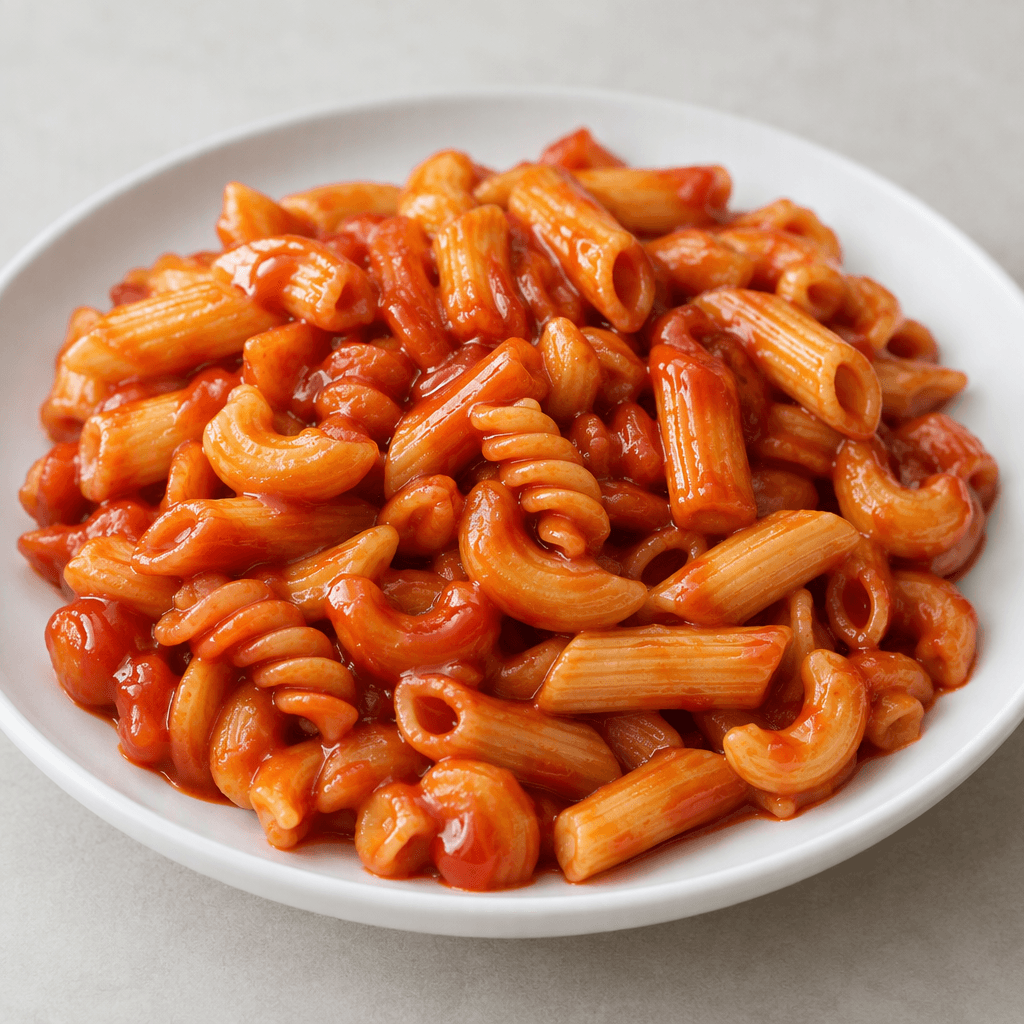
Pasta with ketchup Calories
Quick carb source, low fiber, low protein, popular kids' dish
In season: Spring · Summer · Autumn · Winter
CALORIES
GI
POTASSIUM
FIBER
Quick answer
1 cup (medium) of Pasta with ketchup (150 g) has 210 calories. That works out to 140 calories per 100 g. It contains 41.3 g of carbs, 6.3 g of protein, 1.8 g of fat and 2.3 g of fiber. Its 8.3 µg of Selenium covers 15% of the Daily Value. Its glycemic index is 65 (medium), so it raises blood sugar at a moderate pace.
What is Pasta with ketchup?
Pasta with ketchup is a simple dish of cooked pasta tossed with ketchup rather than a traditional recipe tied to one particular region. Short pasta shapes are often used, so the glossy red sauce clings to each piece. It is a familiar quick meal in many households, especially as an easy option for children or when there is little time to cook.
The flavour is tomatoey, tangy and slightly sweet, with soft pasta contrasting with the thick sauce. It is usually served warm as a casual main or snack; a side salad, vegetables or a little cheese can make the plate feel more complete. Nutritionally, it is mainly a source of carbohydrates, with relatively little fibre or protein. Pairing it with beans, eggs or another protein-rich side can make it more filling.
Pasta with ketchup Nutrition Facts
Selected: 100 g
140
KCAL / 100G
Carbs
27.5g
· 10% DV
Protein
4.2g
· 8% DV
Fat
1.2g
· 2% DV
Fiber
1.5g
· 5% DV
DV is the share of the daily value covered, on a 2,000 kcal reference diet.
Calories come from: Carbs 80% · Protein 12% · Fat 8%
Pasta with ketchup Vitamins & Minerals
Vitamins
B1
0.08mg · 7% DV
B2
0.05mg · 4% DV
B3
0.7mg · 4% DV
B5
0.18mg · 4% DV
Minerals
Selenium
5.5µg · 10% DV
Sodium
210mg · 9% DV
Iron
1mg · 6% DV
Phosphorus
38mg · 5% DV
How Nutritious Is Pasta with ketchup?
Nutrient density
Low
How many vitamins, minerals and how much fiber this food carries per calorie. A high score means a lot of nutrition for few calories.
Satiety score
Medium
An EatBetter score computed from fiber, protein and calorie density. A high score means staying full longer on the same calories.
Both scores are calculated per 100 g and do not change with the selected portion. The satiety score is EatBetter's own calculation, not a clinical measure.
Pasta with ketchup Glycemic Index
GLYCEMIC INDEX
GLYCEMIC LOAD
Accounts for portion size — a more realistic measure than GI alone.
How to Burn Off Pasta with ketchup
To burn the 140 calories in 100 g:
🚶
Walking (5 km/h)
🏃
Running (8 km/h)
🚴
Cycling
🏊
Swimming
Times are calculated with the MET equation for a 70 kg adult. Actual burn varies with your weight, age and pace.
Is Pasta with ketchup Processed?
NOVA 3
Processed
1. Unprocessed
2. Minimally Processed
3. Processed
4. Ultra-Processed
NOVA classifies foods into 4 groups by industrial processing. NOVA 1 (unprocessed) is the healthiest.
Does Pasta with ketchup Contain Allergens?
Contains these allergens:
Which Diets Is Pasta with ketchup Good For?
Vegan
— Not suitable
Vegetarian
✓ Suitable
Gluten-Free
— Not suitable
Dairy-Free
— Not suitable
Mediterranean
— Not suitable
Paleo
— Not suitable
Whole30
— Not suitable
DASH
— Not suitable
Keto
— Not suitable
Low FODMAP
— Not suitable
Pasta with ketchup Fat Profile
SATURATED
0.22g
MONOUNSATURATED
0.13g
POLYUNSATURATED
0.14g
Omega 6:3 ratio 13:1
Above the ideal 4:1 (13:1).
Compare Pasta with ketchup
Foods Similar to Pasta with ketchup
Frequently Asked Questions About Pasta with ketchup
How do you make pasta with ketchup?
Boil the pasta in salted water until tender, then drain it and stir in ketchup while the pasta is still hot. Add a splash of pasta water if the ketchup feels too thick. Serve right away, or warm it briefly in a pan.
Can you put ketchup on pasta?
Yes, you can put ketchup on pasta; it makes a quick, sweet-tangy coating rather than a traditional tomato sauce. Stir it through hot pasta so it spreads evenly, and add a little pasta water if needed.
What kind of pasta works best for pasta with ketchup?
Short shapes such as fusilli, penne, or macaroni work well for pasta with ketchup because they are easy to coat and eat. Any shape will do, though; cook it according to the package directions and drain it before adding ketchup.
How can you make pasta with ketchup taste better?
To improve pasta with ketchup, warm the ketchup briefly with a little butter or olive oil before tossing it with the pasta. Black pepper, dried herbs, or grated cheese add savory flavor and balance the ketchup’s sweetness.
Is pasta with ketchup a good meal for kids?
Pasta with ketchup can be a kid-friendly meal, but it is limited on its own. Serve it with vegetables, beans, eggs, or another protein-rich food to make the meal more filling and varied.
Can you add cheese to pasta with ketchup?
Yes, cheese goes well with pasta with ketchup. Stir grated cheddar into the hot pasta so it melts, or sprinkle Parmesan on top just before serving. Add the cheese gradually, since ketchup already brings a strong flavor.
Can you add tomato paste to pasta with ketchup?
Yes, tomato paste can make pasta with ketchup taste less sweet and more savory. Cook a small amount briefly in oil, then mix in the ketchup and pasta. A splash of pasta water helps loosen the sauce.
Can pasta with ketchup be eaten cold?
Yes, pasta with ketchup can be eaten cold, although the sauce may taste thicker and less evenly coated after chilling. If you prefer it warm, reheat it gently in a pan with a splash of water.
How long does pasta with ketchup last in the fridge?
Pasta with ketchup keeps in a covered container in the refrigerator for about three to four days. Refrigerate it promptly rather than leaving it out, and reheat only the portion you plan to eat until it is steaming hot.
How do you make pasta with ketchup less sweet?
Use less ketchup and mix in a little tomato paste, black pepper, or dried herbs to make pasta with ketchup less sweet. Tomato paste adds a more concentrated savory tomato taste without turning the dish into a completely different sauce.
Have another question about Pasta with ketchup?
Ask the AI nutrition coach — calories, portions, alternatives and more, answered in seconds in the app.

Scan calories with your camera
Instant AI nutrition analysis

Nutrition data compiled from USDA FoodData Central and scientific sources.